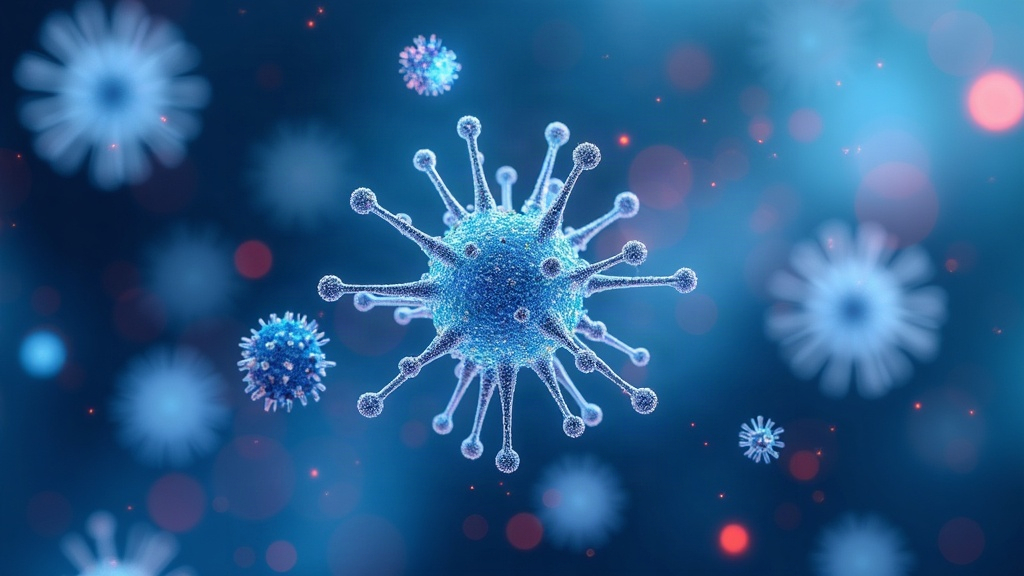
There is a technology so small that it cannot be seen with the naked eye, not even with a normal microscope. It works at the scale of atoms and molecules, where the rules of the world we know change completely. It is called nanotechnology and, although it has been developing in silence for decades, it is already inside your phone, your clothes and the medicines you take.
What is a nanometre?
To give you an idea: a nanometre is one billionth of a metre. A human hair is about 80,000 nanometres thick. That is, in the space occupied by the thickness of a hair, tens of thousands of aligned nanometre-scale structures fit. At that scale, matter behaves differently: materials change colour, become stronger or react sooner to stimuli.
It is as if, by shrinking a football to the size of a marble, it started to float or become transparent. That is, in essence, what scientists take advantage of: the new properties that appear when things are made very, very small.
It is already in your pockets
Nanotechnology is not science fiction: you use it daily without knowing it. The processors in your phone or computer are manufactured with structures of a few nanometres, increasingly smaller so that more circuits fit in the same chip. The batteries of electric cars also take advantage of nanometre-scale materials to store more energy and charge faster.
Even the sportswear that repels water or transparent sunscreens owe their properties to tiny particles. The filters of face masks, the anti-scratch coatings on glasses and the screens of the thinnest televisions also hide nanotechnology inside.
The medicine that attacks with precision
Perhaps the most promising field is medicine. The idea is to send medicines inside small capsules of nanometre size that travel through the bloodstream to the exact place where the treatment is needed. In this way, a tumour can be attacked with less collateral damage or a drug can be released slowly and in a controlled way over weeks.
Nanosensors capable of detecting diseases in a drop of blood long before symptoms appear are also being researched. And bandages with nanoparticles that kill bacteria and speed up healing. The medicine of the future, in part, will be decided at the scale of atoms.
Impossible materials
Nanotechnology also makes it possible to invent materials with properties that do not exist in nature. One of the most famous is graphene: a sheet of carbon only one atom thick, but stronger than steel and which conducts electricity wonderfully. With it, batteries that charge in minutes, flexible screens and smart fabrics are being experimented with.
There are nanomaterials that repel water, others that self-repair if they crack and some that change colour depending on the temperature. They are the raw material with which many objects of the future will be built: lighter, stronger and with less energy consumption.
Limits and caution
Not everything is so simple. Working at such a small scale is expensive and difficult to control, and many products take years to go from the laboratory to the shop. In addition, nanoparticles are so small that they can slip into the organism or the environment, and we still do not know all their long-term effects.
That is why scientists call for regulating their use with caution, studying each material before putting it on the market. Nanotechnology is an extremely powerful tool, but like any tool, it has to be used sensibly.
The future, in miniature
Despite the challenges, the direction is clear. Every year new nanomaterials and techniques appear that make things possible which a decade ago seemed impossible. From filters that purify water for millions of people to batteries that would change electric mobility.
The fascinating thing is that the future is not built only with rockets and skyscrapers. It is also built at the scale of atoms, where a whole world awaits discovery. And that, even though we do not see it, is already changing our lives.