
When you ask your phone what the weather will be tomorrow, when an app suggests the perfect song or when an email ends up in the spam folder without you having marked it, something more than classical programming is happening: a machine has learned. Artificial intelligence is already part of your daily life, but understanding how it learns is simpler than it seems.
Learning is not memorising
The first thing is to banish a mistaken idea. A machine does not learn like a student who knows the syllabus by heart. It learns in another way: by observing millions of examples, detecting patterns and adjusting its behaviour until it gets more and more things right. The more data it sees, the better it gets at distinguishing what is relevant from what is not.
The raw material is data
Imagine you want to teach a program to recognise photos of cats. You do not give it a definition; you show it thousands of photos labelled as “cat” and just as many that are not. The program does not understand what a cat is, but little by little it discovers the shapes, colours and features that repeat in the marked images. That process of looking, making mistakes and correcting itself is, in essence, machine learning or machine learning.
A network of artificial neurons
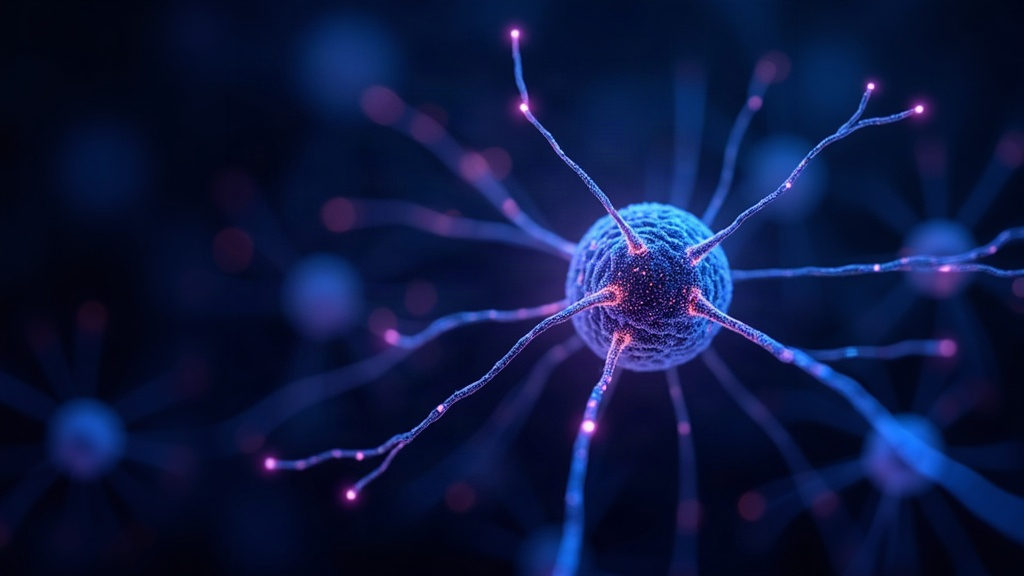
The most powerful tool to achieve this is called a neural network, and its name is no coincidence. Inspired by the human brain, it is a network of small artificial “neurons” connected to each other. Each connection has a weight, an importance. During learning, the system keeps adjusting those weights: it strengthens the connections that lead to the correct answer and weakens those that lead to error. It is a systematic, chain-like trial and error, repeated millions of times.
From trial and error to getting it right
This process is neither magical nor instantaneous. Training a model can take hours, days or even weeks, consuming enormous amounts of energy. But once trained, the result is surprising: the system is able to recognise a cat, translate a language or detect a disease in an X-ray with a precision that often surpasses that of a human.
Does it really learn or does it just copy?
It is a very legitimate question. Experts prefer to say that machines generalise: they apply what they have learned to new cases they have never seen before. There is no consciousness or real understanding behind it. That is why, if they lack variety of data or if the data contains biases, they also learn those biases. The machine is a mirror: it reflects, amplified, what we teach it.
A world that already works this way
Artificial intelligence is not the future, it is the present. We use it when we write with the predictive keyboard, when the bank detects a suspicious purchase, when automatic translation saves us on a trip or when the browser autocompletes a search. Behind each of those comforts there is a machine that, on the basis of examples and corrections, has learned to help you.
Understanding it does not turn anyone into an expert, but it does help to look with different eyes at that technology that already lives among us: not as an incomprehensible black box, but as a system that learns from data, with its lights and its shadows. And knowing how it works is the first step to using it wisely.