
Quantum computing: when computers stop counting one by one
You may have heard about quantum computing and it might sound like science fiction. However, it is one of the most promising technologies of our time, and it is not as far from your life as you imagine. We tell you what it is, why it matters and what it could change in the coming years.
To understand it, first we have to talk about how today’s computers work. A classical computer works with bits, which are like switches that can only be in two positions: on (1) or off (0). With billions of these switches, your phone or laptop is capable of doing anything, from writing a message to rendering a video game.
Quantum computing starts from a different idea: instead of bits, it uses qubits. And here is the magic: a qubit can be 0, 1 or both at the same time, thanks to a phenomenon called superposition. It is as if, while you are not looking, a switch could be on and off at the same time.
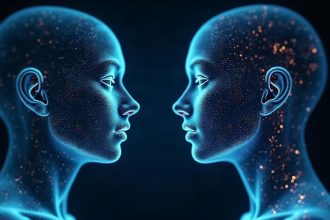
Another key concept is quantum entanglement. When two qubits become entangled, the state of one depends on the other, no matter the distance separating them. Albert Einstein called it “spooky action at a distance”. This connection allows quantum computers to explore a huge number of possibilities at once, instead of doing it one by one.
And what is all this for? There are problems that today’s computers find extremely hard, even taking years of calculation. Quantum computing promises to solve them in minutes. For example, simulating molecules to design new medicines or materials, optimizing transport and logistics routes, improving climate models or revolutionizing cryptography.
We are still in the early days. Today’s quantum computers are enormous, very expensive and extremely delicate machines: they need temperatures close to absolute zero to work. In addition, qubits are fragile and make mistakes easily. Researchers are working to correct them so that these machines become reliable and practical.
Large companies such as Google, IBM or Microsoft, and also many countries, are investing billions in this race. We still do not know when we will see a quantum computer at home (you will probably never need one), but it is very possible that, in the future, this technology will be behind the medical, energy and scientific advances that will shape our world.