
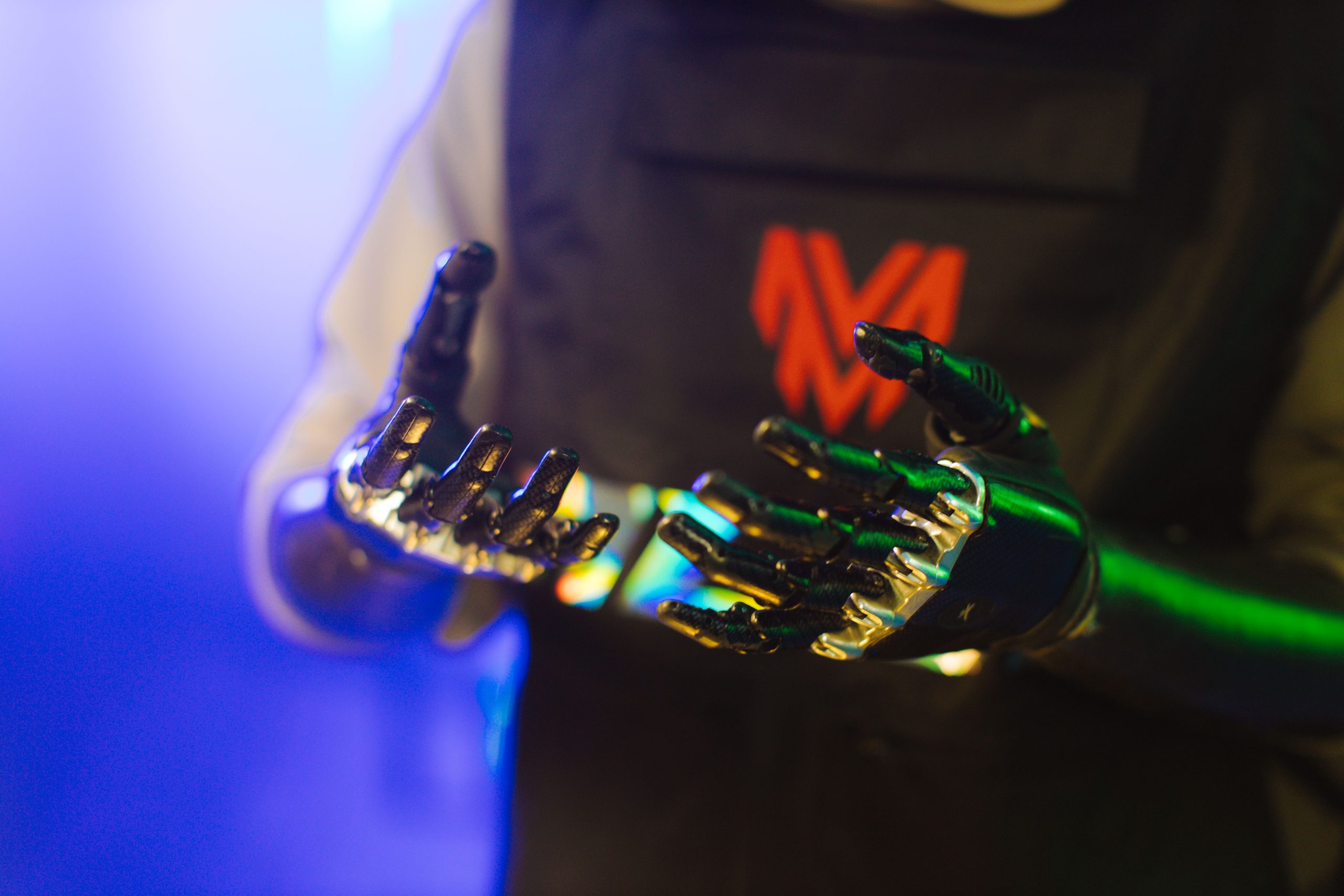
Imagine an armour that is not for war, but so that a person with difficulty walking can go for a stroll, or so that a worker can lift heavy loads without wrecking their back. That is a robotic exoskeleton: an external structure that is placed over the body and lends it strength. We tell you how it works and why it is seen more and more in hospitals, factories and even in your future.
An armour that thinks for you
The name sounds like a science-fiction movie, but the idea is simpler than it seems. Exoskeletons are structures with motors and sensors that adjust to arms, legs or back. When you move, the sensors detect your intention —for example, that you want to raise your arm— and the motors help you do it.
They do not move you by force: they accompany you. It is like when someone helps you up a hill by pushing you slightly. You set the direction and the machine provides the extra power.
In the hospital: walking again
One of the most exciting uses is in rehabilitation. People who have suffered a stroke, a spinal cord injury or who lose strength with age can retrain their gait with the help of an exoskeleton.
The machine supports the weight and guides each step, allowing much more practice without getting tired. And since the body responds by repeating movements, that repeated practice is exactly what recovery needs.
In the factory: fewer injuries
At the other end are the physical jobs. Lifting boxes, holding tools or spending many hours in forced postures takes a toll on the back and joints. This is where industrial exoskeletons come in, often focused on the back or arms.
They do not turn anyone into a superhero, but they do remove part of the effort. The result: fewer injuries, fewer days off work and workers who arrive in better shape at the end of the day. Several logistics and automotive companies already use them on a regular basis.
The battery, the big challenge
If all this sounds so good, why does not everyone wear one? The main obstacle is energy. An exoskeleton needs batteries to power its motors, and those batteries are heavy and last a limited time.
Lightweight units, designed for short walks or therapies, last a few hours. The more powerful ones last less. That is why one of the great engineering races right now is making more efficient motors and lighter batteries.
Towards a future with fewer barriers
Although they are still expensive and are often reserved for hospitals or factories, prices are falling year after year. There are models that can already be bought for home use, designed for older people or those with reduced mobility.
The dream of those who design them is that one day they will be as common as glasses or a wheelchair: one more tool so that no one is left out because of their body. And that, more than a technological promise, is a promise of equality.