
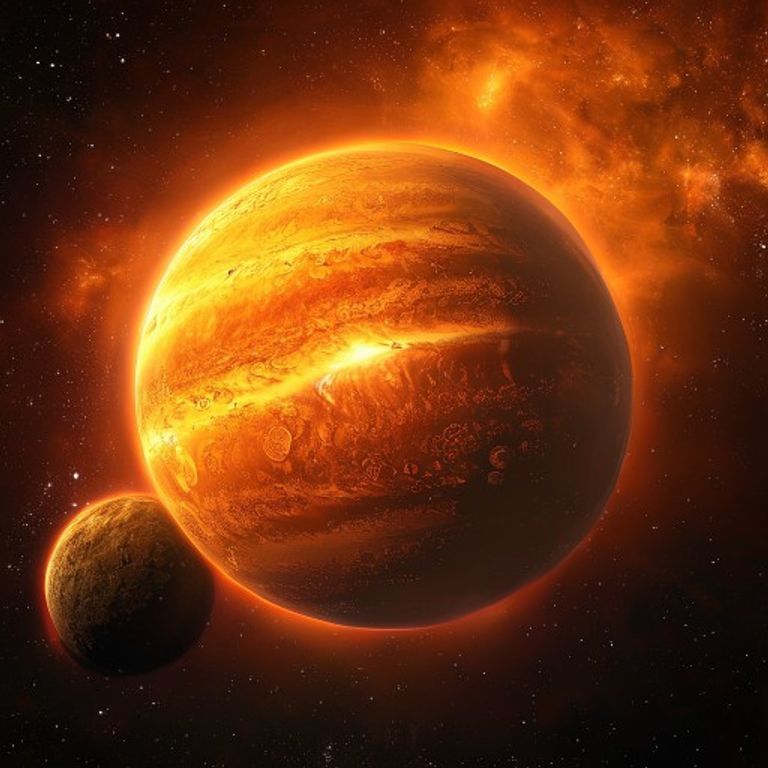
The James Webb Space Telescope has achieved something that seemed impossible: detecting the atmosphere of a rocky planet similar to Earth that orbits in the habitable zone of its star. It is called LHS 1140b, it is 49 light-years away from us and it is the first rocky exoplanet confirmed to have an atmosphere. Until now, astronomers had found atmospheres on giant gas planets, but never on a solid one like ours. The discovery, published in the journal Science, marks a before and after in the search for life beyond the solar system. And why does this matter? Because having an atmosphere is key for a planet to be able to host life as we know it. The atmosphere regulates temperature, protects against radiation and allows liquid water to exist on the surface. The first data from James Webb suggest that LHS 1140b could have water and even clouds. Scientists believe this is only the first of many discoveries: the telescope is prepared to analyze dozens of similar planets in the coming years. – Marta, for inteligencia intermitente.
For the first time, an atmosphere is detected on a rocky, habitable exoplanet

Artículo anterior Artículo siguiente
An autonomous AI agent hacked Hugging Face – the first fully automated cyberattack in history
Jack Dorsey launches Buzz: the team chat with AI agents that challenges Slack

publicaciones relacionadas

GPS: the satellites that always know where you are
25 de August de 2026
Quantum computers: the revolution that comes after silicon
21 de August de 2026