

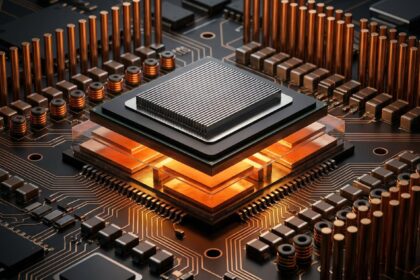
A modern AI accelerator does not run on the 12 volts that travel across the motherboard. It asks for 0.6 to 0.9 volts, but with a current measured in thousands of amps. A 700-watt chip running at 0.8 ...
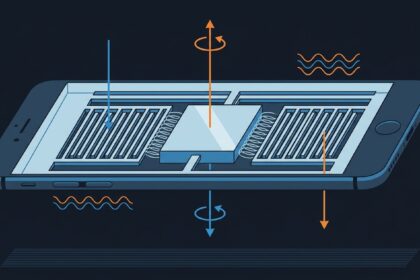
You turn the phone and the screen settles by itself. There is no pendulum inside pointing to the ground and no compass with a needle: there are three pieces of silicon the size of a grain of salt that...
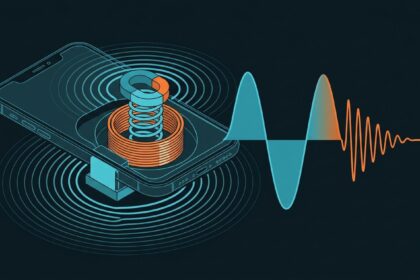
When a message arrives, the phone announces it with a short, dry buzz. It looks trivial, but that buzz hides two engineering problems that have to be solved in milliseconds: moving a mass with enough ...

Somewhere in an operations centre a screen has just raised a flag: in 26 hours, one of your satellites and a rocket fragment will pass within 300 metres of each other. Nobody has lost control of anyth...
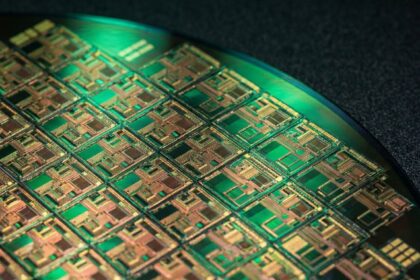
RISC-V is not a brand and not a chip. It is an instruction set: the contract that fixes which commands a processor understands, how many registers it has to work with and how it behaves in memory. It ...
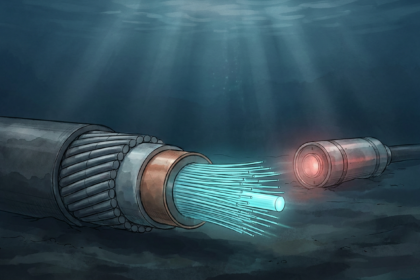
Every time someone in Madrid opens a video hosted in a Virginia data centre, the bits of that video cross the Atlantic. They do not travel by satellite or over any wireless link: they ride a cable abo...
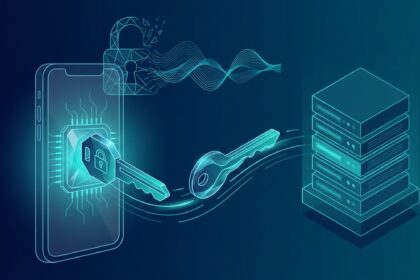
When Fernando Corbató put the first password on a time-sharing system at MIT in 1961, he only meant to keep two researchers from stepping on each other’s work. Sixty-five years later, that offic...
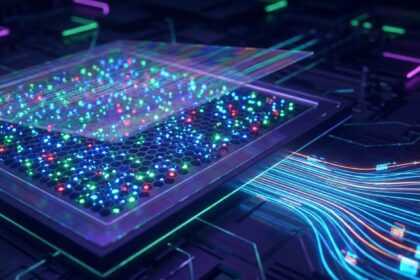
Take a photo of a white wall. The sensor behind the lens has tens of millions of points spread over a grid a few millimetres wide, and every one of them has done exactly the same thing: count how many...
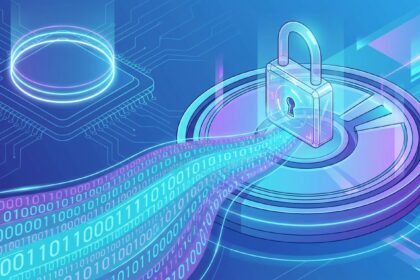
Your bank, your email, your medical records: all of it travels encrypted today using algorithms that have worked for decades and, until recently, were considered unbreakable. The safety of that traffi...
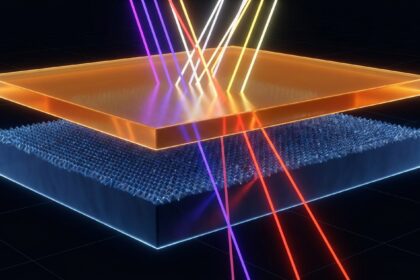
Silicon has spent almost seventy years being the material from which virtually all of the world’s solar electricity is made. It is abundant, it stays stable for decades and the industry has lear...
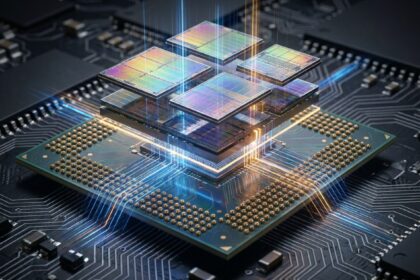
For half a century a chip was one piece: a silicon wafer, a square die, a package and pins. Everything the processor did lived inside that die, built in a single pass with the same process. That idea ...
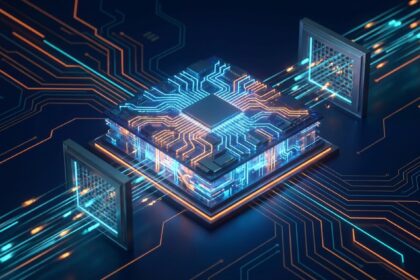
When a server decides whether a network packet gets in or is dropped, that packet normally walks through a series of rules in user space or in the kernel firewall: the data is copied back and forth, c...