

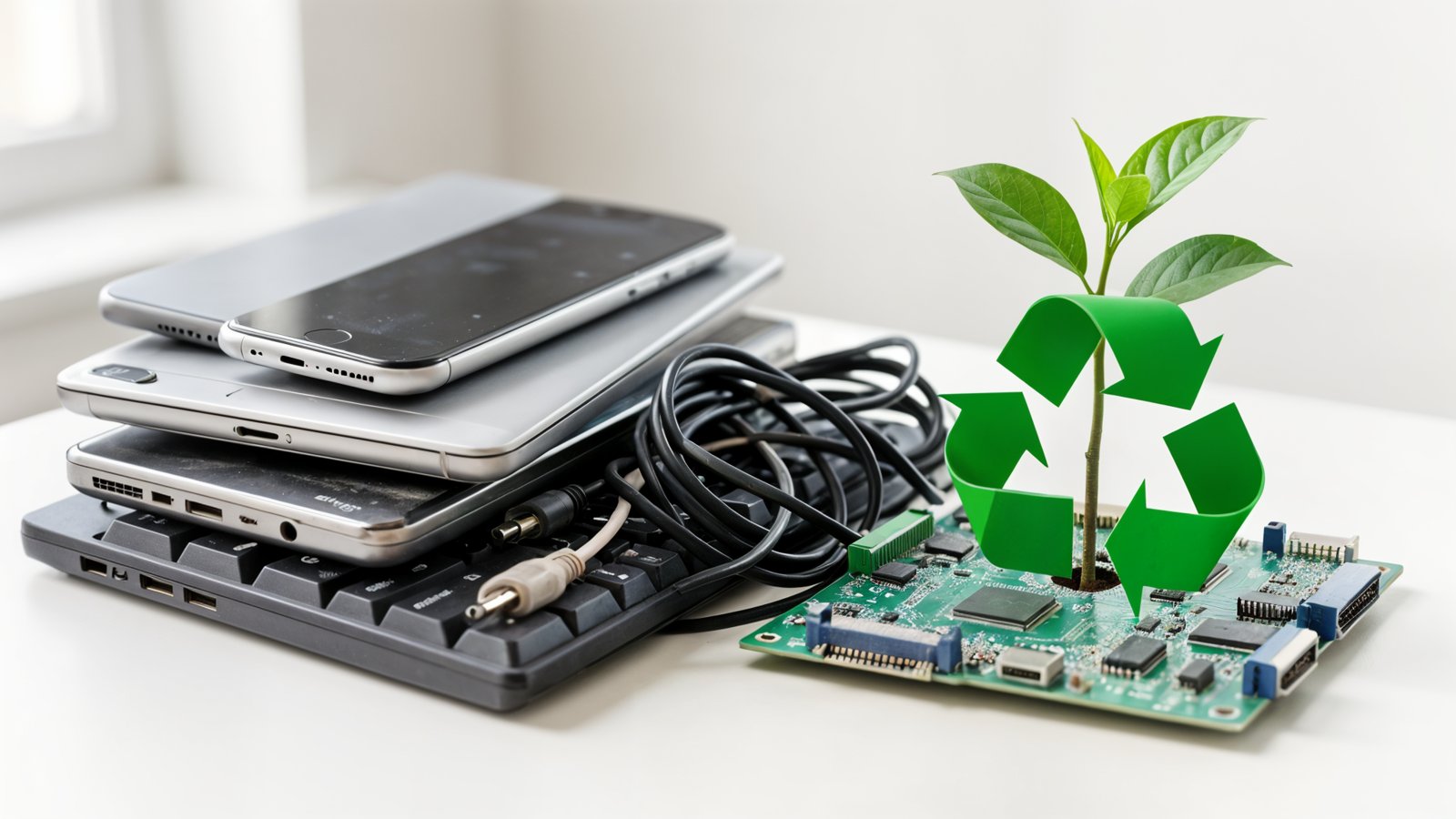
Technology advances so fast that we barely have time to wear out a phone before the next one arrives. The result is a silent but gigantic problem: mountains of old devices gathering dust in a drawer or ending up in distant landfills. We are talking about e-waste, and its volume is already hard to imagine.
A problem with record-breaking numbers
According to the latest UN data, the world generates tens of millions of tons of electronic waste every year. Only a small fraction is properly recycled. The rest ends up mixed with regular trash, burned, or exported to countries where it is dismantled with little control or protection.
What is worrying is the trend: the amount of electronic waste keeps growing every year, while recycling barely advances. The gap between what we throw away and what we recover is widening.
It is not just trash: it is a treasure
The key to understanding this is that an old phone or laptop is not worthless scrap. Inside them are materials that are expensive to extract: gold, silver, copper, lithium or rare earths. It is estimated that, ton for ton, used electronics concentrate more precious metals than many conventional mines.
Recovering those materials has a double benefit. On one hand, it reduces the need to open new mines and the environmental impact that entails. On the other, it helps us depend less on specific countries that today control a large share of these strategic resources.
What happens to your data
One of the barriers to recycling is fear. Before getting rid of a device, you have to make sure you erase the information properly. Emptying the recycle bin is not enough: the ideal is to do a factory reset, and on disks and computers it is also advisable to encrypt the data or physically destroy old drives.
There are companies and official programs that guarantee safe, certified recycling. Handing the device in at these points, instead of leaving it in a drawer, is the most responsible way to give it a second life.
Repair, the other side of the coin
Recycling is important, but it would be even better to extend the life of what we already have. In recent years the so-called right to repair has grown strongly, forcing manufacturers to make parts, tools and manuals available so that fixing a device is something reasonable rather than impossible.
A phone that is repaired and lasts two more years is, in practical terms, a phone that is not manufactured and a piece of waste that is not generated. Small decisions, such as replacing a battery instead of buying a new device, add up to more than it seems.
What you can do today
You do not need to be an expert to help. Going through that drawer of forgotten cables and phones, handing them in at your city’s clean points or at stores that have collection programs is a simple first step. It is also worth choosing brands that bet on durability and repairability.
The next time your phone gets slow or the screen breaks, it is worth asking yourself whether it is really time to change it. Often, the most sustainable option —and also the most economical— is the one you already have in your hand.