

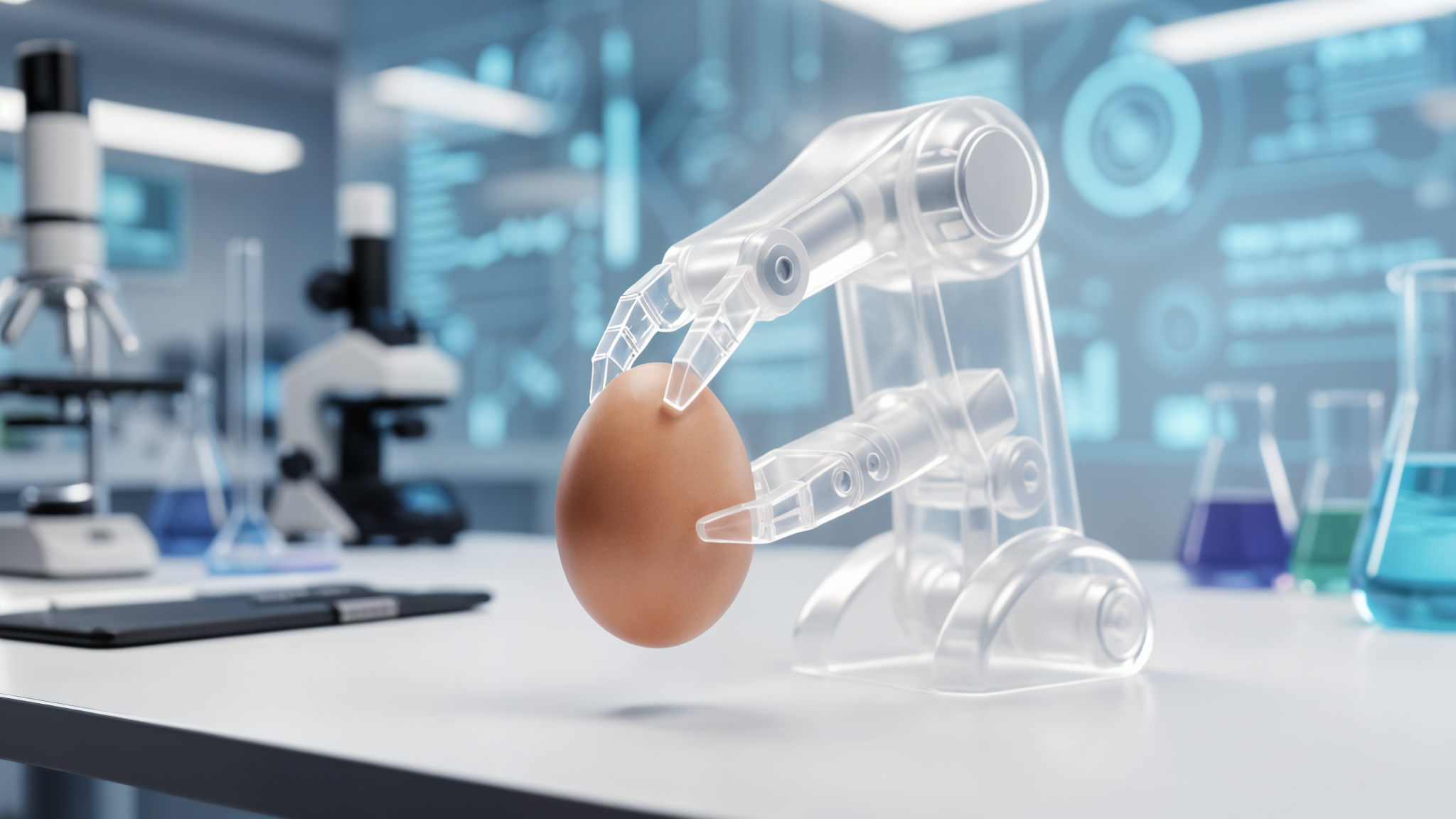
If you think of a robot, you probably imagine a metal arm moving stiffly among factory parts. But a new generation of machines is changing that image: they are robots made of soft materials, able to bend, squeeze and adapt as if they had real muscles.
This is what is known as soft robotics, and it promises to solve some of the great challenges that rigid robots cannot: gripping an egg without breaking it, operating inside the human body, or moving across terrain that no traditional mechanism can cross.
What is the difference from a normal robot?
The key is in the materials. Instead of motors, gears and metal, these robots use silicone, rubber, fabrics or flexible polymers that move thanks to air, liquid or small electric fields. Having no hard parts, their movement is much closer to that of animals or our own hands.
How they move without motors
Many soft robots work with pressurized air. By inflating some internal chambers in a specific way, the material curves in a determined direction, like a balloon that you inflate more on one side. By changing where and how it inflates, the robot can grip, crawl or swim.
Others use cables that pull like tendons, or smart materials that change shape when they receive electricity or heat. The trick is that, being soft, they can absorb impacts and adapt to the object they touch without crushing it.
Why they matter so much to us
The applications are many and very varied. In industry, there are already soft grippers that handle food or delicate parts without damaging them. In medicine, researchers are testing flexible robots that could travel through the inside of the body to deliver drugs or perform less invasive surgery.
Uses in rescue are also being explored: soft machines that slip through cracks among the rubble of an earthquake, where a metal robot does not fit. And in the sea, there are prototypes that swim like jellyfish or octopuses to study the ocean floor without scaring the creatures.
The challenge that still lies ahead
Soft robotics is still young. Precisely controlling a material that deforms is not easy at all, and today these robots usually move more slowly than rigid ones. Connecting the soft part with sensors and batteries also remains a headache.
Even so, the advances are accelerating. Combined with artificial intelligence, this technology could give rise to the next generation of machines: safer around people, more delicate and capable of reaching places that until now were impossible.
The future of robots, in many cases, will not be of shiny metal. It will be soft.