

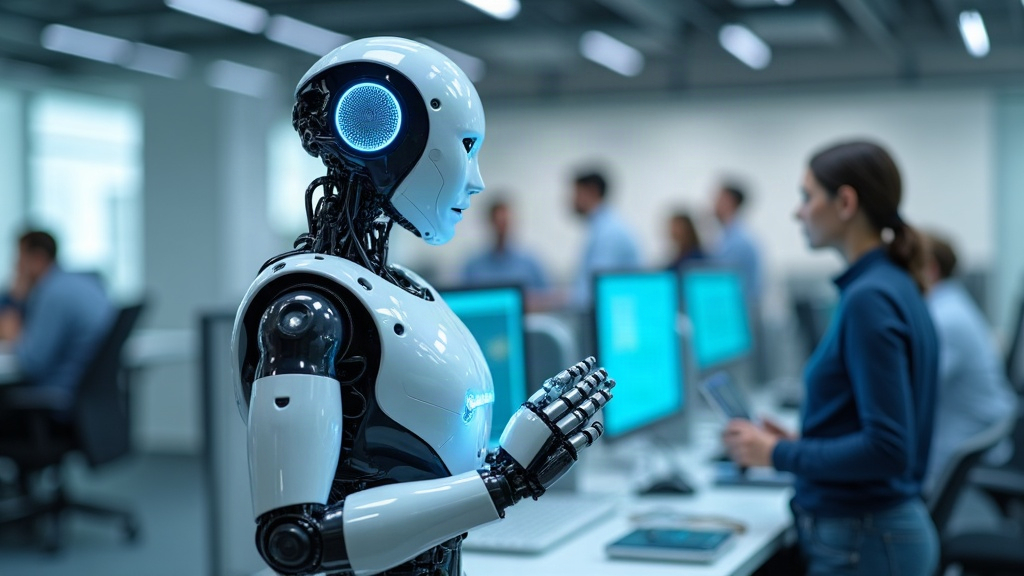
Robots are no longer just a thing of science fiction movies. They are increasingly present in factories, hospitals, warehouses and even in our homes. But how do they really work? What makes them capable of doing tasks that until recently seemed impossible for a machine?
What a robot really is
A robot is, in essence, a machine that can move and act on its own, guided by instructions that come to it from a program. It may have arms, wheels, legs or none of those things. What matters is not its appearance, but the fact that it is able to perceive its surroundings, decide what to do and carry it out with precision.
Behind every robot there are three key elements: the sensors (its “eyes” and “ears”), the brain (the software that decides) and the actuators (the motors that produce movement). The combination of these three elements is what allows it to interact with the real world.
From the factory to the hospital
The place where robots have been working the longest is industry. Robotic arms assemble cars, weld parts and pack products at speeds and with a precision that no human could match. And they do it without getting tired, 24 hours a day.
But their field of action has expanded enormously. In hospitals, robots assist in highly precise surgeries, help elderly people and transport medicines along the corridors. In large online warehouses, small mobile robots pick up orders and take them to the shipping area in a matter of minutes.
How they learn to do new things
The most fascinating thing about modern robotics is that many robots are no longer programmed instruction by instruction. Instead, they learn by themselves, just as we learn: by practicing and correcting mistakes.
This is achieved with artificial intelligence. A robot can simulate millions of attempts in a virtual world before trying the real movement. So by the time it reaches real life, it already knows how to grasp a fragile object or how to avoid tripping over a person crossing its path. The more data it receives, the better it becomes.
The robots that already live at home
They are also arriving in our homes, although in a more discreet way. Robot vacuum cleaners clean the floor while we sleep, and automatic lawnmowers take care of the garden without us having to touch them. They are simple, but they show that robotics can make our lives more comfortable.
Voice assistants, even though they do not move, also belong to this family: they listen, understand commands and control other devices. They are a first step towards that future in which machines collaborate with us in everyday tasks.
The future: robots that live alongside people
The great frontier of robotics is coexistence. The robots of the future will have to be safe, understandable and able to react to unpredictable situations. That is why researchers are working on making them more sensitive to human emotions and on having them explain, clearly, what they are going to do and why.
There are still challenges ahead, such as battery life, the ability to work in cluttered environments or cost. But the direction is clear: we will increasingly see machines that not only execute orders, but also understand the world around them. And the best part is that we are still only at the beginning of this story.