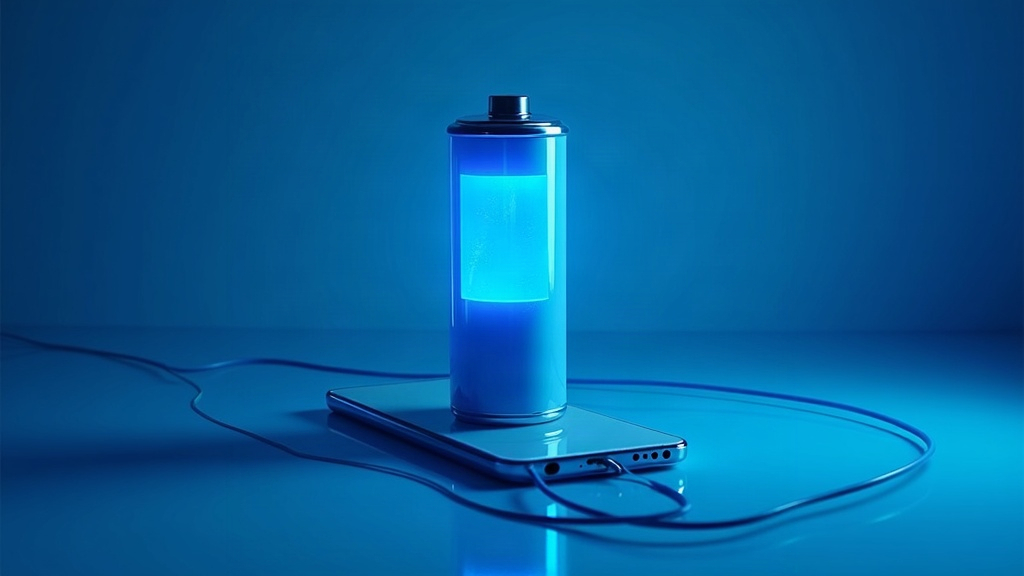
The battery that promises to charge your phone in minutes
We all know the scene: the phone runs out of battery just when you need it most and you have to look for an outlet, with the anxiety of the percentage dropping in real time. For decades, batteries have been the Achilles’ heel of technology: we move at full speed in screens, cameras and processors, but the energy that powers them has changed much more slowly. Now, a technology called the solid-state battery promises to turn it all around.
What today’s batteries have inside
To understand the novelty, it is worth looking inside the battery of your current phone. These batteries, called lithium-ion, work with a liquid part inside, the electrolyte, which allows lithium ions to travel from one side to the other and generate electricity.
That liquid is practical, but it has its limitations. It takes up space, weighs, can degrade with heat and, in extreme cases, is responsible for those fires that the news sometimes talks about. It is a mature technology, but with its ceiling already very close.
The change: a solid electrolyte
The solid-state battery replaces that liquid with a solid material. It seems like a small change, but its consequences are enormous. By eliminating the liquid, the battery can store more energy in the same space, something essential in a phone where every millimetre counts.
In addition, being solid, it is safer and tolerates temperatures better. The result is a battery that lasts longer, charges faster and withstands more charge cycles before starting to lose capacity. In practice, that could mean charging your phone completely in a matter of minutes, or an electric car travelling hundreds of kilometres more with each charge.
The challenges of making it a reality
If it sounds so good, why isn’t it already in all devices? Because manufacturing it in series is not easy. Working with solid materials on a large scale, getting them to last thousands of charges without wearing out and producing millions of units at a reasonable price are considerable technical and economic challenges.
The big technology and automotive companies have been investing in this race for years. Some already present prototypes and promise commercial launches in the coming years, although the recent history of this technology teaches us to be cautious with dates.
A future with less battery anxiety
If the solid-state battery finally takes off, the change will be noticed everywhere. Phones that charge while you have a coffee, electric cars with more range and less weight, and thinner and safer devices. Energy has always been the slowest link in technology; it finally seems to be starting to accelerate.
In the meantime, we will keep glancing at the battery percentage. But the next technological revolution may not come with a foldable screen or a new assistant, but from within: in that small, solid piece that makes everything else work.