

There is a technology that has been quietly slipping into our lives for years without us even noticing. It is in social media filters, in the maps that guide us as we walk, in video games and in the operating rooms of the most advanced hospitals. It is called virtual and augmented reality, and although it sounds like science fiction, it is already part of your daily life.
The first thing is to clarify the difference, because they are not the same. Virtual reality (VR) transports you to a completely digital world: you put on a headset and everything around you disappears, as if you stepped into another room made of pixels. Augmented reality (AR), on the other hand, does not take you out of your world: it adds digital layers on top of what you already see, as if you were drawing information in the air in front of your eyes.
The best-known example of augmented reality is right in your pocket. When you use a filter that gives you cat ears, or when a map shows you the direction with arrows over the image of the street, you are using AR without realising it. The phone, with its camera and sensors, is the most popular gateway to this technology.
How machines “see” our world
For augmented reality to work, the device needs to know exactly where it is and where it is looking. To do this it uses a combination of data: the camera captures the image, the gyroscope measures tilt and the accelerometer detects movement. With all that information, the system calculates in milliseconds how to place the digital element so that it looks as if it is attached to the real world.
The key is that the virtual object stays in place even if you move your head. That is harder than it seems and requires constant, lightning-fast calculation. When it succeeds, the effect is so natural that the brain accepts without question that that plastic dinosaur really is on your table.
Not just for playing
Perhaps the most interesting thing is that these technologies are already transforming serious work. Surgeons use augmented reality to see inside a patient’s body without needing to open it, superimposing medical images over the area to be operated on. Firefighters practise rescues in virtual scenarios where there is no real risk. And engineers rehearse complex assemblies before touching a single physical part.
It is also changing the way we learn. A medical student can examine a virtual heart from every angle, something impossible with a textbook. A trainee mechanic can take apart a digital engine over and over again, without fear of breaking anything. Practice, say the experts, no longer has to wait until you reach the real workshop.
Towards glasses for everyone
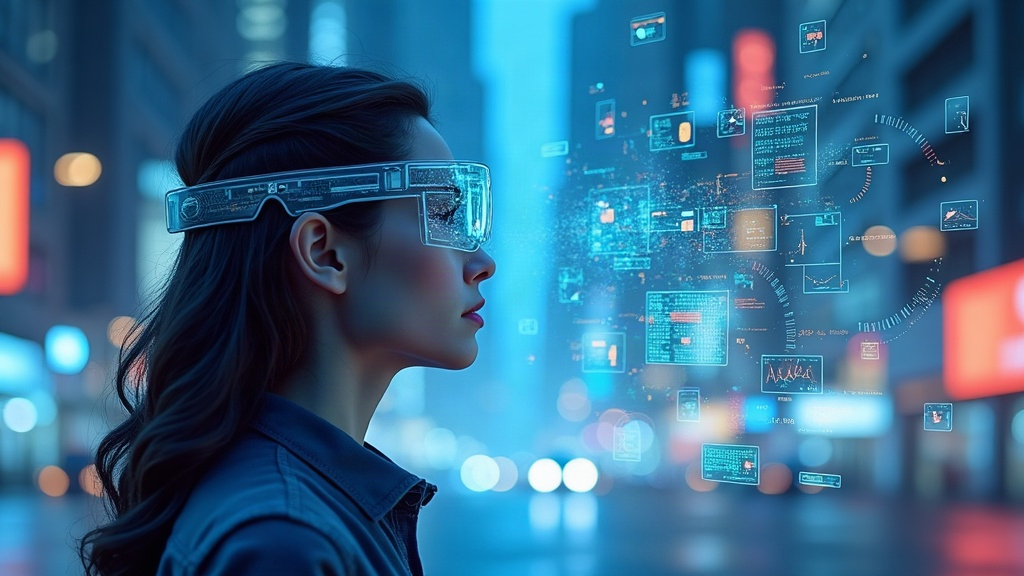
For years, the great brake on this technology was the hardware: heavy, expensive and uncomfortable. But that is changing fast. The new augmented reality glasses are lightweight, look more and more like ordinary glasses and promise to be the next big leap after the mobile phone.
The idea is that, in the future, you will not need to look at a screen to consult information: it will appear floating before your eyes when you need it. A translation over a street sign in a foreign country, the route drawn on the asphalt, or assembly instructions over the part you are holding in your hand. The real world and the digital world merge into a single image.
Of course, challenges remain. Privacy is one of the big ones: if the cameras and sensors are in your glasses, who controls what they record? There is also battery life and price. But the direction is clear: more and more digital information will be available at the exact moment and place we need it.
Virtual and augmented reality are no longer a promise for the future. They are a real tool that already helps us operate, teach and create. And if everything keeps up this pace, very soon it will stop attracting attention and simply become another way of looking at the world.