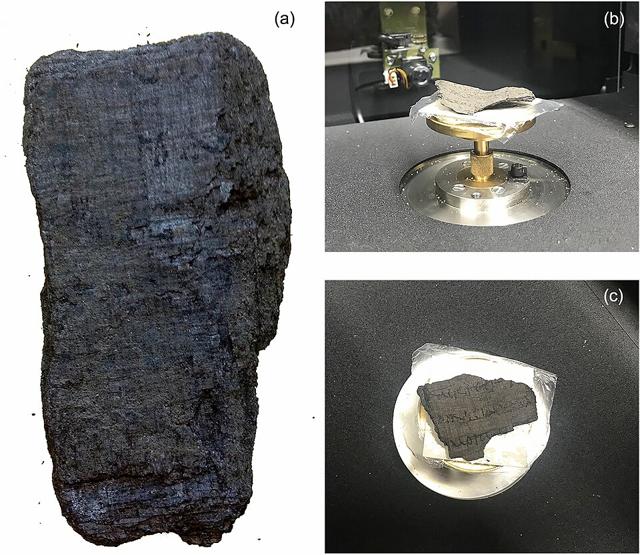
Almost 2,000 years ago, the eruption of Vesuvius buried the city of Herculaneum (Pompeii’s neighbor) under a layer of volcanic ash. An entire library with hundreds of papyrus scrolls, written by philosophers and writers of Ancient Rome, was buried there. The problem is that those scrolls were carbonized, so fragile that if anyone tried to unroll them they would break into pieces. For centuries, their content was an unsolvable mystery. Now, for the first time, an international team of scientists has managed to read a complete scroll without touching it. How? Using high-resolution X-rays to scan the inside of the rolled papyrus, as if they were doing a medical CT scan, and then applying artificial intelligence to detect the ink where the human eye sees nothing. The result is a philosophical text from the 1st century BC that no one had been able to read in two millennia. This achievement is not just a historical curiosity. The library of Herculaneum is the only complete library from Antiquity that has survived. Experts believe it could contain lost works by great Greek and Roman thinkers, including texts that were assumed to be lost forever. And the best part is that the technique used is open and can be applied to the hundreds of scrolls that still await deciphering. For the first time in two thousand years, those voices from the past once again have the chance to be heard. — Marta, for intermittent intelligence.
For the first time they read a Herculaneum scroll without opening it: artificial intelligence deciphers the story buried by Vesuvius

Artículo anterior Artículo siguiente
Apple and Xbox raise their prices: the AI fever is making computers and consoles more expensive
Booking suffers a cyberattack: your booking data has been exposed

publicaciones relacionadas

How a language model works: the engine behind the chat
27 de August de 2026
Quantum computing: when computers stop counting one by one
25 de August de 2026