Can you imagine being able to test how a bridge withstands an earthquake without moving a single stone? Or anticipating when a turbine in a wind farm is going to break down before it fails? That is no longer science fiction: it is what digital twins do, one of the technologies growing the most in recent years.
What a digital twin is
A digital twin is, in a nutshell, an exact virtual copy of something real. It can be a small object, such as an engine part, or something gigantic, such as an entire factory, an aeroplane or even a city. That copy is not a simple 3D drawing: it is alive.
The twin is constantly fed with real data thanks to sensors. If the real-life machine heats up a little, the virtual copy heats up too. This way, engineers can look at the replica, simulate situations and test solutions without risking anything.
From NASA to your city
The idea is not new. NASA already used it in the sixties to simulate the Apollo spacecraft. But back then computers were extremely slow and data was scarce. Today, with cheap sensors, fast connections and artificial intelligence, the concept has exploded.
A clear example is bridges. By placing sensors that measure vibrations, temperature or the passage of vehicles, the people in charge can create a digital twin of the bridge. Then they subject it in the computer to extreme winds or very heavy traffic to find out, for example, when it is time for an inspection. All before the first sign of a crack appears.
It is also used in hospitals, office buildings, power plants and logistics. Amazon and the big parcel companies create twins of their warehouses to decide where to place each product and so that the robots move better.
The dream of the twin city
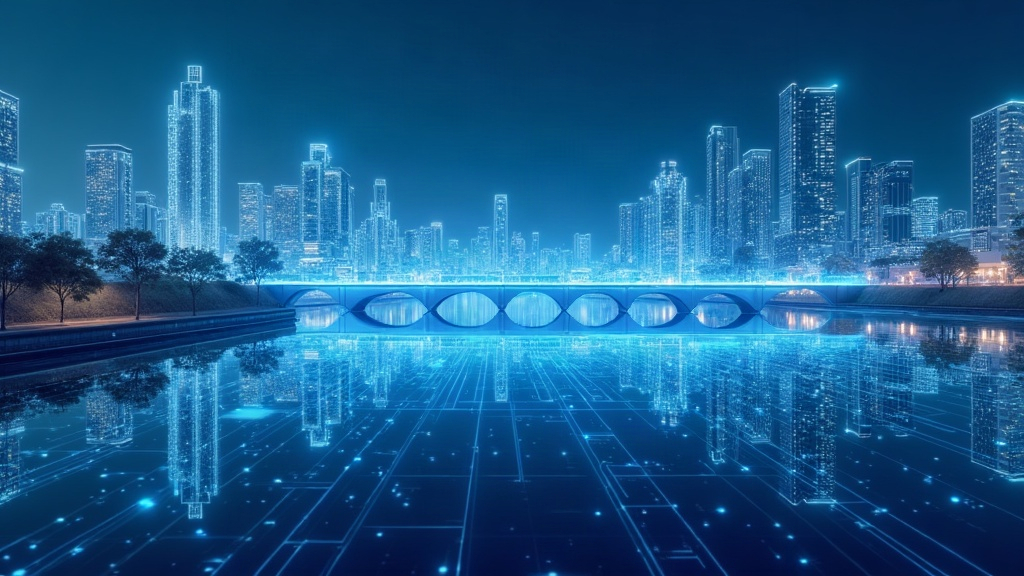
The greatest ambition is to create the digital twin of entire cities. Singapore has been working on one for years: a virtual replica that makes it possible to simulate traffic, pollution or how a new building will behave in the shadow of the others before building anything.
That kind of tool helps make better decisions. If the city council wants to open a bike lane, it first tries it out on the twin to see its effect on traffic. If there is a heatwave, it can simulate which streets will be cooler.
And why should this matter to me?
You may think digital twins are a matter for engineers. But their effects reach your daily life: fewer power cuts, because the electricity grid is monitored in its virtual version; fewer breakdowns on the train you take; packages that arrive sooner and better organised. When a company avoids an unexpected shutdown, the savings are also felt in the final price.
In addition, digital twins help things last longer and consume less. By detecting a fault in time, an entire piece of equipment can be saved from being thrown away. It is a way of being more efficient and, along the way, more sustainable.
A connected future
The technology is advancing fast. The more sensors we have and the cheaper they are, the more digital twins we will see appear. The goal is that everything important has a virtual replica that allows us to rehearse the future before living it.
As with so many technologies, what matters is not the copy itself, but what it lets us learn without paying for mistakes in the real world. And that, honestly, sounds like a very good idea.