
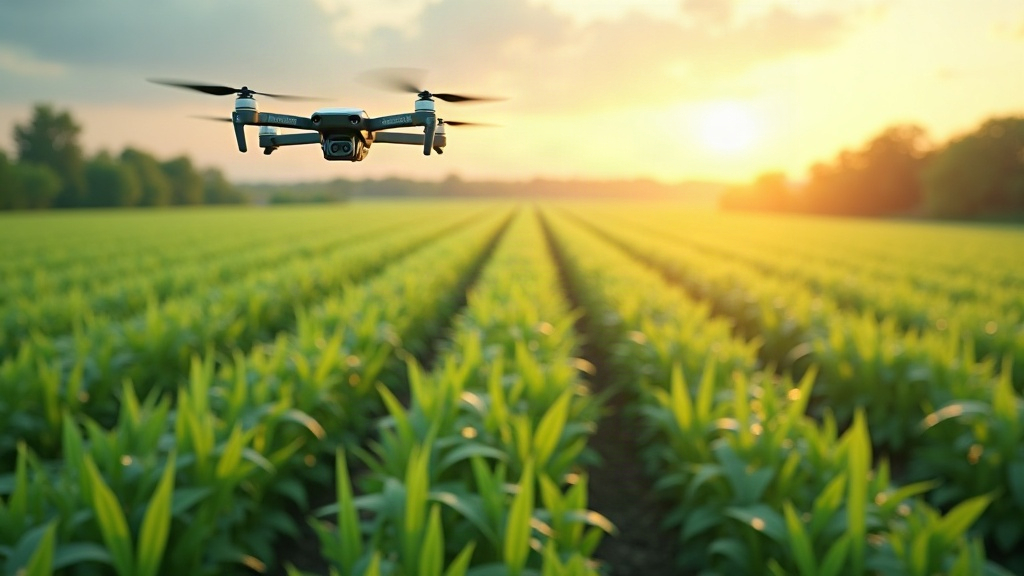
Just a decade ago, monitoring a crop field meant walking it on foot, covering kilometres of land under the sun to check whether a plant was sick, whether water was short or whether a pest was spreading unseen. Today, a drone does that same job flying over the farms in a matter of minutes. Agriculture has fully entered the digital age, and it has done so from the air.
The so-called agricultural drones are, in essence, small unmanned aircraft loaded with sensors and cameras capable of reading the state of a crop from the sky. They are no simple toys with propellers: they carry multispectral cameras that see what the human eye cannot perceive, satellite navigation systems and software that interprets every image in real time.
An eye that sees the invisible
The key lies in light. Healthy plants reflect light differently from sick or dehydrated ones. The multispectral cameras on these drones pick up those small changes in infrared light, which we cannot see, and turn the field into a colour map where every shade indicates the health of the plants.
The farmer thus receives a detailed map that tells them exactly which area needs water, which lacks nutrients or where a pest is starting. No guesswork: hard data to make more precise decisions.
Less water, fewer chemicals, more harvest
The most obvious benefit is saving resources. If the drone detects that only one corner of the farm needs watering, the irrigation system can concentrate there instead of watering the whole field evenly. The same goes for fertilisers and pesticides: they are applied only where needed, reducing costs and the impact on the environment.
In addition, these regular flights make it possible to detect problems weeks in advance, while they still have a solution. A pest caught in time can be stopped with a targeted action; if it is discovered too late, the entire harvest may be at stake.
From the field to the cloud
The drone is only half the story. All the data it collects is sent to cloud platforms where artificial intelligence software analyses it and offers recommendations. Over time, these systems learn from each growing season and keep refining their predictions.
From their phone or computer, farmers can track the evolution of their crops without setting foot on the farm, and receive automatic alerts when something needs their attention. Technology does not replace their experience, but it multiplies it.
A revolution within everyone’s reach
The price of this equipment has fallen dramatically in recent years, and today there are solutions adapted to small and medium-sized farms, not just large agricultural multinationals. Precision agriculture, which seemed a luxury reserved for a few, is becoming an accessible tool for any farmer.
The land and technology have never been so close. And the result, in the end, benefits everyone: a healthier field, more responsible use of resources and, ultimately, food produced more intelligently.