
From the dictionary to the brain: the revolution of translating without a dictionary
A few decades ago, translating a text from another language required thick dictionaries, hours of consulting and quite a lot of patience. Today you type a sentence on your phone and, in an instant, you see it in twenty other languages. Automatic translation has gone from being a curiosity to a tool we use every day, almost without noticing it. How has the machine managed to speak so many languages?
The first attempts: rules and dictionaries
The first translation programs worked like a dictionary with memory. They replaced word by word following fixed grammatical rules. The result was usually clumsy: literal sentences, without nuances and, often, funny because of how absurd they were. The problem was that languages do not work that way. The same word changes meaning depending on the context, and the order of words follows different logic in each language.
Machines followed those rules to the letter, but human language is much more flexible. It was clear that another approach would be needed.
The turning point: learning from examples
The great revolution came when researchers stopped writing rules and started letting machines learn by themselves. The idea was simple in appearance: feed the program with millions of sentences already translated by humans, so that it could find the patterns on its own.
This method, called statistical translation, was a big step forward. But it still stumbled over unusual expressions and nuances. The definitive leap came with modern artificial intelligence, specifically with neural networks, the same kind of technology that recognises your face or understands your voice commands.
How a neural network that translates works
A neural network is a program inspired, very loosely, by how the brain works. It is made up of thousands of artificial “neurons” connected to each other. To translate, the machine does not memorise sentences: it converts words into numbers and analyses the relationships between them. In this way it captures not only what each word means, but the meaning of the whole sentence, the tone and the context.
It is as if the translator did not copy, but understood. First it reads the whole sentence to get a general idea and, afterwards, it generates the translation word by word, taking into account what it has already written. That is why modern translations sound much more natural than those of ten years ago.
Why they still make mistakes
Despite the advances, machines still fail. They stumble over puns, irony, proverbs and cultural references. A joke that works in one language can sound absurd in another, and the machine does not always detect it. In addition, languages with fewer texts available on the internet are translated worse, because the machine has fewer examples to learn from.
In short, automatic translation is already excellent in everyday tasks, but it remains an aid and not a substitute for the human translator when there is a lot at stake.
Towards a world that understands itself
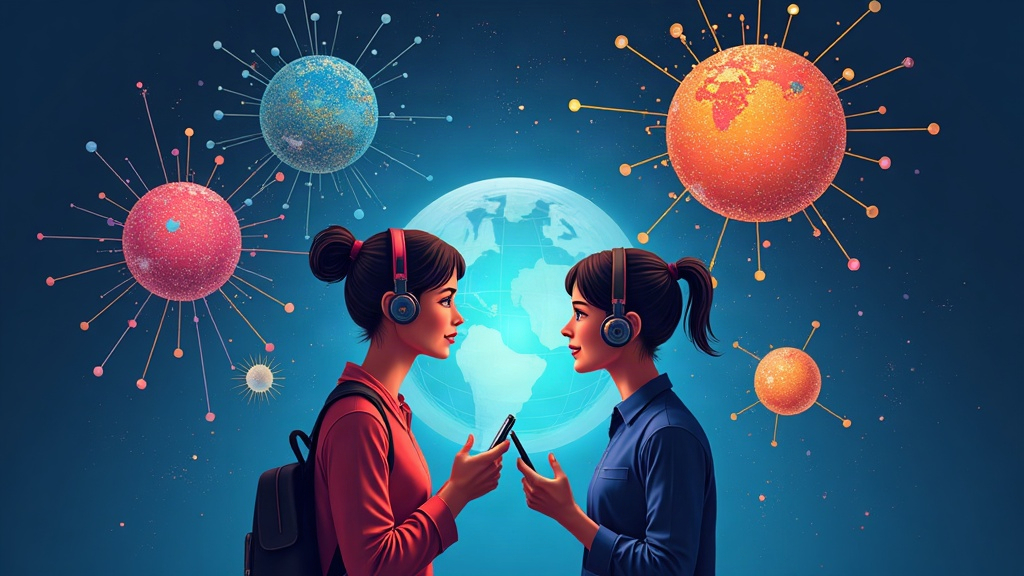
Despite its limits, automatic translation is breaking down barriers. It allows you to read news from any country, communicate with clients of other languages, study at foreign universities or travel without fear of getting lost. Earphones that translate in real time, although imperfect, are already a reality.
The dream that any person on the planet can understand any other is closer than ever. And the most surprising thing is that the tool that makes it possible we now have right in our pocket. The next time your phone translates a conversation, think about all the ground that has been covered: from the paper dictionary to the artificial brain that speaks every language.