

The question almost every electric car driver asks
If you have an electric car, you’ve surely done the same calculation at some point. Will the battery get me to work? Where’s a charging point nearby? How long do I have to wait while it fills up?
The answer to these questions could change completely within a few years. The idea sounds almost like magic: charging the battery while the car is in motion, without cables, without stopping, without leaving the lane. And no, it isn’t science fiction.
What induction charging is (and why it sounds so strange)
To understand it, think of an electric toothbrush. You leave it on its base, you don’t plug anything in, and the battery charges on its own. That’s induction charging: energy passes from one point to another without cables, thanks to a magnetic field.
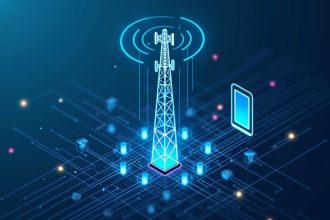
The same technology, taken to the road, works like this. Coils that generate that magnetic field are buried beneath the asphalt. The car carries a receiver on its underside. When it passes over them, it receives that energy and turns it into electricity for the battery.
In essence, it’s as if the asphalt were a huge wireless charger and the car a giant phone that fills up with battery as it drives along.
Goodbye to stops at the charger
The biggest benefit is obvious: stop worrying about range. If the road charges the car as it advances, the battery can be smaller, the car lighter and the price lower.
For heavy vehicles, such as trucks and buses, the change would be enormous. Today an electric truck needs to stop for long periods to recharge. With prepared stretches of road, it could travel hundreds of kilometres without stopping.
In cities, buses could charge at every stop, a few seconds more than enough to recover energy. Taxis and delivery vehicles could work all day without a single recharge.
And how much energy can be transmitted?
Here’s the biggest challenge. Today, wireless chargers for stationary vehicles already work and are increasingly powerful. But transmitting energy to a car moving at 100 kilometres per hour is much more complicated.
The contact time with the coil is minimal, so a lot of power has to be transmitted in a very small space. Current trials manage to transmit tens of kilowatts, enough to provide extra energy, though still not to fill the battery completely in a single trip.
In practice, the goal isn’t to replace traditional chargers, but to complement them. The road would extend range and reduce anxiety, but you’ll still plug in the cable at home or at work.
Where it’s really being tested
This technology has already left the laboratories and is being tested on real roads. Sweden, France, Germany, the United States, China and South Korea have installed test stretches with in-motion induction charging.
One of the most advanced trials is in Sweden, where a motorway stretch charges buses and trucks as they drive. In South Korea, urban buses have been recharging at stops with this system for years.
The European Union is also promoting pilot projects, with an eye to connecting the main transport corridors with stretches of dynamic charging.
The challenges that remain ahead
The biggest obstacle is money. Retrofitting a motorway to bury coils beneath the asphalt is expensive, and it’s still unclear who pays the bill or how the energy consumed is charged.
A common standard is also needed. Just as today all phones share the same type of wireless charger, cars from different brands will have to be compatible with the same infrastructure. If each manufacturer uses a different system, the idea won’t take off.
Finally, there’s durability. The coils beneath the asphalt bear the weight of thousands of vehicles, the rain, the cold and the heat. They must last decades without breaking, and maintain their efficiency over time.
What this means for you
You probably won’t see these roads in your city tomorrow. Experts estimate that years will pass before the infrastructure is widespread, and at first only on specific corridors and for professional vehicles.
But the direction is clear. The electric car is moving from “where do I charge” to “whenever I want”. And the day the asphalt becomes part of the battery, the question of where the charger is will stop making sense.
That day, the answer to the question at the start will be very simple: it doesn’t matter where the charger is. The road already handles it.