
Every time we charge our phone, we set in motion a small chemical feat: storing electricity in the same space that fits a handful of rice. But that feat — the lithium batteries that fill everything today — has its days numbered. Or at least that is what the engineers working on its successor believe: the solid-state battery.
The battery we carry inside
To understand what is new, you have to look inside the current battery. Inside there are two electrodes, one positive and one negative, and between them a liquid, the electrolyte, which allows lithium ions to travel from one side to the other. That liquid is what charges and discharges the battery, but it is also its weak point: it is flammable, degrades with heat and limits how much energy can be stored.
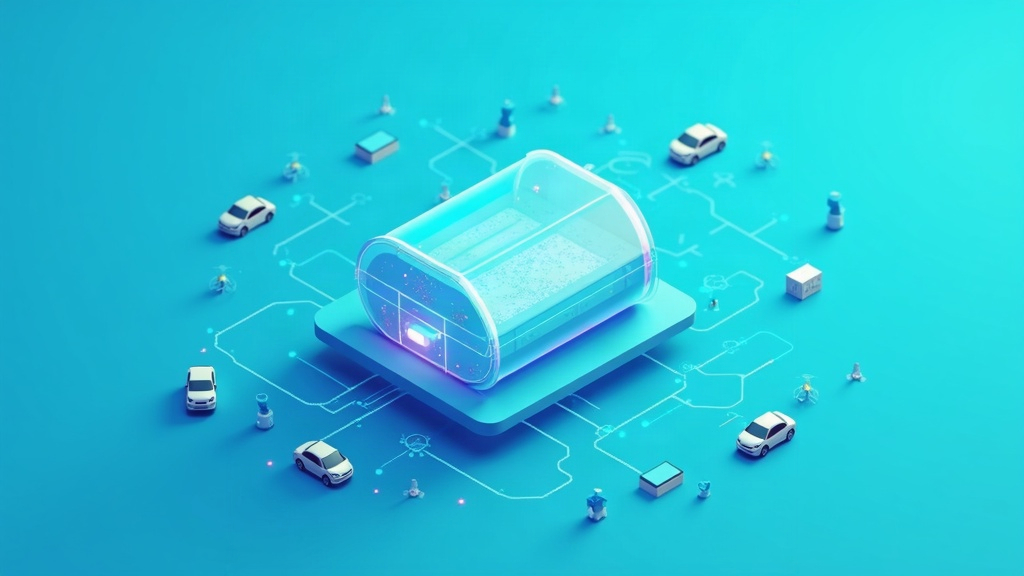
The solid-state battery makes a radical bet: replacing that liquid with a solid material, usually ceramic or crystalline. Simple on paper, extremely hard in practice. But the advantages are so great that half the tech world is obsessed with achieving it.
Why it is worth it
The first big advantage is safety. Without flammable liquid, the famous problem of batteries catching fire almost disappears. The second is energy density: in the same size, a solid-state battery can store considerably more, which translates into phones that last for days or electric cars with hundreds of extra kilometres of range.
And there is a third benefit, perhaps the most important: they charge in much less time. Some prototypes promise to go from 10% to 80% in under ten minutes, something that would completely change how we use electric cars and portable devices.
A long-distance race with giants inside
That is why car, phone and component manufacturers have been investing billions for years. Japan, South Korea, China and the United States are competing to get there first, and some brands are already announcing the first models for the end of the decade.
It is not all a bed of roses. Producing these materials at industrial scale is still expensive and complicated, and they still have to prove they can withstand thousands of charge cycles without losing quality. Experts agree that we will see the first solid-state batteries in small devices before we see them in cars.
The future charges in minutes
If everything goes as planned, in a few years we will stop looking at the battery percentage with anxiety. Recharging your phone or your car will become as fast and routine as filling the tank. The solid-state battery revolution will not make noise, but it will silently change how we consume energy every day.