
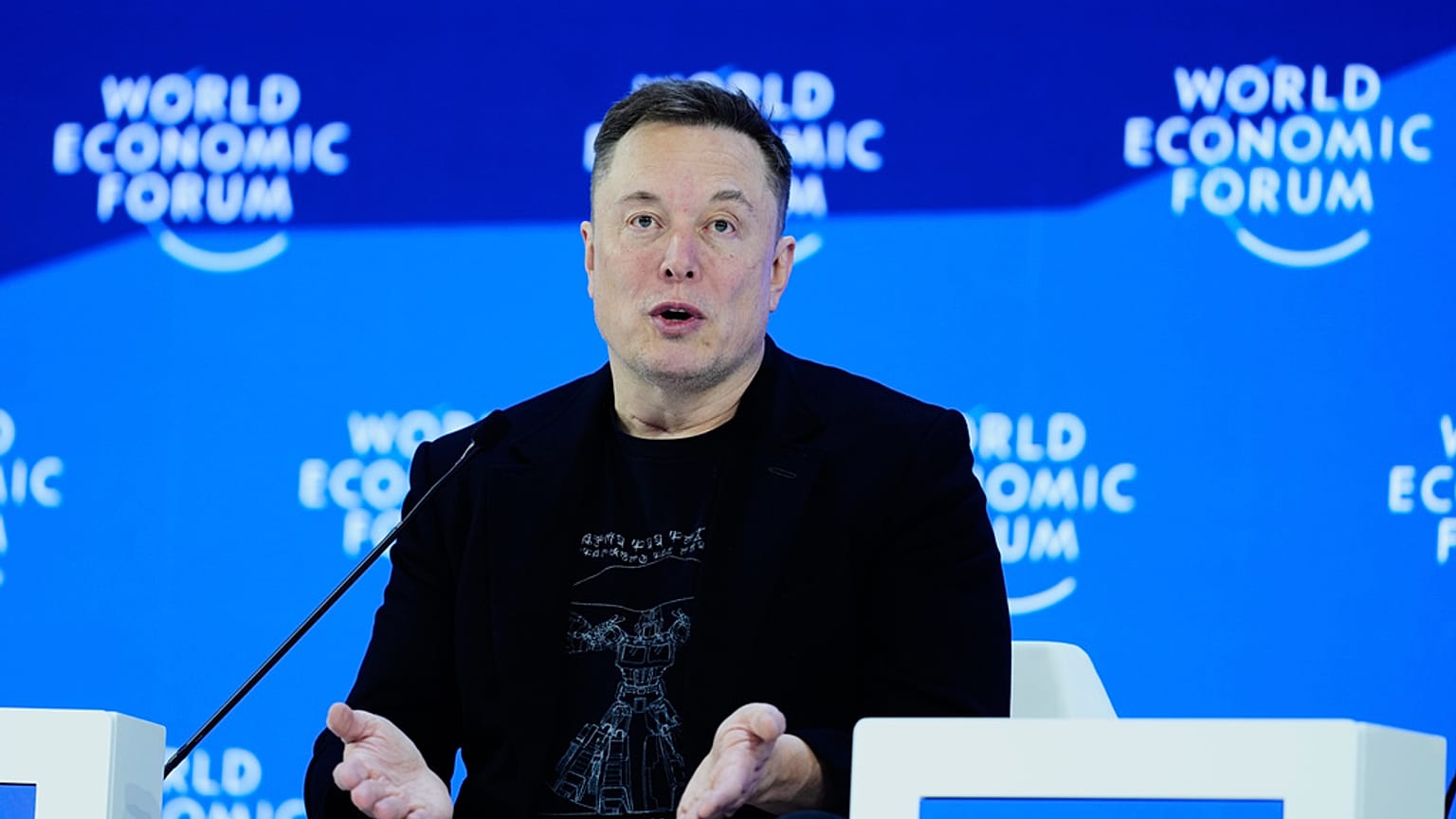
The World Economic Forum in Davos always produces headlines, but few as impactful as Elon Musk’s latest warning. The tech magnate has stated that artificial intelligence could become “smarter than any human being” by the end of 2026. A prediction that, coming from one of the most influential figures in AI development, has resonated strongly around the world.
Musk, known for his bold and often controversial visions of the future, didn’t stop there. He suggested that in the not-too-distant future, AI and robotics will advance to the point that work, as we know it, could become optional. In this scenario, the abundance generated by automation would mean that “money would no longer be a problem”, radically transforming the structure of our society.
This isn’t the first time Musk has expressed his concern and amazement at the rapid advance of artificial intelligence. However, setting such a concrete and near deadline for the surpassing of human intelligence has intensified the debate over the risks and benefits of this technology. While some see a utopian future of abundance and leisure, others warn of the possible consequences of creating an intelligence superior to our own without proper precautions.
Musk’s intervention at Davos serves as a stark reminder that the AI revolution is not a science-fiction fantasy, but an imminent reality that requires deep reflection and careful planning on the part of governments, companies, and society as a whole. The clock, according to Musk, is already ticking.