
Digital twins: when the factory has its own virtual reflection
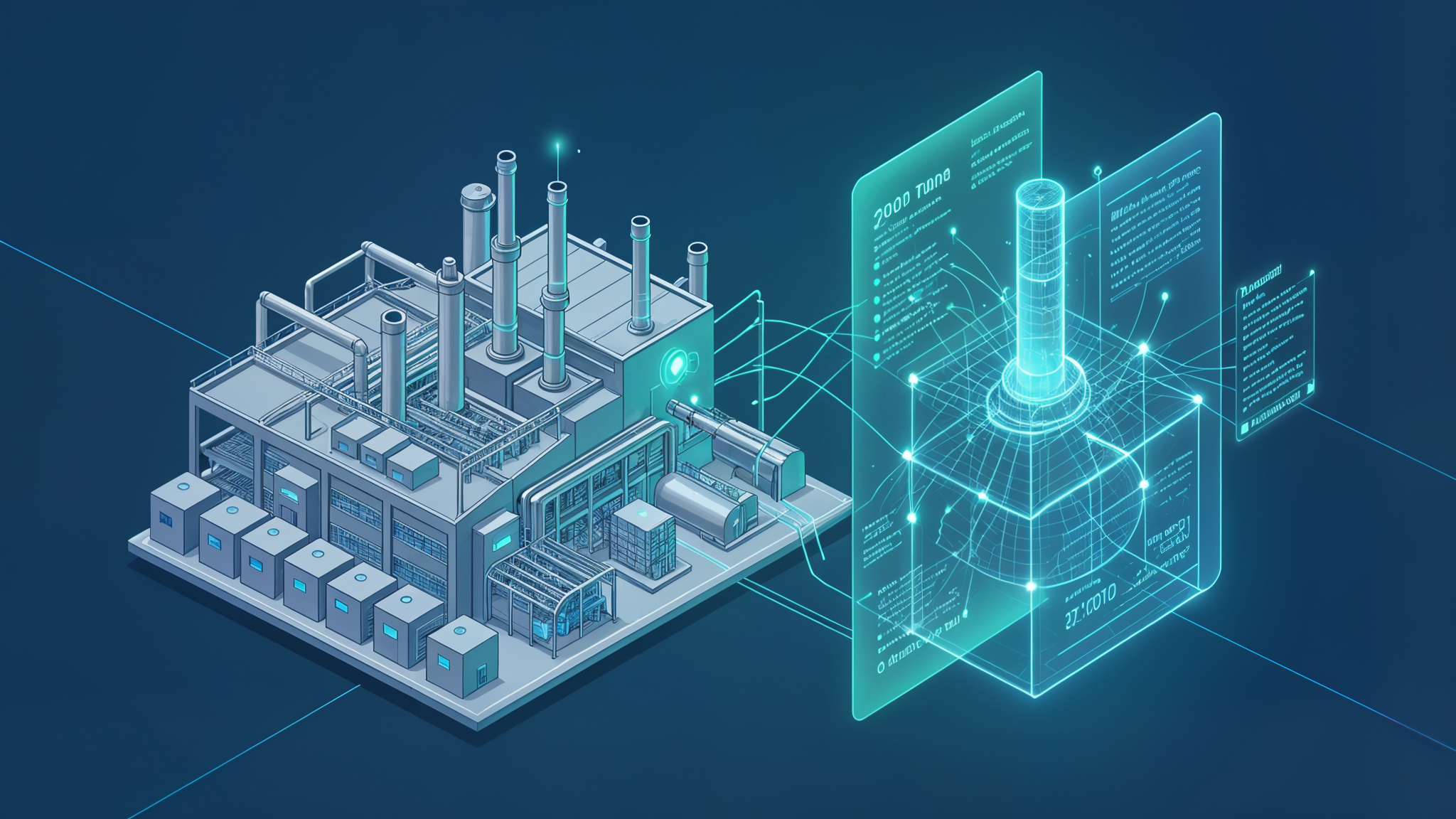
Imagine that every machine, every sensor and every process in a factory has its exact copy in the digital world. It is not a generic simulation: it is a clone that breathes at the same rhythm, that receives the same data in real time and that lets you test changes without touching a single screw. That is a digital twin.
The idea is not new. NASA used it in the 1960s to replicate the Apollo spacecraft on the ground and solve problems at a distance. What has changed is the scale. Today, the combination of cheap sensors, industrial 5G, edge computing and artificial intelligence models makes it possible to create twins of entire factories, power grids, cities or even human organs.
In practice, the digital twin feeds on real data —temperature, vibration, pressure, flow— and returns predictions. If a bearing starts to vibrate differently, the twin detects it days before it fails. Maintenance moves from reactive to predictive. Unexpected stoppages are avoided, equipment life is extended and energy is saved by adjusting parameters in real time.
Companies such as Siemens, General Electric or Nvidia have taken this into production. Nvidia’s Omniverse platform allows manufacturers like BMW to simulate complete assembly lines before building them. In energy, twins of wind farms optimize the orientation of each turbine according to the real wind. In healthcare, heart twins help plan complex surgeries.
But not everything is plug-and-play. A useful twin demands clean, standardized and governed data. Many plants have islands of automation that do not talk to each other. Integrating them requires software layers —the so-called “data fabrics”— that unify protocols and give context to raw information. Without that foundation, the twin is just a pretty 3D model with no brain.
The next frontier is generative AI applied to the twin. Instead of consulting control panels, an engineer will be able to ask in natural language: “What if I raise the line speed by 15%?” and the twin will simulate the scenario instantly, proposing adjustments in heating, cooling or logistics. The twin stops being a mirror and becomes a co-pilot.
Spain has relevant cases. Navantia uses twins in shipbuilding. Repsol applies them in refineries. Red Eléctrica monitors the transmission grid. And the PERTE for industrial digitalization injects funds so that SMEs can make the leap. The challenge is no longer technological: it is organizational. It requires teams that blend process knowledge, data and business.
The digital twin does not replace the physical factory. It makes it smarter, more resilient and more sustainable. In a world where the margin for error shrinks and climate pressure grows, having a virtual reflection where you can rehearse the future before it happens stops being a luxury and becomes a necessity.