
It may sound like science fiction, but it is already a reality: there are homes built with a giant printer that deposits layers of concrete, just like an inkjet printer on paper. 3D printing has stopped being a thing of prototypes and scale models to become a technique that promises to change the way houses are built.
In this article we explain what 3D printing construction is, how it works, what real advantages it has and what challenges still lie ahead before we see it in every neighborhood.
What printing a house is
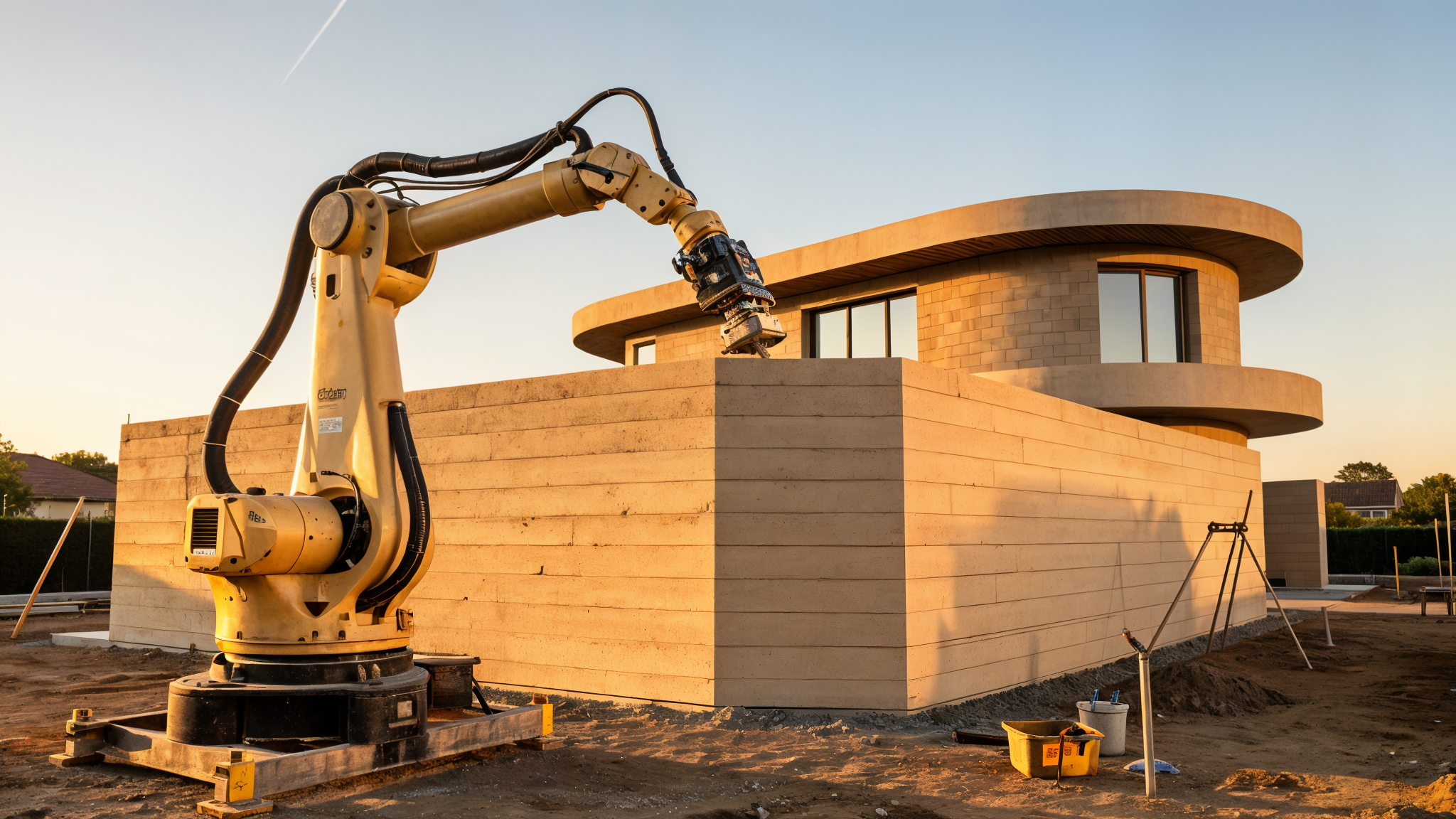
The idea is simple. Instead of building walls brick by brick, an enormous machine —which works like a printer but at house size— deposits layers of material through a robotic arm that moves along rails. That material is usually a special concrete mix that sets quickly and allows building walls with curves and shapes that are impossible with traditional methods.
The process is controlled by a computer: first the house is designed in 3D, the file is loaded into the machine and it “draws” the structure layer by layer, without the need for formwork or hundreds of workers.
How long it takes and how much it costs
The most striking thing is the speed. There are projects that have raised a complete home in less than two weeks, when conventional methods take months. In some cases, even multi-story buildings have been printed.
The savings are also felt in the pocket. By reducing labor and time, costs drop noticeably. In countries with housing crises, 3D printing is being considered as a tool to build social housing quickly and economically.
Less waste and more design freedom
Another great advantage is sustainability. By depositing only the necessary material, far less waste is generated than in a conventional construction site. In addition, local and even recycled materials can be reused, which reduces the carbon footprint of construction.
And we must not forget design. Since the machine is not limited to straight lines, it is possible to create curved facades, organic interiors and solutions adapted to each terrain with a freedom that until now was prohibitively expensive.
The challenges that still remain
Not everything is advantages. The technology still has pending issues. The materials need to improve their long-term resistance and comply with all construction regulations, something that varies a lot from country to country. Authorities are still updating the rules to allow this type of construction.
Nor is it a universal solution: today the structure of the home is mainly printed, but afterwards windows, the roof, plumbing and electrical installations still have to be fitted, which continue to require traditional work.
A future with many printed houses
Construction is one of the sectors slowest to adopt technology, and 3D printing is one of the bets to modernize it. There are already dozens of real projects in the United States, Europe, Asia and Latin America, from social housing to hotels and emergency shelters.
The road is long, but the direction is clear: within a few years, having a house printed instead of built with cranes and scaffolding will stop being a curiosity and become a common alternative. The question is no longer whether it will arrive, but how long we will wait to see it in our neighborhood.