

Email was designed in 1982 for a world built on trust: anyone could connect to a server and say “hello, I am writing from your-bank.com“. Four decades later, that sentence is still free to...

On 4 October 2021, Facebook, Instagram and WhatsApp vanished from the internet for nearly six hours. There was no attack, no power failure, no fire in a data centre. Their servers stayed up and their ...

There is an object that is manufactured by drawing with light and that costs more per unit of weight than gold: the chip in your pocket. Each of its transistors — now counted in the tens of billions —...

You plug in the cable, the phone starts charging and the screen says “fast charging, 67 W”. Nothing visible has happened, but in that instant a strictly rule-bound negotiation has taken pl...

You tap the card, the terminal beeps, and in under half a second it already knows whether that piece of plastic deserves its trust. No PIN, no signature and, in many cases, not even a call to the bank...

Every time your program reaches an if, the processor faces a problem it should not have: the answer to that question does not exist yet. The value that decides the branch may come from a memory read t...

It is half past three in the afternoon in Madrid and your laptop has just asked a server in Virginia what time it is. Twenty minutes have passed between the reply and the next one; by the time it fini...

One thread per connection does not scale The most common mental model of a server is simple: a connection arrives, a thread opens, it is served, it closes. That works with a hundred clients. With ten ...

Malloc does not call the kernel for every byte When a C or C++ program asks for memory with malloc(), most people picture the operating system handing out fresh pages every time. The truth is duller a...
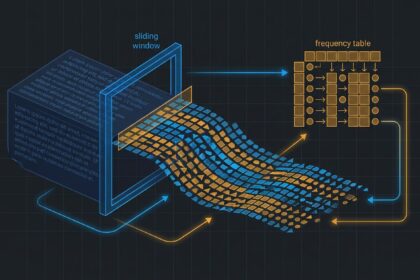
Your text file is 10 MB. You compress it and it is 2.5 MB. You decompress it and it is exactly the same file, bit for bit, without a single different letter. Nothing has been lost, and yet 7...

You have a folder on your desktop and, inside it, a file. The filesystem tells you it lives at logical address 4,812,003. You believe it. Your SSD does not. The moment that information reaches the dri...

You type a message, hit send, and the text shows up on someone else’s phone halfway around the world. In between it has travelled through servers you do not own, across networks someone may be r...

There is a line of code almost all of us have written at some point that looks completely harmless: preg_match('/^(\w+\s?)*$/', $text), or its JavaScript cousin /^([a-z]+\s?)+$/. With a ten-character ...

You open a website in Madrid and the packets reach a server in Virginia passing through a dozen networks owned by different companies that compete with each other and share no boss. There is no centra...

Two people type into the same paragraph at the same time, each from a different city, and neither loses what they wrote. Behind that everyday scene lies a fairly serious computer science problem: how ...
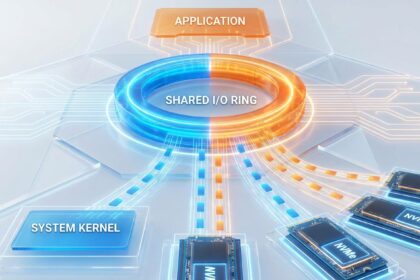
For decades, talking to a disk from a program meant one request after another: the process called into the kernel, the kernel did the work, the process waited and called again. Every one of those syst...

There is an idea that sounds like a contradiction in any modern database engine: to write fast, you must avoid modifying what is already written. LSM engines (short for Log-Structured Merge) take that...

There is a layer of software that has changed, over the last few years, the way Linux servers are observed and protected, and it almost never makes the headline: eBPF. Its starting idea is easy to sta...


For decades, a web connection leaned on an inseparable pair: TCP to open a reliable channel and HTTP to request and deliver resources. That scheme worked well until the web stopped being a collection ...

Every time you log into a web application, a small object with three sections decides whether your next request is yours or an impostor’s. It is called a JSON Web Token (JWT), and its success co...
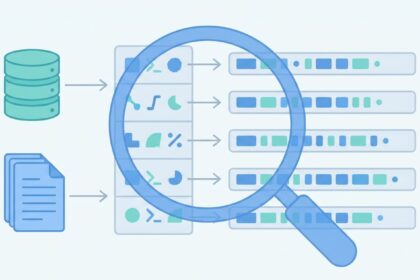
When you type a word in a search engine, millions of pages that contain it reappear within milliseconds. It is tempting to imagine that engine “reading” your documents on the fly and compa...

Every time you open an HTTPS page, the same little miracle repeats itself in a few milliseconds: two machines that have never met must agree on a shared secret while a third party listens to the whole...

A bank cannot charge the same payroll twice. An airline must not sell the last seat to two passengers at the same time. Currency exchange bets, shopping carts, like counters: behind all of these there...
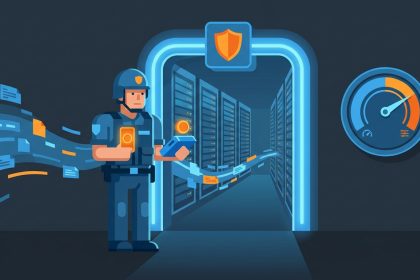
When you fire thousands of requests at an API in a single second, most people expect the server to answer every single one. A server that always answers, with no brakes, is designed to collapse. Befor...

Imagine you and another person edit the same document offline, on different devices. When you both get back online, the two copies must become one again. No referee, no locking, no lost edits. That ap...

A Java, Go or Python program does not free memory manually: it trusts a garbage collector (GC). Its job is to find the objects that are no longer in use and reclaim their space. The hard part is not f...

When you search on Google, the engine does not compare individual words: it compares meanings. Behind that ability sits a piece of software that has moved from the lab to production in just a few year...
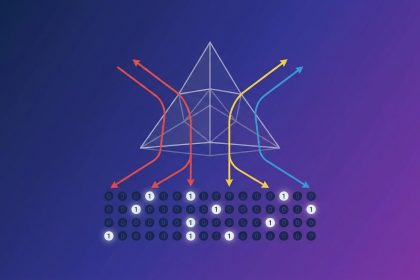
In a distributed system there is no “single queue” letting nodes find out what is happening. Each server only knows a handful of neighbors, and no central authority tells them who has just...

In a distributed system there is no “single queue” letting nodes find out what is happening. Each server only knows a handful of neighbors, and no central authority tells them who has just...