
Hello, dear audience! Marta at the keyboard.
Personal clouds emerge as a response to a growing concern about privacy and control over our data. Because let’s be honest, when we upload our photos, documents or videos to services like Google Drive, OneDrive or iCloud, we are entrusting potentially sensitive information to companies whose business model is based, in many cases, on analyzing data to show us advertising. It is like leaving your personal diaries at a friend’s house who, although he promises not to read them, makes a living writing gossip columns.
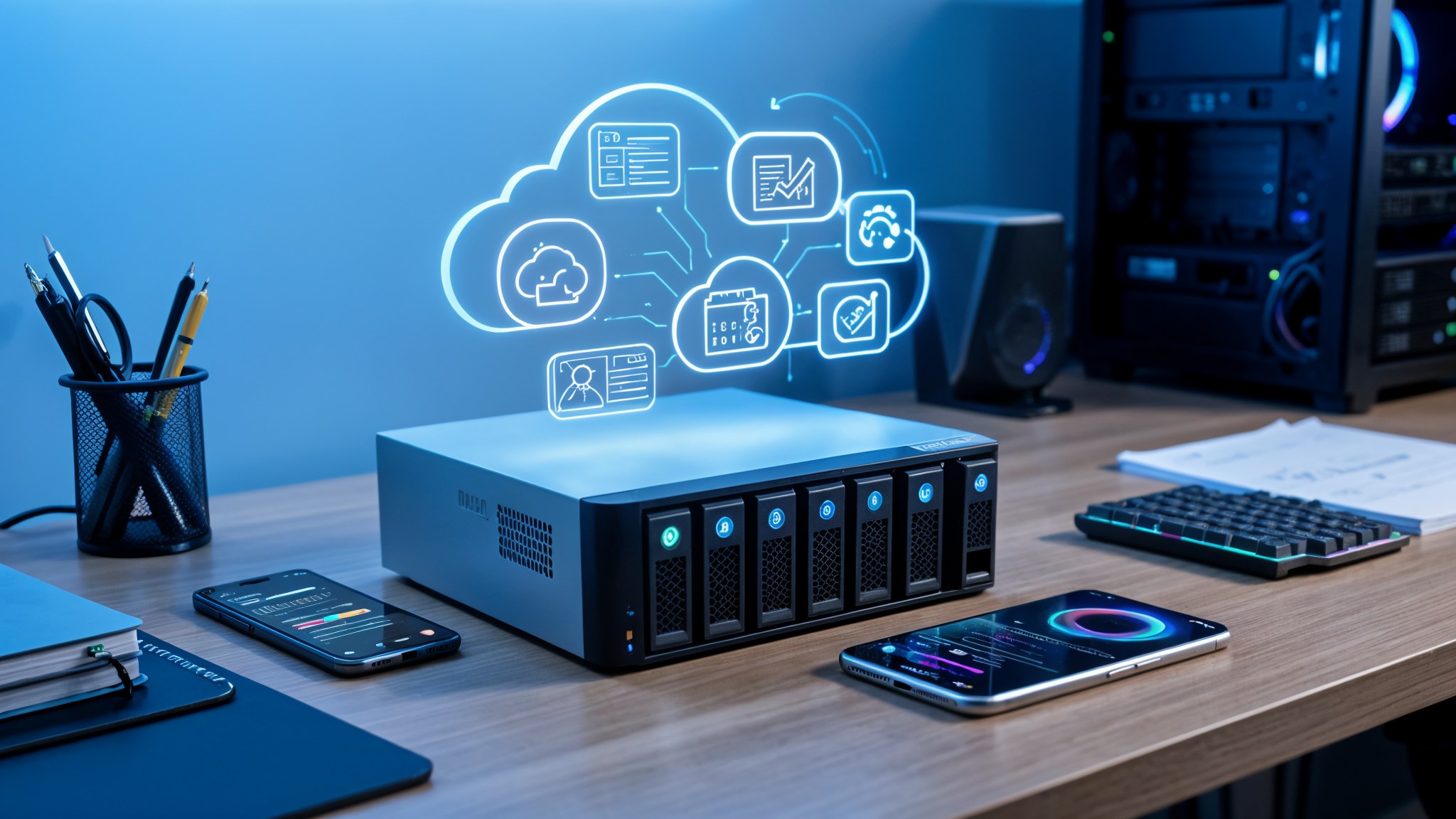
Solutions like Nextcloud, ownCloud or Seafile allow you to create your own cloud storage service using your hardware. You can install them on an old computer you have lying around the house, on a NAS (Network Attached Storage) or even on a Raspberry Pi, that tiny computer the size of a credit card. Once configured, they offer practically the same features as commercial services: file syncing between devices, mobile apps for access anywhere, file sharing with other users, and even collaborative document editing in some cases. It is like having your own restaurant at home instead of eating out: it takes more initial work, but then you can prepare the dishes exactly to your taste.
Privacy is, without a doubt, the great advantage of personal clouds. Your data is on your hardware, under your control, and nobody else has access to it unless you explicitly allow it. There are no algorithms analyzing your photos to identify products and show you related advertising, nor terms of service that change overnight granting the company more rights over your content. It is like the difference between keeping your valuables in a bank safety deposit box (where the bank has a master key) or in a safe in your own home.
Cost is another factor to consider. Commercial cloud services usually offer a limited amount of free storage and then charge monthly for additional space. With a personal cloud, the initial investment in hardware may be higher, but in the long run it can prove more economical, especially if you need a lot of space. In addition, you can expand capacity by adding more hard drives when you need them, without having to change plans or pay more each month. It is like comparing renting an apartment (with the limitations imposed by the landlord) versus buying it (greater initial investment but more freedom and potentially more economical in the long run).
However, not everything is a plus. Setting up and maintaining a personal cloud requires certain technical knowledge that not all users possess. Although the installation interfaces have improved a lot and there are numerous tutorials online, it is still more complex than simply signing up for a commercial service. It is like the difference between buying bread at the bakery or making it yourself: the result can be better, but you need to learn the recipe and spend time kneading.
Security is another crucial aspect. When you use services like Google Drive or Dropbox, teams of security experts work constantly to protect the infrastructure and your data. With a personal cloud, the responsibility for keeping the system updated, configuring the firewalls correctly and protecting against vulnerabilities falls on you. It is like being your own bodyguard: you can do a good job, but you do not have the training or resources of a professional security company.
Remote access can be another challenge. For your personal cloud to be accessible from outside your local network (for example, from your phone when you are out and about), you need to configure your router correctly and possibly use dynamic DNS services. Some residential internet providers do not offer fixed IPs or even block certain ports, which can complicate the setup. It is like having a wonderful house but with such a complex lock system that sometimes you yourself have trouble getting in.
Backups are fundamental in any storage system, but especially in a personal cloud. If your server fails or you suffer an incident such as a fire or a flood, you could lose all your data. That is why it is crucial to implement a backup system, ideally following the 3-2-1 rule: three copies of your data, on two different types of storage, with one copy outside your physical location. It is like having an evacuation plan for your data: you hope you never need it, but you will be glad you have it if the worst happens.
In conclusion, personal clouds offer an interesting alternative for those who value privacy, control over their data and do not fear facing a certain level of technical complexity. They are not the perfect solution for all users, but they represent an important step towards a more decentralized internet where individuals have more autonomy over their digital information. As with so many technology decisions, there is no single correct answer: each person must assess their needs, knowledge and priorities to choose the solution that best fits their particular case. See you next time, cloud friends!