

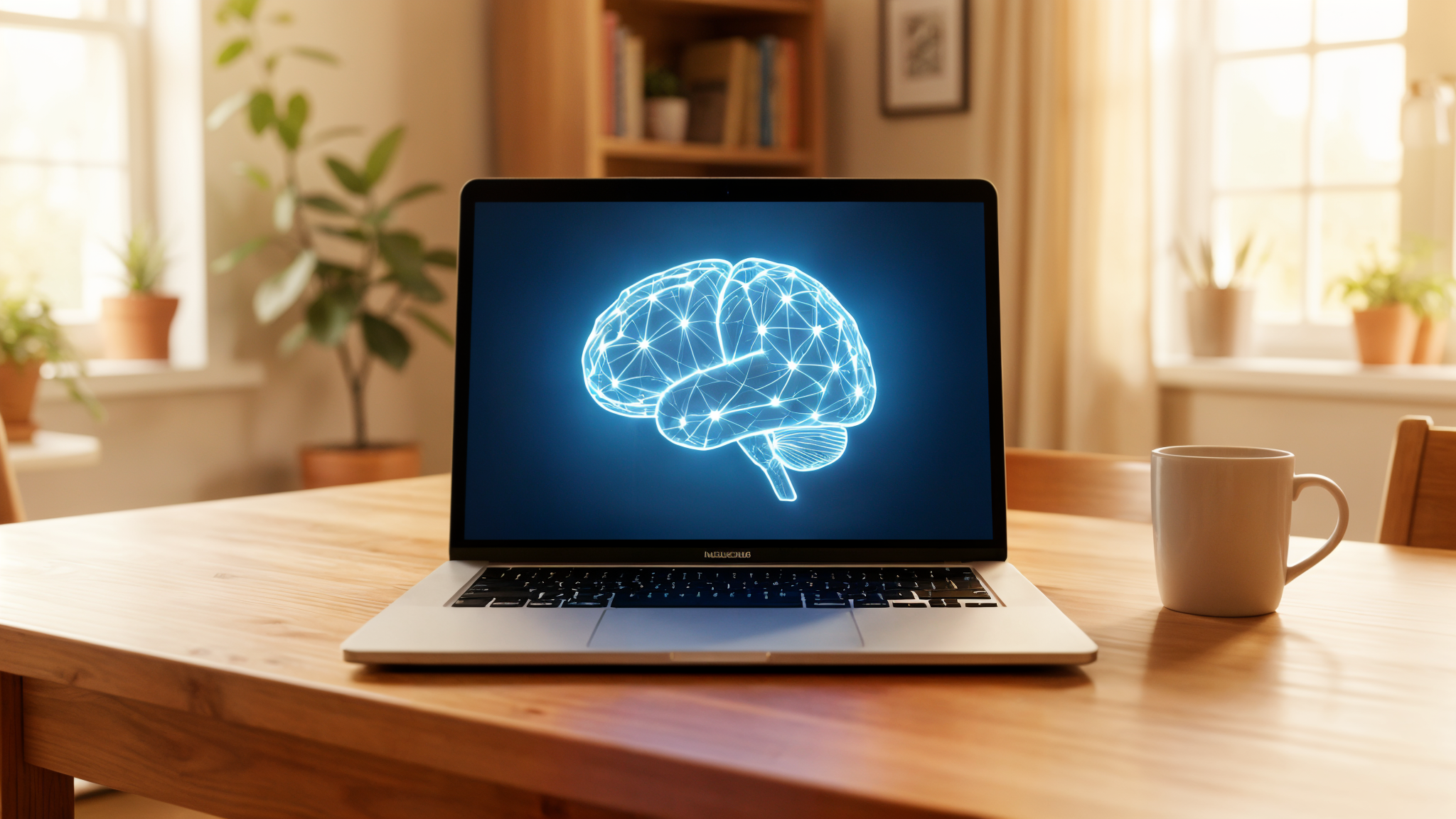
Meta launches an artificial intelligence that fits in your laptop
Until very recently, using the most powerful artificial intelligence was a big-business affair. You needed giant, extremely expensive computers full of fans. But that era is changing. On Monday 10 August, Meta (the company that owns Facebook and Instagram) presented a new artificial intelligence model that can run on a normal computer, even a laptop. In other words, the same technology that before needed an entire room can now run on your desk.
First, what is an artificial intelligence model?
Think of an artificial intelligence model as a very clever assistant that has read millions of books, web pages and conversations to learn. That assistant can answer questions, write texts, translate or solve problems. Until today, those assistants lived almost always on the servers of the big tech companies: huge machines located in warehouses where companies store their data.
Meta’s boss, Mark Zuckerberg, announced he wants to change that. His idea is that those assistants can also live on each person’s computer. And not only that: he announced that the company will leave the “parameters” of its latest model open. Parameters are like the instructions that determine how the artificial intelligence behaves: its internal rules. Opening them means that anyone with technical knowledge will be able to download them, look at them and modify them. It is like a famous chef giving you his recipe and letting you change it to your taste, instead of keeping it under lock and key.
Why is this such a big deal?
Most of Meta’s big rivals, such as OpenAI (creator of ChatGPT) or Anthropic, do just the opposite: they keep their models closed. That is, you can only use them over the internet, but you do not know how they work inside nor can you download them. Meta bets on the opposite option: giving away the instructions so anyone can use and improve them.
Zuckerberg explained it with these words: “Instead of centralizing superintelligence, we should distribute it broadly and give each person the ability to direct it.” In plain language: he does not want all intelligence to be kept in the hands of a few, but distributed so ordinary people can use and control it.
What is behind this decision?
There are several reasons. One is competition with China, which is advancing very fast in artificial intelligence. Zuckerberg thinks the United States cannot fall behind.
There is also a heated debate in the United States. Some politicians and experts believe this type of technology should be more controlled and restricted, in case it is used dangerously. In addition, many neighbours complain about “data centres”: those huge warehouses full of computers that consume a tremendous amount of electricity and make noise. If artificial intelligence runs on your own laptop, fewer of those giant warehouses would be needed.
What does this mean for you?
For an average person, this advance has two practical effects. The first: artificial intelligence will be easier to use without depending so much on the internet or on paying subscriptions to giant companies. The second, and perhaps the most important: more freedom. When the “brain” runs on your own machine, your questions and your data do not have to leave your home. Privacy means precisely that: that what you do stays with you.
Of course, this does not mean that tomorrow you will download a model yourself. Perhaps only technicians and developers will do it at first. But that technology is distributed is, almost always, good news for ordinary people. When something stops being hidden and comes within everyone’s reach, more ideas, more programs and more solutions are created.
Artificial intelligence is leaving the big computer warehouses to get closer to your home. And that, in the end, is good news for those who are not tech experts: the more distributed it is, the easier it will be for it to work in your favour.