
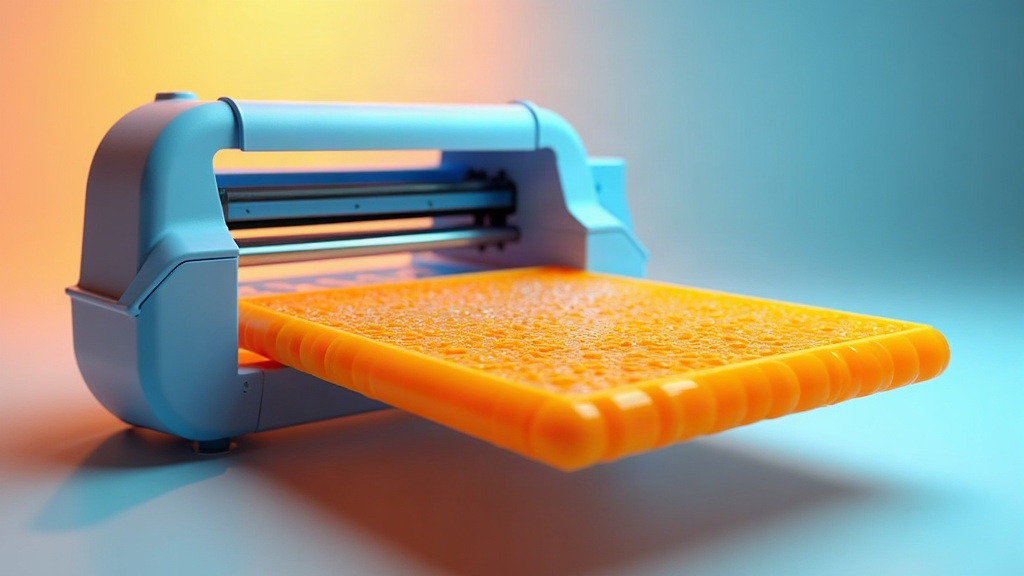
There is a machine capable of creating a spare part, a toy, a medical prosthesis or even a home. It does not manufacture it: it “prints” it, adding material layer by layer until it takes shape. It is 3D printing, a technology that has spent decades in laboratories and is now landing in our homes, hospitals and factories.
From digital to physical, in layers
The idea is simpler than it seems. Instead of carving a block or melting metal in a mould, the 3D printer draws the object in the air, millimetre by millimetre. A computer program splits the design into hundreds of flat layers and the printer deposits material on each of them until the piece is complete. It is like building a model with many superimposed sheets, but at full size.
The materials have also evolved. The most common is melted plastic, but parts are already being printed in resin, metal, ceramic and even concrete for building. Each technique has its advantages: some are faster, others stronger or more precise.
Prototypes in hours, not months
The great revolution of 3D printing was time. Before, designing a new part meant ordering expensive moulds and waiting weeks. Now, an engineer can draw a prototype in the morning and have it in their hands by the afternoon. That speeds up the design of everything: from a phone to an aircraft turbine.
That is why factories use it more and more, not only to test ideas, but to produce final parts in small quantities. When you only need a few hundred units, printing is usually cheaper and more flexible than setting up a traditional production line.
The printing that saves lives
Perhaps the most exciting field is medicine. Surgeons print exact replicas of organs to practise before operating. Dentists make custom aligners and crowns. And arm or leg prostheses are adapted to the patient without waiting months of manufacturing, at a much lower cost.
Research is even underway on printing living tissues: researchers seed cells onto a special “ink” to create structures that imitate real organs. There is still a way to go, but the foundations are already laid.
What about a house? That too
In several countries, homes have already been built with giant 3D printers that deposit layers of concrete. The promise is twofold: build faster and with less waste. A printed house can be erected in days and makes use of the material with a precision that traditional brick does not allow. For areas hit by disasters or with a shortage of housing, the idea is tempting.
Limits and future
3D printing is not a magic wand. Printing large objects is still slow and expensive, and the plastic used can end up in landfill if it is not recycled properly. In addition, quality depends a lot on the machine and the material: not everything that comes out of a printer is as strong as a part made by classical methods.
Even so, the trend is clear. Printers are cheaper, faster and more precise every year, and more and more professionals and homes have one. Manufacturing is ceasing to be a matter for big factories to move closer to whoever needs it. And the best part is that, in the future, that capability will be in any workshop, hospital or kitchen.