

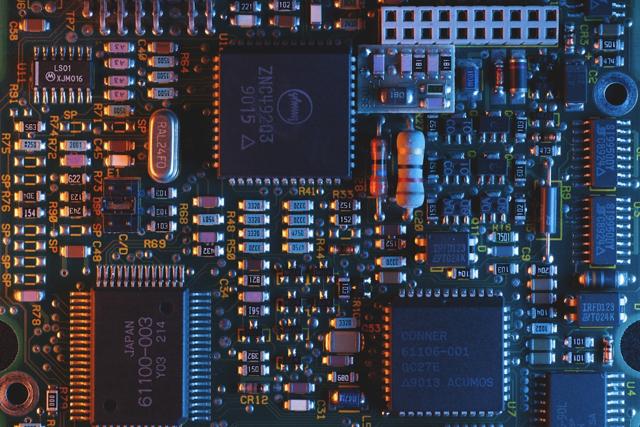
IBM, one of the oldest technology companies in the world, has announced an impressive breakthrough: it has created the first chip (the brain of electronic devices) with a size smaller than a nanometer. To give you an idea of how small that is, a nanometer is one billionth of a meter. This tiny chip is capable of housing 100 billion transistors —the miniature switches that make a chip work— in a space the size of a fingernail. That’s almost double the density of IBM’s previous record chip, the 2-nanometer one they presented in 2021.
To achieve this feat, IBM’s engineers have had to invent a new way of placing transistors. Until now, chips were basically flat, like a two-dimensional map. IBM has created a three-dimensional architecture called “nanostack” that stacks transistors vertically, as if it were a miniature multi-story building. This allows many more components to fit in the same space without needing to make them smaller one by one. The result is a chip that can be up to 50% faster or consume 70% less energy than today’s best chips.
And how does this affect you? Well, in practically everything you use that has a chip, which is almost all electronic devices: phones, computers, cars, appliances… The smaller and more efficient chips are, the more powerful your devices will be and the less battery they’ll use. IBM estimates that this technology could be ready to manufacture in about five years. Besides, this breakthrough proves that, although many thought it was no longer possible to make smaller chips, innovation is still possible.
— Marta, for inteligencia intermitente.