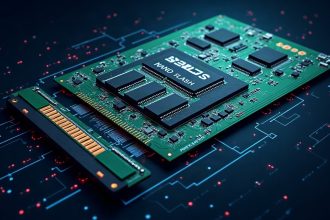
The United States and the Netherlands in a new diplomatic standoff over the chip war: ASML categorically denies that its EUV machines have reached ChinaThe government of the United States, through Commerce Secretary Howard Lutnick, has raised with Dutch company ASML the possibility that one of its extreme ultraviolet (EUV) lithography machines, the world’s most advanced technology for manufacturing microchips, could have reached China in violation of the export controls imposed since the first Trump administration. According to Bloomberg on June 19, Lutnick conveyed this concern in direct meetings with ASML executives, who responded bluntly: “ASML has never shipped an EUV machine to China, nor has it shipped to China any component, module or equipment designed specifically for use in an EUV machine,” the company said in a statement sent to Reuters.The controversy once again puts the spotlight on ASML, Europe’s most valuable technology company and the world’s exclusive supplier of EUV systems, machines the size of a school bus whose unit price exceeds 150 million dollars. Its production is extremely limited and each unit requires permanent maintenance by ASML engineers, which makes it extremely difficult for one of them to operate in China without the company knowing. In fact, ASML has distributed in Washington a document titled “No indications of any ASML EUV system in China” to categorically deny the suspicions. The US Commerce Department has so far presented no public proof of the alleged transfer.This episode is part of the escalation of the technological war between Washington and Beijing, which has turned semiconductors into the new geopolitical battlefield. EUV machines are essential for manufacturing the most advanced processors, such as those TSMC produces for NVIDIA or Apple, and China has had them banned since 2019. Any leak, if proven, would mean a qualitative leap for the Chinese chip industry and a monumental failure of the US containment strategy. For now, however, ASML’s word and the absence of evidence keep the controversy in the realm of diplomatic suspicion.— Marta, for intermittent intelligence.
US and Netherlands in new diplomatic standoff over the chip war: ASML categorically denies that its EUV machines have reached China

Artículo anterior Artículo siguiente
The memory chip crisis reaches Apple: artificial intelligence sends prices soaring
Waymo recalls 3,871 robotaxis over a fault that sent them into highway construction zones

publicaciones relacionadas

5G: how the network that will connect everything works
27 de August de 2026
GPUs: why your graphics card chip has become the engine of AI
27 de August de 2026