

Imagine ordering a pizza or a medicine and, instead of a delivery driver knocking on the door, you hear a buzz at the window. A small drone drops the order on your terrace and flies away. What a few years ago looked like a tech-fair experiment is now a reality growing in cities across the world, and little by little it is getting closer to our daily lives.
Delivery drones are not the same flying toys we use to record video. They are machines designed for a very specific job: carrying light packages, between one and five kilos, from one point to another through the air, without depending on traffic or traffic lights.
How a drone delivery works
The process is simpler than it seems. When you place an order, a distribution center prepares the package and places it on a drone loaded with a battery and its own navigation system. The device follows a programmed route, flies to your address and leaves the package with a cable or directly on the ground.
To know where to land, the drone uses GPS combined with sensors and, in many cases, with artificial intelligence that helps it detect obstacles such as trees, power lines or other birds. Some models do not even stop their flight: they release the package mid-descent and leave it hanging from a thread at door height.
Why so many people are interested
The main advantage is speed. Without traffic jams or traffic lights, a drone can cover several kilometers in a few minutes. In rural or hard-to-reach areas, where a delivery driver would take hours or simply cannot get there, the difference is even greater. That is why the first serious uses are proving to be the delivery of medicines and medical supplies.
It is also a bet on efficiency and the environment. Many of these devices run on electric batteries, so they do not burn fuel on every trip. And since they take up no road space, they ease the pressure of urban delivery during peak hours.
The challenges holding back expansion
It is not all flying and delivering. The main obstacle is regulation. Current rules greatly restrict where and at what altitude these devices can fly, especially in populated areas. Public authorities need to guarantee that they do not fall on people or interfere with other aircraft, and that takes time.
There is also safety. A drone must work well in rain, wind or heat, and must correctly distinguish between a balcony where it can leave the package and a window where it should not. Battery autonomy is still limited, and the noise, although increasingly lower, still bothers some neighbors.
An increasingly busy sky
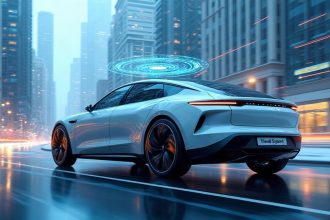
The future points to delivery not being the only user of the sky. Technology companies and car manufacturers are advancing in parallel with the so-called flying taxis, vehicles designed to carry people. In the background, all this aerial activity will require a sort of “urban air traffic control” that manages who flies, when and where, in a coordinated way.
No one expects drones to suddenly replace traditional delivery drivers. But it is reasonable to think that in the coming years we will see more and more packages take off and land at our feet. The next time you hear a buzz near home, it may not be a plane: it could be the new neighbor delivering.