


You open a laptop, kick off a build and for two minutes everything flies. Then, with nothing broken and no application closed, the fan roars and the machine seems to be driving with the handbrake on. ...

In a processor from twenty years ago, two cores touching the same variable fought over the memory bus and the hardware settled the tie by taking turns. Today a single chip can hold 96 or 128 cores, an...

More than 99% of traffic between continents does not travel by satellite: it runs through submarine fibre-optic cables. This is how light is multiplexed, amplified every 60 kilometres and repaired whe...
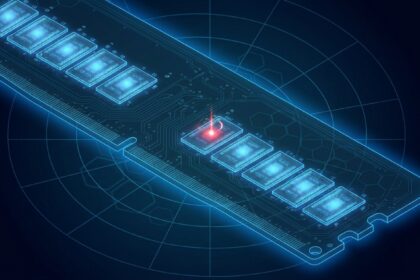
A computer’s memory is not a filing cabinet: it is a bank of microscopic capacitors that drain by themselves in milliseconds and have to be topped up constantly. In that back-and-forth of electr...

For forty years, choosing a processor has meant choosing a side: x86 if you wanted a PC or a server, ARM if you wanted a phone that did not run hot. Both architectures are proprietary, and to build a ...
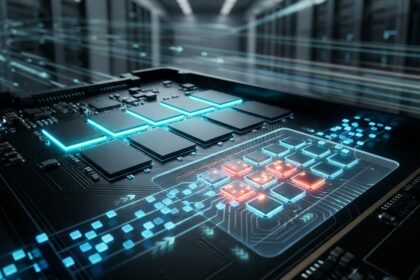
When you delete a file on an SSD, the operating system does something rather modest: it removes the directory entry and marks those filesystem blocks as free. The drive itself does not touch anything....

For nearly thirty years, changing carriers meant the same ritual: find a pin, open the tray and swap a piece of plastic with gold contacts. That piece was a SIM card (Subscriber Identity Module), and ...

Every time your phone draws the blue dot on the map, there is no satellite looking at you. What exists is four atomic clocks in orbit keeping their own account of time and a receiver in your pocket th...

The problem is not when, but since when The public-key cryptography that holds up the Internet —RSA and elliptic curves (ECC)— rests on two problems a classical computer cannot solve in reasonable tim...
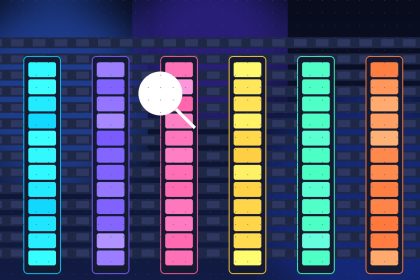
Two people edit the same document at the same time from two devices, offline, and when they finally reconnect the result is not a tangle of broken cells or a blunt “last writer wins”: both...

If you’ve ever wondered why Cassandra, RocksDB, LevelDB or HBase write at speeds a relational database can only dream of, the answer lives in a structure called the LSM-tree (Log-Structured Merg...
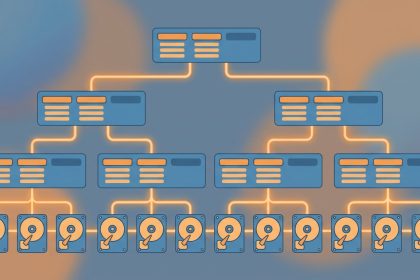
Every time your application runs a SELECT or UPDATE query, the database does not crawl its rows: it locates the record almost instantly. Most of that work is done by a data structure called the B-tree...