


Opening dozens of browser tabs without a thought for RAM, creating lists, dictionaries or objects and then forgetting about them: almost no programmer worries today about freeing memory manually. That...
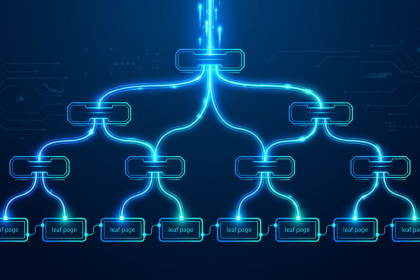
When you run an SQL query and the database answers in milliseconds, almost nobody stops to think that the heavy lifting is not done by the table: it is done by an auxiliary structure called an index. ...

When you open a page that runs WebAssembly (or Wasm), the browser is not executing JavaScript that somehow works magic: it is running a binary compiled beforehand, on another machine, inside a virtual...

That an AI assistant manages to “read” a PDF, query a database or run a command is not magic: it is a protocol. It is called the Model Context Protocol (MCP) and, since November 2024, it h...

You switch the computer off and its RAM forgets everything: that is the well-known part. What is told less often is that, even while the machine is running, that memory is “forgetting” non...

In 1994 the mathematician Peter Shor proved something uncomfortable: if we ever build a large enough quantum computer, the asymmetric encryption algorithms that protect the Internet today —RSA, ECDSA,...

If you are reading this page, it has very likely already travelled over HTTP/3. The newest version of the protocol that runs the web has been quietly rolling out for years, and it rides on a surprisin...

When you buy an SSD, the spec sheet promises “200 TB written” or “5 years of warranty”. What it does not say is that every one of its memory cells is born with a finite, counte...

Between your finger pressing the mouse and the pixel changing colour, roughly twenty milliseconds pass. You do not feel them, but in that instant the signal travels an entire chain of hardware and sof...

When your operator promises a “symmetric 1 Gbps fiber” connection, that promise rests on physics that has little to do with electricity. A fiber optic cable does not carry electrons: it ca...

When you save a password on a serious service, the platform does not store the password. It stores a fingerprint of it: a hash. That difference—between storing a secret and storing only the proof that...

When you type a URL and press Enter, your device does not connect straight to the website: every data packet passes through a filter that decides in fractions of a millisecond whether it should contin...