

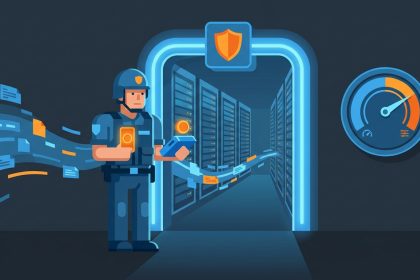
When you fire thousands of requests at an API in a single second, most people expect the server to answer every single one. A server that always answers, with no brakes, is designed to collapse. Befor...

Imagine you and another person edit the same document offline, on different devices. When you both get back online, the two copies must become one again. No referee, no locking, no lost edits. That ap...

A Java, Go or Python program does not free memory manually: it trusts a garbage collector (GC). Its job is to find the objects that are no longer in use and reclaim their space. The hard part is not f...

When you search on Google, the engine does not compare individual words: it compares meanings. Behind that ability sits a piece of software that has moved from the lab to production in just a few year...
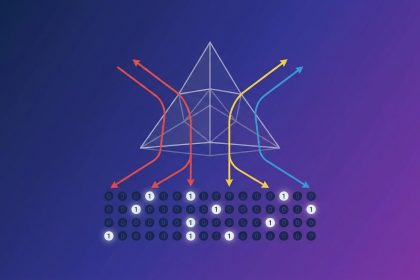
In a distributed system there is no “single queue” letting nodes find out what is happening. Each server only knows a handful of neighbors, and no central authority tells them who has just...

In a distributed system there is no “single queue” letting nodes find out what is happening. Each server only knows a handful of neighbors, and no central authority tells them who has just...

When you sign up for a service, the server should not store your password. It stores something that looks like gibberish: a cryptographic digest, or hash, of that password. The idea is a one-way proce...

Scaling a cache or a database to several servers seems easy: you split the keys across nodes and you are done. The problem arrives the day a node goes down, or you add a new one, and with the naive sp...

That your database answers in milliseconds is not magic: it is a tree called B+, a data structure that rearranges your rows so that the disk is read the absolute minimum. It is arguably the piece of s...

When an online shopping cart, an industrial sensor or your click history leaves a trace in almost any modern architecture, the message almost always ends up in the same place: an append-only log. That...

A request to a modern API is rarely answered by a single program. It enters through a load balancer, passes an authentication gateway, calls three or four microservices, each one queries its own datab...

A zero-knowledge proof is a cryptographic protocol with an almost paradoxical promise: proving to another party that a statement is true without revealing anything beyond the truth itself. This is not...