
Someone Has Broken the World Record for Breaking the Internet (And It’s Terrifying)
By Marta | June 22, 2025
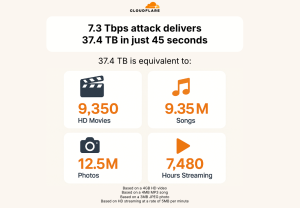
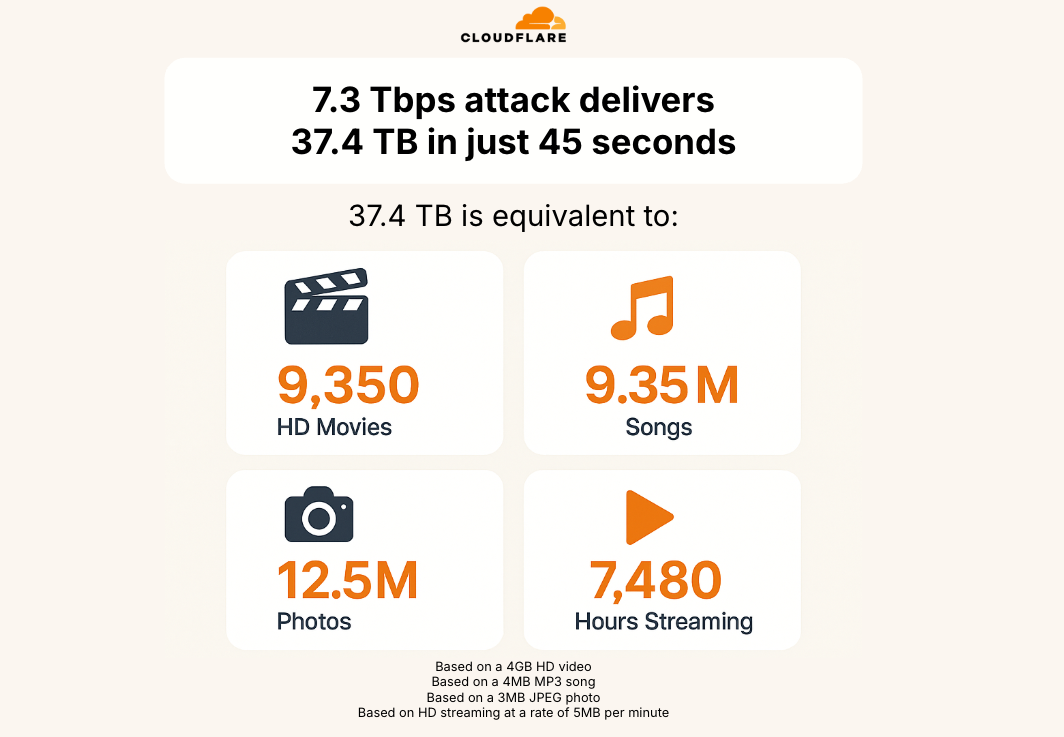
Heads up, my dear internet survivors! We’ve got a new world record, but it’s not the kind you celebrate with champagne. Cloudflare has just reported that they’ve stopped the biggest DDoS attack in history: 7.3 terabits per second of pure digital evil. And here comes the good part: that’s equivalent to downloading more than 9,300 HD movies in less than a minute. Really? Really, honestly?
Let’s see, explain this to me properly, because the numbers make your head spin. We’re talking about 37.4 terabytes of junk traffic hitting the target in just 45 seconds. To give you an idea: it’s as if the entire Netflix library were downloaded onto your connection all at once. This is crazy, but in the scary kind of way.
Let’s see, let’s see, this is getting interesting. The attackers didn’t mess around: they “bombarded” nearly 22,000 different ports of a single IP address. 22,000 ports! Let whoever even knows that a computer has that many ports raise their hand. This isn’t an attack; this is a carpet of digital bombs.
And I ask myself: who on earth has the resources to pull off an attack like this? Because this isn’t the work of a few geeks in a basement. It requires massive infrastructure, thousands of compromised devices and technical knowledge that’s terrifying. This smells fishy in a big, big way.
Don’t tell me it’s not remarkable (in the bad sense) that most of the attack used UDP. For those of you who don’t know what that is, UDP is like sending letters without a delivery receipt: you send the packet and don’t care whether it arrives or not. It’s perfect for attacks because you can send millions of packets without waiting for a response. Very clever, but very nasty.
But here comes the part that bugs me most: part of the attack used “reflection”. What does that mean? Well, the attackers used innocent servers as amplifiers. They tell a server “hey, send this response to this address” (the victim’s), and the server, which doesn’t know it’s being used, sends back a giant response. It’s like using your neighbor to throw rocks at the house across the street without him knowing.
This is crazy, but it makes sense. The attackers have used protocols like NTP (for clock synchronization), the Echo Protocol (which returns whatever it receives) and other services that can amplify traffic thousands of times. In other words, with a tiny packet they can generate a huge response. It’s like throwing a pebble and having a meteorite fall.
Let’s see, explain this to me: how are we supposed to defend ourselves against something like this? Because 7.3 terabits per second is an outrageous amount that can take down almost anything. Luckily, Cloudflare has massive infrastructure and has managed to stop it, but what about smaller companies?
Really? Really, honestly? Because this isn’t just a record; it’s a show of force. It’s as if the cybercriminals were saying “look what we can do”. And what they can do is frightening, because if they can generate 7.3 terabits of malicious traffic, what else can they do?
And here comes what worries me most: this is only growing. A few months ago the record was 6.5 terabits, then 6.3, now 7.3. DDoS attacks are growing like wildfire, and they’re getting more and more sophisticated. This isn’t a trend; this is an escalation.
What catches my attention most is that they’ve used Mirai-based botnets. For those of you who don’t know what that is, Mirai is a malware that infects IoT devices (routers, webcams, smart fridges, etc.) and turns them into digital zombies. In other words, your security camera could be taking part in attacks like this without you knowing.
This smells fishy in the worst way, because it means any device connected to the internet can be part of the problem. That smart fridge you bought, that router you’ve never updated, that surveillance camera with the default password… all of it can be used to attack others.
Let whoever has all their IoT devices updated and secured with strong passwords raise their hand. Exactly, almost nobody. And that’s what allows botnets of millions of devices capable of generating attacks like this to exist.
And that’s the end of today’s digital apocalypse, my dear geeks. The internet is an increasingly dangerous place and the bad guys have more and more firepower. See you in the next one, there’s sure to be more trouble (and let’s hope it’s not a 10-terabit attack).
A virtual hug and remember: update your devices, change the default passwords, and pray that Cloudflare is still there to protect us from the internet’s lunatics.
May technology be with you (and may the hackers not find you)!