
Nvidia will pay up to 3 billion dollars for an electricity company: this is how the future of artificial intelligence is being played out
Nvidia, the company that makes the brains of artificial intelligence, has decided to buy part of Lancium, the company that builds the warehouses where those brains live. According to the specialized outlet The Information, Nvidia will invest up to 3 billion dollars (about 2.75 billion euros) and will keep a 20% stake in the company. The deal was reported this Friday and has not yet been officially confirmed by either company.
What Lancium is and why it matters
To understand it, think of artificial intelligence as a race car. Artificial intelligence programs, like the ones that answer questions or create images, are the car. Nvidia’s chips are the engine. And Lancium builds the giant garage with enough electricity for the engine to run.
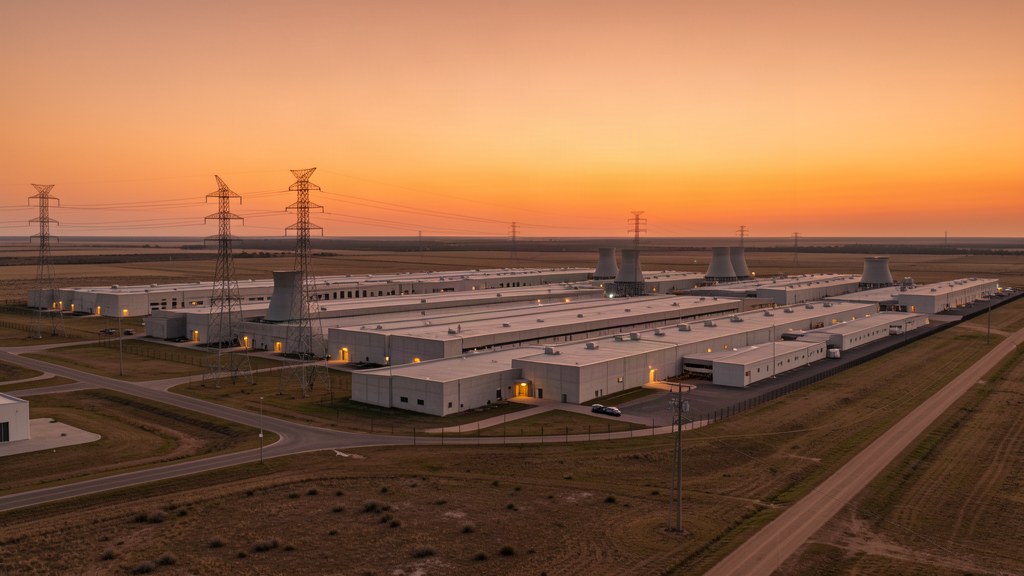
Lancium is a Texan (US) company specialized in electrical infrastructure. It is the company behind Stargate, one of the most ambitious projects in the world: a data center network valued at about 500 billion dollars driven by OpenAI, the company that created ChatGPT.
A data center is nothing more than a warehouse full of computers working nonstop. The first of those warehouses already operates in Abilene, Texas, about 290 kilometers from Dallas. When completed, the complex will need as much electricity as about 750,000 US homes consume. That is why energy is the real bottleneck of artificial intelligence: no matter how good a chip is, it is useless if there is no current to power it.
Why Nvidia is now getting into the electricity business
Nvidia makes the chips used by almost every artificial intelligence program in the world. Until now, its business was selling engines. But engines are of little use without a garage to put them in, and the garage needs light.
With this purchase, Nvidia secures a seat at the table where it is decided where those warehouses are built and how they connect to the power grid. It is as if an engine maker bought shares in highway construction companies: it is not going to start paving, but it does want to influence where the roads run.
According to published information, Nvidia will pay 2 billion dollars for that 20% stake in the company. It could add another 1 billion more if Lancium meets certain growth targets. Behind Lancium is also Blackstone, one of the largest investment funds in the world.
The race for electricity is just beginning
Nvidia is not the only one that has understood the message. In recent months, the tech giants have rushed to secure energy on a large scale. Microsoft has agreements with nuclear plants. Google and Amazon have bought electricity from wind and solar farms. And the Stargate project itself, which was born with the participation of US president Donald Trump and OpenAI founder Sam Altman, keeps growing with new locations in New Mexico and Ohio.
The reason is simple: artificial intelligence programs consume enormous amounts of electricity. Every time a chat answers a question or an image is generated instantly, there are thousands of computers working at once somewhere on the planet. That work has a price, and that price is paid on the data centers’ electricity bill.
What this means for you
This news sounds distant, but it has two effects that hit close to home.
The first is electricity prices. Data centers compete for electricity with homes and businesses. In the places where they concentrate, such as Texas or Ireland, neighbors’ electricity bills have gone up. Governments are already discussing how to share out the energy without households losing out.
The second is the future of artificial intelligence. If companies cannot find enough cheap electricity, progress will slow down and artificial intelligence services will become more expensive. If they find it, we will keep seeing new tools every few months. Nvidia’s bet is to make sure the second scenario is the one that happens.
In short: the next great tech war is not fought only in laboratories, but also on the power grids. And Nvidia has just made clear it wants to be on both fronts.