
Shopping online is becoming more and more dangerous: fake stores are multiplying in Spain
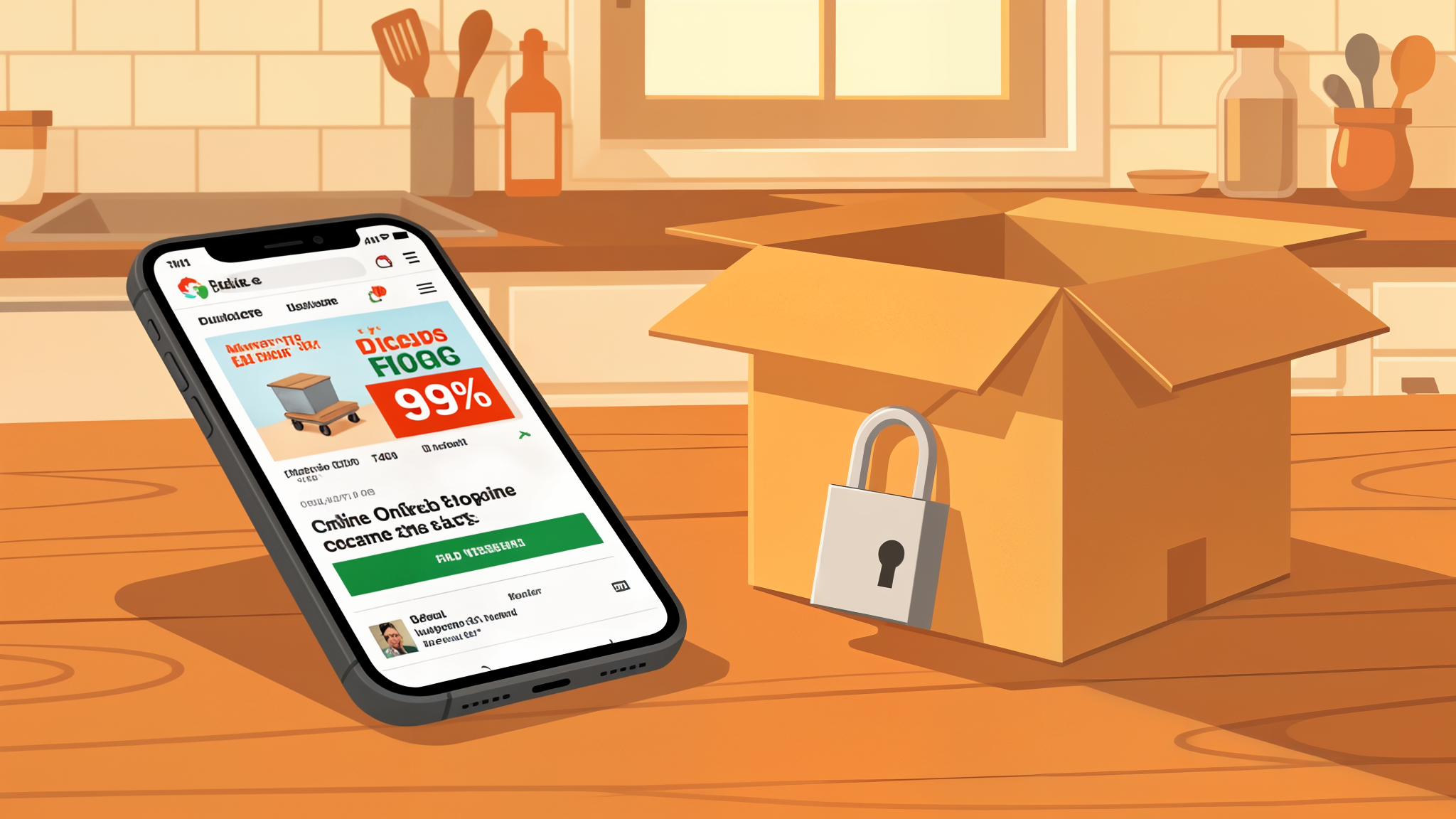
Finding a bargain online is a joy. But there are more and more people who, when paying, are left without the product and without the money. A new security report warns that scams involving fake online stores are growing at full speed in Spain. And the worst thing is that many times you do not even notice the deception until it is already too late.
What exactly is a fake online store?
A fake online store is a page that looks like a real store, but is not. They usually offer expensive products at prices too good to be true: a latest-generation mobile for half its price, heavily discounted brand-name trainers, a tablet at bargain price.
Let us give a simple example: imagine you see a coat that costs 200 euros in the shops and on that website they sell it for 40. It seems like an opportunity. You pay with your card, you get a confirmation email… and you never receive the parcel. When you try to complain, the page no longer exists or nobody answers. The money is gone and the product never arrived.
It is like when someone offers you a jewel on the street at a ridiculous price: it smells too good to be true. And most of the time, it is.
How much is the problem growing?
The security company Gen, which is behind well-known brands like Norton, has published a report on the threats we saw on the internet during the first half of 2026. The figures on fake stores jump out.
In those six months, more than 114 million scam attempts in online stores were blocked in the Europe area alone. That is an increase of more than one hundred per cent compared with before. In Spain, scams involving fake stores grew by 81%.
But fake stores are not the only thing. The report also warns of other scams that are rising very fast:
Criminals now pretend to be your family
Deceptions that impersonate a relative — a son, a grandson, a niece who “is in trouble and needs money right now” — rose by more than 450%. Whoever calls or writes is not your relative, but a scammer who has obtained their information.
They also pretend to be the Government
Another very trendy trap: messages or calls in which someone claims to be from the tax office, the social security or a public body. Scams that impersonate institutions grew by almost 390%. People trust the Government, and that is exactly what criminals take advantage of.
The fake support technician is still active
More than 20 million attempts of the “computer technician” scam were also blocked, the one where they call you saying your computer has a virus and ask you to let them fix it remotely.
How can you protect yourself?
You do not need to be an expert to dodge most of these deceptions. A few simple reflexes are enough:
Distrust impossible prices. If something costs much less than in all the other shops, think about why. Nobody gives money away.
Look closely at the website address. Fake pages usually have strange addresses or with mistakes (an extra letter, a missing hyphen). Before paying, check that the address is correct.
Look for other people’s reviews. If the store is new and there are no reviews, be careful. Ghost stores usually appear and disappear within a few weeks.
Pay with protected methods. If your bank or card offers a secure purchase system that asks you to confirm with a code, use it. That makes it easier to complain if something goes wrong.
Do not give data when they call you. Neither your bank, nor the tax office, nor your real family will ever ask you for a secret code by phone if you are the one who hangs up first.
When in doubt, do not pay. If something does not fit, even if it is just a feeling, wait. It is better to lose a fake bargain than your real money.
A rule that sums it all up
Scammers no longer need complicated technical tricks. The most powerful weapon they have is trust: we trust a nice-looking store, a message from a relative, someone who claims to be from the Government. That is why the best vaccine against this type of deception is the same as always: stop, think and do not be in a hurry. If something feels too good, too urgent or too strange, take a minute before giving your data or paying. That minute can save you a big upset.
Because in the end, on the internet and in life, those who do not trust do not get lost. But those who trust everything end up paying dearly for it.