

A California city loses its 911 emergency phone service to a cyberattack
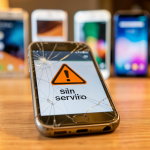
Imagine you have an emergency. You urgently need an ambulance, the police or the fire brigade. You dial the emergency number and… nobody answers. That is exactly what has happened in a small city in the United States. Computer criminals, the so-called hackers, attacked their computers and took down the 911 system for a while, the number used to ask for help in case of danger.
The city is called Suisun City and it is in California, in the west of the United States. It has about 30,000 inhabitants. That is, roughly the population of a medium-sized Spanish town. On Friday, its officials detected the intrusion into the systems. On Saturday, the city council declared a state of emergency. It is a serious measure: it means the situation is grave and the authorities can make urgent decisions to protect the residents.
What a cyberattack is, explained simply
To understand it: a computer is like a house with doors and windows. Cybercriminals look for a window that is not properly closed to sneak in. In this case, they used a malicious program, a malware. It is nothing more than a program designed to do harm, just as there are medicines that heal but also poisons that kill. The program got into the city council’s computers and started causing problems.
When this happens, security experts have a first golden rule: cut the power. It is like when there is a fire at home and the first thing you do is turn off the gas valve. The authorities disconnected the city’s entire computer network. That cut off the criminals’ access, but it also left many things without service for a while.
The most serious part: the emergency phone line
The scariest thing about this case is that the attack affected the 911 number, the one everyone in the United States dials to ask for help. The police and fire brigade communications were also malfunctioning. In other words, exactly what you need when a disaster happens.
The city solved it by temporarily moving emergency response to a dispatch centre elsewhere, in Solano County. It is like if a town’s emergency phone stopped working and calls had to be handled from the province’s capital until it gets fixed.
The authorities also switched off the network to protect the evidence. When there is a robbery in a house, the police do not want anyone to touch anything so they can find fingerprints. Well, same here: the investigators want to preserve the digital traces the criminals left so they can identify them. The famous FBI, the United States federal police, has started investigating who is behind it.
Why you should worry
You are probably thinking: “That happens in the United States, it does not affect me.” But the truth is that this type of attack affects us all, even here, for three reasons.
First: public services use computers all over the world. Hospitals, town councils, the police. If their information is stolen or their systems are blocked, citizens are left without services we take for granted.
Second: this kind of criminal does not distinguish between borders. Malicious programs travel over the internet, and the internet has no passport.
Third: it teaches us how important it is to update your programs. An update is like a vaccine for the computer: it fixes the holes the criminals could slip through. The longer we delay getting the vaccine, the more time attackers have to get in.
What you can do
You do not need to be an expert to be more protected. A few simple things help a lot:
- Always update your programs when you are asked to. It is the vaccine we were talking about.
- Do not click on links that arrive strangely by email or message.
- Use different passwords for each important service. As if every door in your house had a different key.
What happened in Suisun City ended well: nobody was injured and they managed to restore a temporary emergency service. But it serves as a warning. Our most important services, even the ones that save lives, depend more and more on computers. And protecting those computers is everyone’s business: governments, companies and also each of us, when we update our devices and distrust what we do not know.