
For decades, being able to control a computer with your mind was the territory of science fiction. Today it is no longer a distant promise: brain-computer interfaces, known by their English acronym BCI, are leaving the laboratories to become real technology with which tests are already being carried out on people.
What exactly a brain-computer interface is
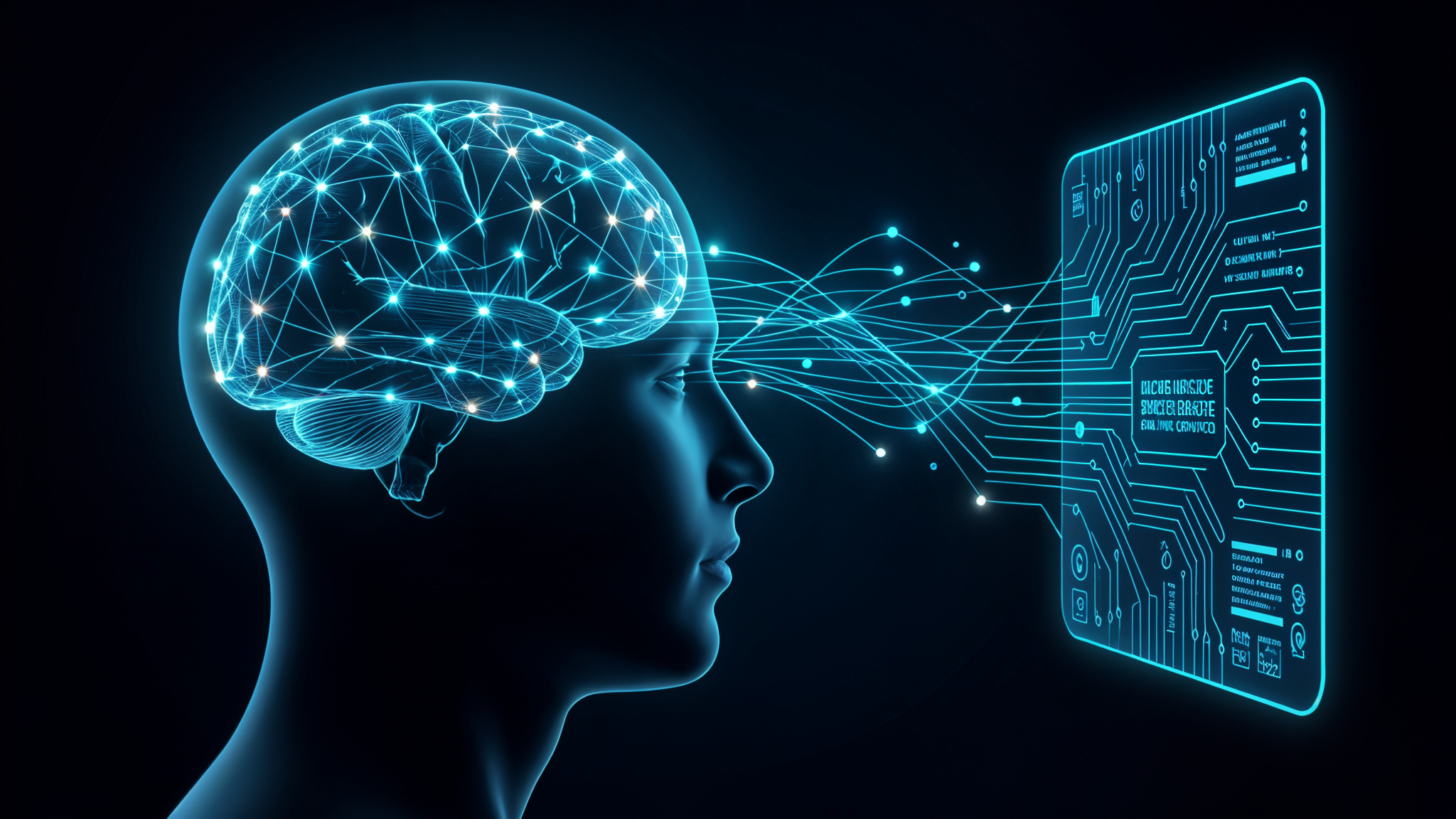
A BCI is a system that translates the electrical activity of our brain into commands that a machine can understand. Instead of writing, clicking or moving a mouse, the person “thinks” the action and the device executes it. It is like a direct bridge between our neurons and a computer, without going through the muscles.
There are two big families. Non-invasive ones use helmets or caps with sensors that read brain activity from outside the skull, something like an electroencephalogram. They are safer and more comfortable, but the signal is weaker. Invasive ones implant small electrodes inside the brain or on its surface, achieving a much more precise reading in exchange for requiring surgery.
What it is really for
The first major use is medical, and there the technology is most advanced. People with severe paralysis or neurodegenerative diseases such as amyotrophic lateral sclerosis (ALS) have managed to move a cursor on a screen, write messages or operate a robotic arm solely with their thoughts. For someone who has lost mobility or speech, this is not a luxury: it is a way to communicate with the world again.
Much more natural prosthetic control, recovery after a stroke and the treatment of certain neurological disorders are also being explored. And on the horizon appear less medical uses, such as the possibility of writing or operating the phone without touching it, which several companies are already studying as future everyday functions.
The new tech race
The interest of the big companies has boosted research. The most well-known company is Neuralink, founded by Elon Musk, which has managed to get a person with the implanted device to play chess or interact with a computer only with their mind. But it is not alone: there are technology firms, neuroscience companies and research centres from around the world competing to be the first to offer reliable and safe solutions.
The pace is dizzying. What a few years ago required thick cables and huge equipment increasingly fits into smaller devices, with wireless connection and increasingly cleaner readings.
The challenges that remain ahead
There are important obstacles left. The first is precision: understanding exactly which thought a person wants to execute is still difficult, and brain signals change from one person to another. The second is the safety and durability of the implants, which must work for years without causing rejection. And the third is ethical: if a device can read certain patterns of our brain activity, who guarantees that that data is private? That is why “neurorights” are already being discussed, specific rules to protect the information that comes out of our brain.
A future that has already begun
We are not all going to have a chip in our heads tomorrow, nor do we need to. But the direction is clear: the human brain and machines are getting closer than ever. For thousands of people with disabilities, that closeness already means a more autonomous life. For the rest, it is the beginning of a new way of understanding the relationship between our mind and technology.
The truth is that the fiction of being able to operate a computer “with the mind” has become a technology with its own name, million-dollar investment and real results. And the best part is that the most impressive thing about this story is still to come.