
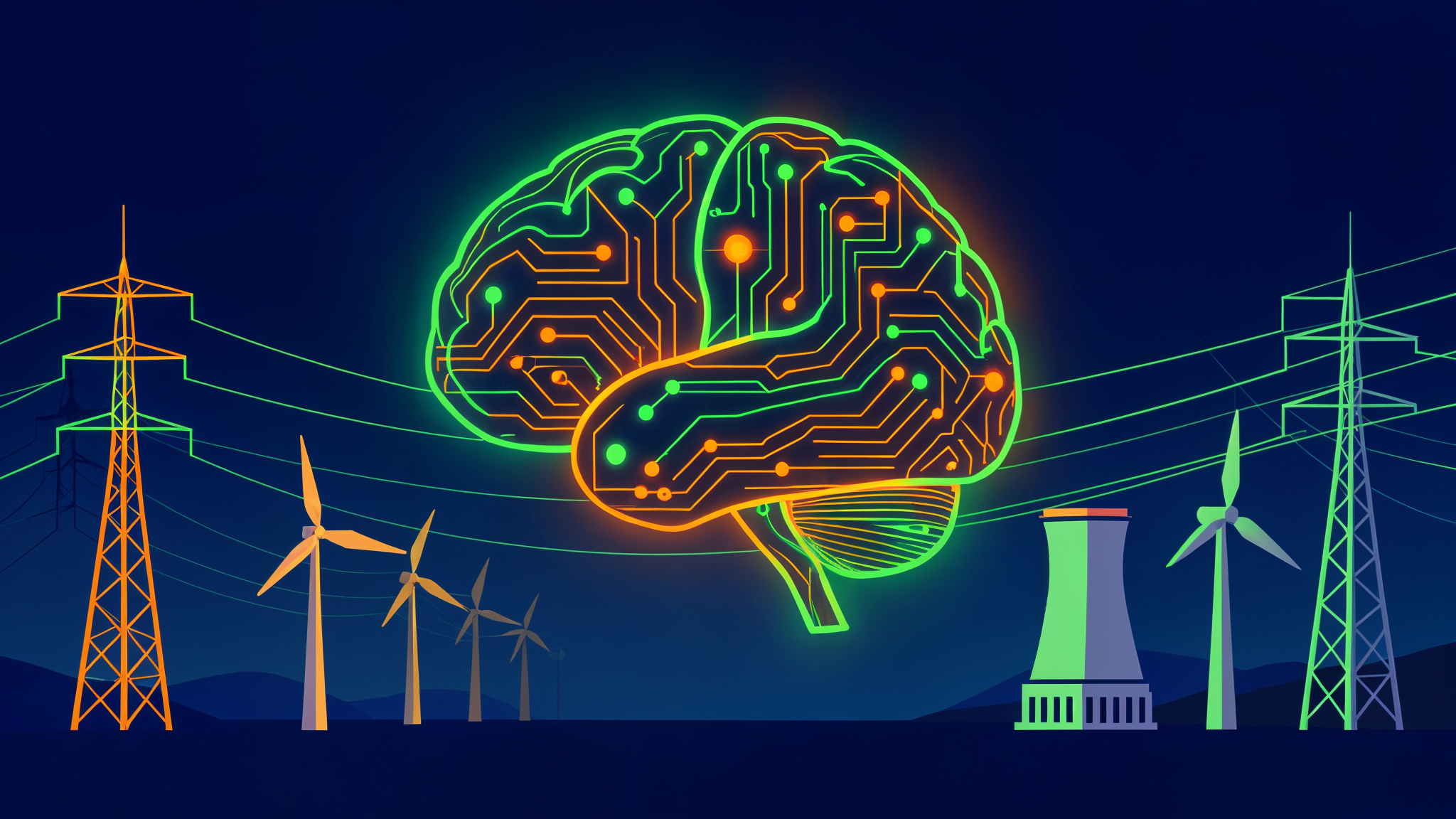
If you have ever wondered why you have been hearing about nuclear power plants or the rise in the price of electricity for months, the answer may have a name: artificial intelligence. It is not an exaggeration: the technological revolution of recent years has also become one of the planet’s great consumers of electricity, and that is changing the energy strategy of half the world.
Every time you ask something to an assistant, ask an app for an image or use an AI search engine, behind it there are thousands of computers working in large data centres. These “server warehouses” need electricity 24 hours a day, and much of that energy ends up turning into heat that has to be cooled. The result: the electrical appetite of technology keeps growing.
A figure that says it all
According to various sector analyses, the electricity consumption of data centres could double in the coming years and come to represent a considerable part of all the electricity consumed in the world. The technology companies themselves have acknowledged that their energy spending has risen noticeably and will keep rising.
It is not just a matter of figures. Behind that consumption there are decisions that affect us all: what kind of power plants are built, how much electricity costs and which technologies receive public aid to develop.
The return of nuclear energy
One of the most striking turns is the return of nuclear energy to the centre of the debate. After years in which many countries bet on reducing it, several big tech companies have now signed agreements to buy electricity from existing nuclear plants, or even to reactivate plants that were about to close.
The reason is simple: nuclear produces large amounts of electricity continuously, without depending on sun or wind. For a data centre that can never be switched off, having a stable and abundant source of energy is pure gold.
And renewables?
This does not mean solar or wind energy are out of the game. Quite the opposite: more and more solar and wind farms are being built to supply data centres. But renewables have a problem: they do not always produce at the same time. That is why many companies combine sources, or install large batteries to store energy and use it when they need it.
The trend points to a mix: some nuclear, a lot of sun and wind, and batteries that help it all add up. A very different mix from the one we imagined a decade ago.
What this means for you
Although it may seem like a debate between engineers and companies, it affects us closely. If electricity demand keeps soaring, it is very possible that energy prices will show up on the bill. At the same time, this pressure is accelerating the arrival of smarter grids and more efficient ways of producing and storing energy.
It is also pushing the companies themselves to be more efficient: using processors that consume less, designing centres that cool better or taking advantage of the heat they generate to warm nearby buildings. It is not altruism: it is that, at this point, saving energy means saving money.
The future, on the balance
Artificial intelligence promises spectacular advances, from better medical diagnoses to cars that drive themselves. But no advance is free, and the energy cost is the other side of the coin. The big question of the coming years will not only be whether AI can do something, but at what energy and environmental price we are willing to pay for it.
Between technology becoming more efficient, renewables continuing to grow and nuclear returning to a role, what is clear is that energy is back in fashion. And perhaps we have never been so clear that electricity, the one that comes out of the socket, is the silent fuel of the entire digital revolution.