
If in recent years you have had problems with your home wifi — dropouts, slowness when many people are connected or a video call that keeps freezing — good news: the solution is here and it is called Wi-Fi 7. It is the new generation of wireless networks that promises speeds up to four times higher than the current one and, most importantly, a stability that completely changes the experience.
What Wi-Fi 7 is and how it differs
Every few years, the wifi standard makes a leap. Wi-Fi 6 (2020) and its 6E revision improved speed and the management of many connected devices. Now comes Wi-Fi 7, also known as 802.11be, which goes one step further.
Its great novelty is that it uses the 6 GHz band much more efficiently and, above all, it widens the channels through which data travels. This translates into something very simple: data travels on wider roads and with fewer traffic jams.
The big promise: fewer dropouts and less waiting
The figure repeated at presentations is up to 46 gigabits per second of theoretical speed. But for most people, the figure that really matters is another: latency, the time it takes for the signal to go and come back.
Thanks to that ultra-low latency, Wi-Fi 7 is ideal for things that today often fail at home: cloud gaming, virtual reality with wireless headsets or 4K video calls. Everything works with almost imperceptible delay.
Imagine a home in which everything understands each other
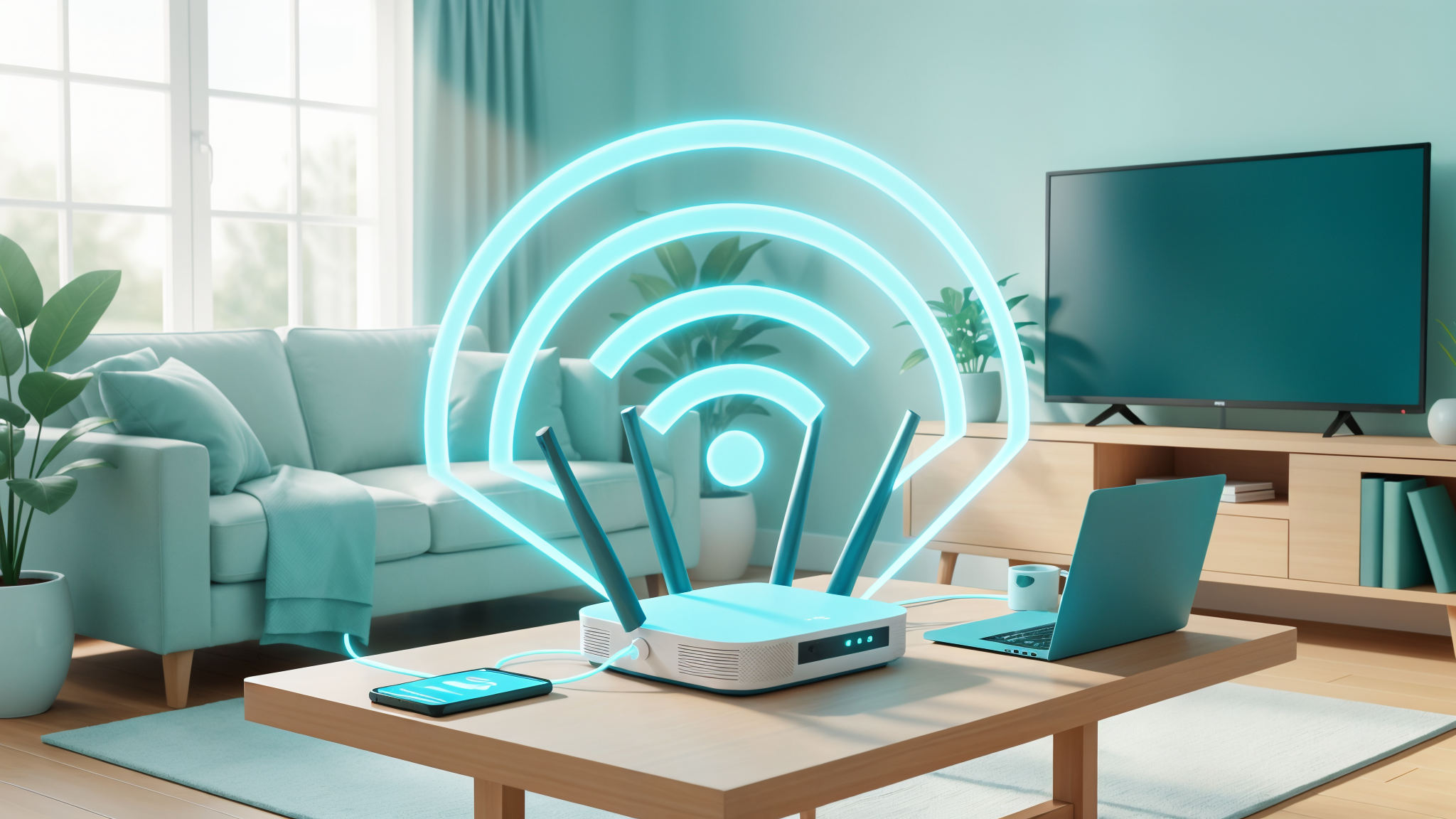
Home automation and smart devices have turned our homes into small armies of connected gadgets. An old router gets stuck when there are too many. Wi-Fi 7 is designed to coordinate them better, distributing the channel more intelligently and without the phone and the TV stepping on each other’s signal.
This also improves coverage in more rooms, because the router manages the three bands better at the same time and always chooses the best route for each device.
What you need (and when you will have it)
To take advantage of Wi-Fi 7 you need three pieces: a compatible router, devices that also support it and, usually, a powerful fiber connection. The first routers have been on the market since 2024, and high-end phones and new laptops increasingly include it.
The good news is that the standard is backward compatible: your old devices will keep working. What happens is that only the new ones will manage to squeeze out all the advantages.
A change at the core, without you having to do anything
As happened with previous generations, Wi-Fi 7 is not a change you have to activate: it is a silent improvement that will gradually slip into your devices as you change router or phone. In a few years the question will not be “do you have Wi-Fi 7?”, but “do you remember what wifi used to be like?”.