
Europe draws up the blueprint of its own cloud: SAP and Fraunhofer open up ApeiroRA’s code
The German institutes Fraunhofer ISST and Fraunhofer AISEC have made public this 3 August 2026 the state of their collaboration with SAP on ApeiroRA, an open-source project that aspires to become the technical blueprint for a European cloud-edge infrastructure, neutral with respect to the provider and with guaranteed interoperability between different operators. The goal is stated without beating around the bush: to cut dependence on US hyperscalers, which today concentrate close to 70% of the European cloud infrastructure market split between Amazon, Microsoft and Google.
The figure does not come alone. The Draghi report on competitiveness calculates that the European Union depends on third countries for more than 80% of the digital products, services, infrastructures and intellectual property considered strategic. That diagnosis is what has pushed the European Commission to approve in June its Technological Sovereignty Package, with the proposed Cloud and Artificial Intelligence Development Regulation (CADA) as the central piece of the board.
What ApeiroRA is exactly
ApeiroRA —an acronym for Apeiro Reference Architecture— is being developed within the IPCEI-CIS initiative (European Common Interest Project for Cloud Infrastructure and Services), the umbrella under which Brussels and several member states fund continental cloud technology. It is not about building “another European Amazon”, but about publishing the technological components and the reference architecture that any provider can implement, so that a customer can move a workload from one operator to another without rewriting their platform.
Fraunhofer’s contribution focuses on the service lifecycle: prototypical development and deployment of scalable, secure and automated management for cloud and edge services. In practice, that means building modular systems capable of working without friction between different providers and applications, which is exactly where portability is lost today. Both institutes also bring years of prior work in data spaces —the data spaces that enable sovereign exchange of information between companies— and in the Fraunhofer CCIT cluster of excellence.
Europe’s bet is the edge, not the giant data centre
The strategic approach is interesting because it accepts a partial defeat in order to win on another front. “Europe has fallen behind in the global market for public cloud services,” acknowledges Heinrich Pettenpohl, responsible for IT service providers at Fraunhofer ISST. “The same does not happen in the cloud-edge field. That is why the European Commission is pursuing a strategy of promoting smaller, decentralized data centres, the so-called cloud edges, which give European companies direct access to infrastructure where to store their data.”
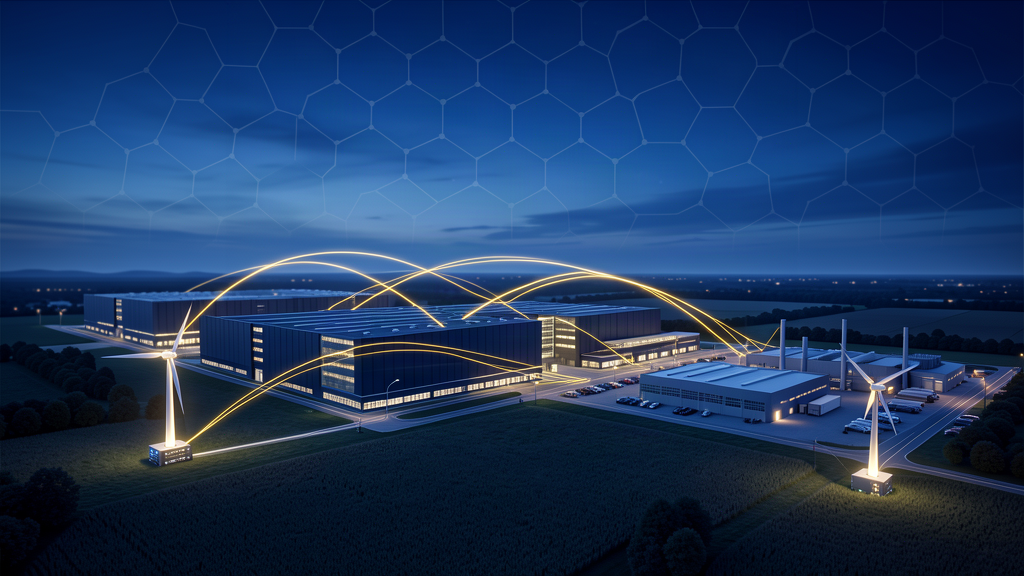
Those microcentres can be installed almost anywhere: at the base of a wind turbine, in an industrial yard or in a manufacturing plant. Processing moves to the point where the data is born, which reduces latency, saves bandwidth and enables real-time analytics, while the central cloud continues to act as repository and platform for long-running complex analyses. ApeiroRA joins both worlds into a cloud-edge continuum that dynamically distributes workloads wherever they are processed best.
Digital twins, energy and zero trust
The project adds a layer that is usually left out of infrastructure announcements: measured sustainability. Fraunhofer is working on the analysis of resource consumption, the collection and forecasting of sustainability metrics and the generation of efficient configuration recommendations. “By moving services to locations where energy is available, especially renewable energy, we make the system more sustainable,” explains Pettenpohl, who places digital twins as a tool for optimizing that consumption.
The agenda also includes autonomous root-cause analysis and AI-assisted operation to reduce the administrative burden. Andreas Schlosser, Apeiro coordinator for alliances and integrations at SAP, summarizes the whole: automated operating models ready for regulatory compliance, approaches based on zero trust principles and confidential computing, plus new concepts such as digital twins and AI optimization. “It is not just technological innovation: it creates verifiable and transferable solutions,” he maintains.
Where the code will end up
The project’s key results will be poured into the NeoNephos Foundation, integrated into Linux Foundation Europe and dedicated to driving open-source projects aligned with the objectives of IPCEI-CIS. That is a detail that matters: it means the work does not stay locked inside a closed consortium, but in a foundation with open governance and licences that any company can adopt.
What it means for businesses here
For a Spanish SME that today has its ERP, its email and its backups on a hyperscaler, none of this changes tomorrow. But the direction does matter. An open reference architecture and services portable between providers are the precondition for real price competition to exist and for the exit clauses of a cloud contract to stop being dead letter. And in a context in which the GDPR and the requirements for data processing on European territory weigh ever more heavily in tenders —especially in healthcare, public administration and industry—, being able to choose a continental operator without rebuilding the platform stops being an ideological question and becomes a measurable operational advantage.