
Since the beginning of August, a pioneering law has been in force in California (United States): the California AI Transparency Act. It is the first law of its kind in the whole country and requires the big artificial intelligence companies to offer free tools to check whether an image, a video or an audio clip was made by a machine and not by a person.
Artificial intelligence, in case you do not know it, is the technology that lets a computer do things that only we humans used to do, such as writing texts, drawing or imitating voices. When a machine creates content that looks real but is not, we talk about a "deepfake", a word that combines "deep" and "fake". An everyday example: a video in which a celebrity says something they never said, or a photo of a document that does not exist. This law was born so you can easily detect those deceits.
Who does the law affect?
The rule targets the companies that create these systems, not ordinary people. They are known as "covered providers": companies whose artificial intelligence programs have more than a million users a month and are available to the public in California. They are the giants you use daily, even if you do not know it, when you chat with an automated assistant or edit a photo with a smart filter.
What changes from now on
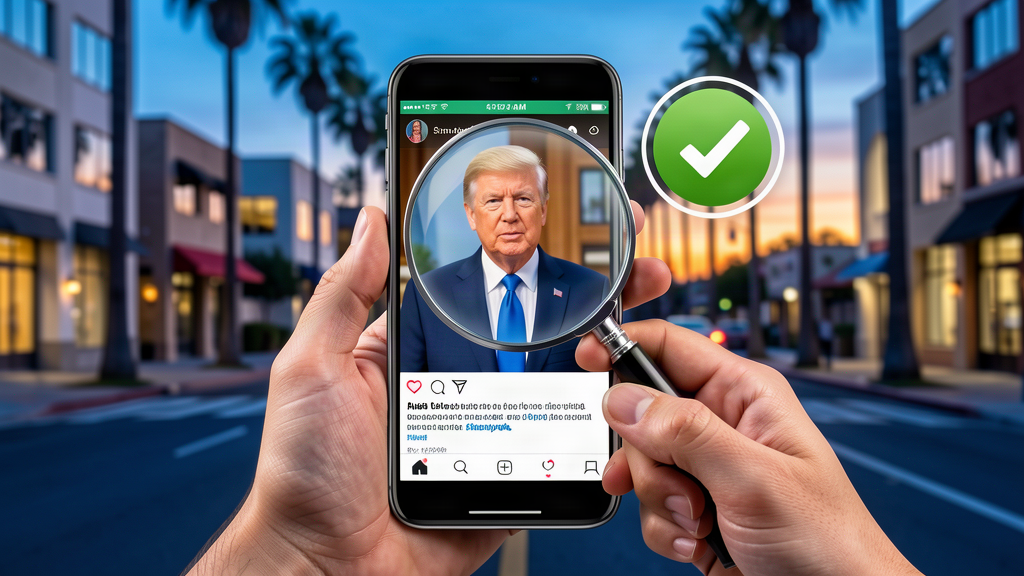
The rule applies in two phases. The first is already underway. Since August 2, 2026, artificial intelligence companies with more than a million users a month —such as ChatGPT, Gemini or Claude— must offer, at no cost, a tool to verify content. You can upload an image, a video or an audio clip, or paste the link to a post, and the system tells you whether that material was created or retouched with their artificial intelligence.
The law also protects your privacy: those tools cannot keep your files longer than necessary or collect your personal data. It is like a fitting room: you use it, you check, and no one keeps your information.
The second phase: visible labels
On January 1, 2027, the second phase will arrive, the most visible one for users. Platforms will have to clearly mark content generated with artificial intelligence, just as a label on a food package indicates its origin. That mark rests on something called "digital provenance": a hidden history inside the file itself that says who created it, with which system, when and whether it was modified afterwards. It is, in short, the identity card of each piece of content.
In addition, companies that lend their technology to others will have to make sure the labels keep working. If they discover that someone has removed them, they will have a window of 96 hours to revoke their usage license. And in 2028 a further step will be taken: camera and phone manufacturers will have to offer the option of including a hidden mark in the photos taken with those devices.
Fines of up to 5,000 dollars
What happens if a company does not comply with the law? It faces civil fines of up to 5,000 dollars per violation. And each day the non-compliance continues counts as a new violation, so the bill can rise very fast. Complaints may be filed by California’s attorney general and the district attorneys of its counties.
Does it affect me if I do not live in California?
Although the rule is California’s, its effect can be felt around the world. The big tech companies operate in every country, and a tool they have already built to comply with a law usually ends up available to all users. In addition, other regions, such as Europe, are moving in the same direction so that machine-made content is easy to identify.
The law, driven by Senator Josh Becker and signed by Governor Gavin Newsom in 2024, seeks to curb three very specific problems: scams with fake voices, manipulated videos in election campaigns and invented news that looks real. The easier it is to verify the origin of content, the harder it will be to deceive us. And that is good news for everyone.