
Artificial intelligence creates for the first time new viruses that fight bacteria
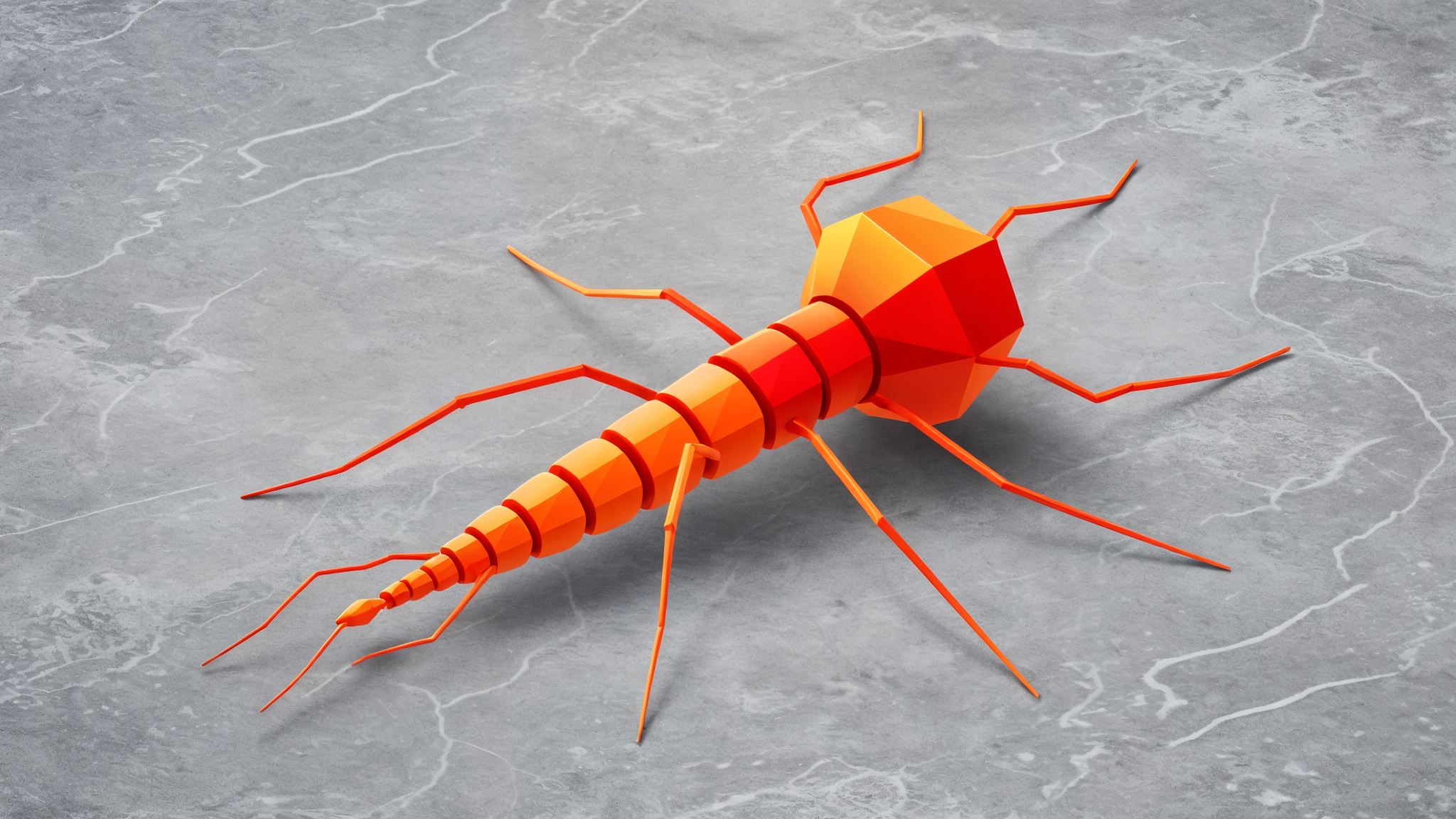
There is news that is generating a lot of discussion in the world of science. A group of researchers from Stanford University, in the United States, has achieved something never done before: using artificial intelligence (AI) to design completely new viruses. And the most surprising thing is that these viruses really work: they can reproduce in the laboratory.
Let us explain it simply, because the news has two sides: one hopeful and another that calls for caution.
But, what exactly is a virus?
A virus is a microscopic bug, so small that it cannot be seen with the naked eye. It is not alive like a cell, but it needs to enter an organism to multiply. When we say “virus” here, think of something tiny that can “attack” or “infect” other living beings.
The important thing about this news is that these viruses do not attack people. Quite the opposite: they attack specific bacteria. A bacterium is another tiny microorganism, and some of them make us ill.
The AI that learns “the language of life”
How did they achieve it? Artificial intelligence is, in a few words, a machine that learns to do things by looking at many examples and finding patterns. It is the same technology behind the programs that write texts or draw images when you ask them to. A daily example: when you type a message and the phone suggests the next word, you are seeing a small piece of this type of intelligence.
Well, these researchers trained their AI in a special way. Instead of teaching it words, they taught it the “language of life”, that is, the genetic code that all living beings carry inside, from bacteria to plants and people. To give you an idea, it is as if they had taught it to read and predict the “letters” that make up living beings.
Almost like a vaccine for the antibiotic problem: when the little machine learned that language, it was able to invent the code for new viruses that do not exist in nature.
And what is this useful for?
These viruses are designed to eliminate the bacterium called E. coli, one of the most common. Of the 302 most promising designs the AI chose, 16 turned out to work wonderfully in the laboratory: they were placed on plates with bacteria growing on them and, within a few hours, zones could be seen where the bacteria disappeared. The excited scientists — some of them filled the room with applause when they saw it.
Why is it so important? Because there are more and more infections that are not cured with the usual medicines, the antibiotics. Bacteria are becoming “resistant”, that is, immune to medicines. It is as if a padlock no longer worked because the lock has changed. These new viruses, called phages, could be a new tool to treat those difficult infections.
An expert from Pompeu Fabra University, in Spain, summed it up this way: for the first time in history we are starting to design biology, that is, living beings, in front of a computer. And that allows us to dream of huge uses: curing diseases, creating better medicines and even immunotherapies, which are treatments that use the body itself to fight cancer.
The other side of the coin: caution
But not everything is rosy. This same technology could be used, in the wrong hands, to create new diseases and harm people. That is the big concern expressed by other experts from Johns Hopkins University, also in the United States. They wrote it in the same scientific journal that published the finding (the prestigious journal Science): “urgent questions” about safety must be answered before moving forward.
That is why the researchers themselves took many measures. For example, they excluded from the AI’s data the viruses that could infect animals or people, they used only viruses that attack bacteria and they worked in a safe, supervised laboratory.
As a reference, these viruses have a genetic code of about 5,400 “letters”. That of a simple living cell has about 500,000. And that of a person, about three billion. In other words, there is still a long way to go before AI designs complex organisms. But scientists believe it is possible. And that is why this news is, simply, historic.