
An artificial intelligence that predicts hurricanes a day earlier: Google’s new tool
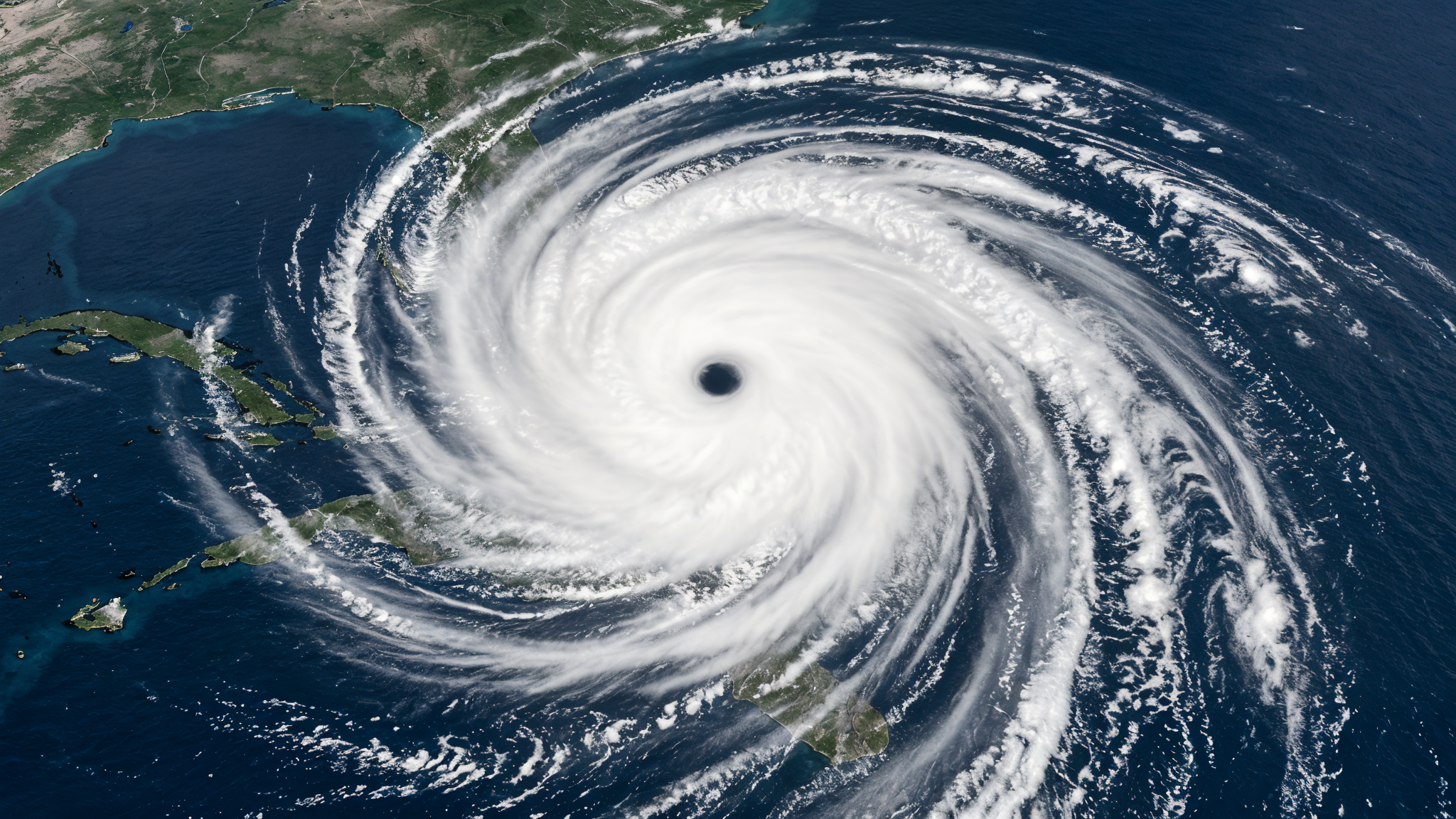
Imagine being warned of a hurricane a full day in advance. Not one more day of fear, but one more day to pack your things, leave home and get to safety. Well, that is, in short, what Google’s scientists have achieved with their new system called WeatherNext. It is an artificial intelligence, a program that learns by itself, and it has shown that it knows how to predict giant storms better than the methods used until now.
The news has been published in the prestigious scientific journal Nature and it is important because it directly affects millions of people. Hurricanes — also called cyclones or typhoons depending on the area of the world where they form — are among the most destructive natural phenomena. In just the last fifty years it is estimated they have caused more than 700,000 deaths and economic losses of more than one and a half trillion dollars. Every hour of warning counts, and this system gives a lot of time.
What exactly is an artificial intelligence?
Let us explain it simply. An artificial intelligence is, as we said, a computer program that learns by looking at data. It is similar to how we learn to recognise a friend: nobody gives us a list of their face, we see it many times and end up recognising it. Well, same thing. This program has been taught almost twenty thousand gigabytes of information about the climate and the data of almost five thousand hurricanes that have happened in history. After learning so much, it is now able to look at today’s weather and guess very well what will happen in the coming days.
And how much better does it predict than before?
A lot. Before, meteorologists — the people who study the weather — had an accuracy margin of about two days. Now, with this artificial intelligence, that same accuracy reaches three days. In practice, there is one more day of warning. And it does not seem like much, because all that progress, with the usual techniques, would have cost about ten years of research.
Besides, the system does not give a single answer, but builds a thousand possible scenarios for each storm. It is as if a doctor did not say “there will be flu”, but calculated a thousand different ways things could go and warned which ones are most likely. That helps experts decide better when it is worth evacuating (that is, moving people out of the danger zone) and when it is not.
It has already been useful for real
This is not just theory. In October 2025, a storm formed in the Caribbean Sea and the different systems could not agree. Some said it would head towards Haiti, others that it would gain strength and head to Jamaica. This artificial intelligence got it right: it warned five days in advance that Jamaica would suffer a maximum-category hurricane. And so it was. It was called Hurricane Melissa and it caused serious flooding, but the advance warning gave people time to prepare.
It is the first time the United States National Hurricane Center managed to predict such a powerful hurricane while it was still a weak storm. The scientists themselves were surprised: “The results were so good that we doubted they would really be repeated later”, one of the researchers acknowledged.
Is there a catch? Any risk?
We have to be honest: it is not perfect nor is it the only tool. The experts remind us that a model that got it right last year does not have to always be the best, and that the human eye and meteorologists’ experience remain essential. “A hurricane is not just a line on a map”, they explain. “You need people to translate that into real decisions, because what kills is not the storm, but not knowing how to prepare.”
There is also a curiosity that still puzzles scientists: this system gets very good results using data with much less precision than the old models. That is, it needs fewer details and still gets more right. The researchers still do not fully understand how it does it, and that opens new questions about the mysteries of the climate.
To finish
The nicest thing about this story is that Google has decided to share the code of this system for free. That is, anyone — universities, other countries, small weather services — can use it and improve it. That way, the protection will not be only for rich countries, but for everyone. On a planet where the climate is increasingly strange and extreme, one extra day of warning can be the difference between life and death. And that that help reaches everyone is, without doubt, great news.