
For years, the solid-state battery has been the promise that is always just around the corner. More range, charging in minutes, no fires. Now, in 2026, the first cars with this technology are starting to leave the factory and the promise hits the asphalt.
**What changes compared with today’s batteries**
The lithium-ion batteries in today’s cars use a liquid electrolyte. That liquid lets the ions travel between the poles, but it has drawbacks: it is flammable, it degrades with heat and it limits how much energy can be stored in the same space.
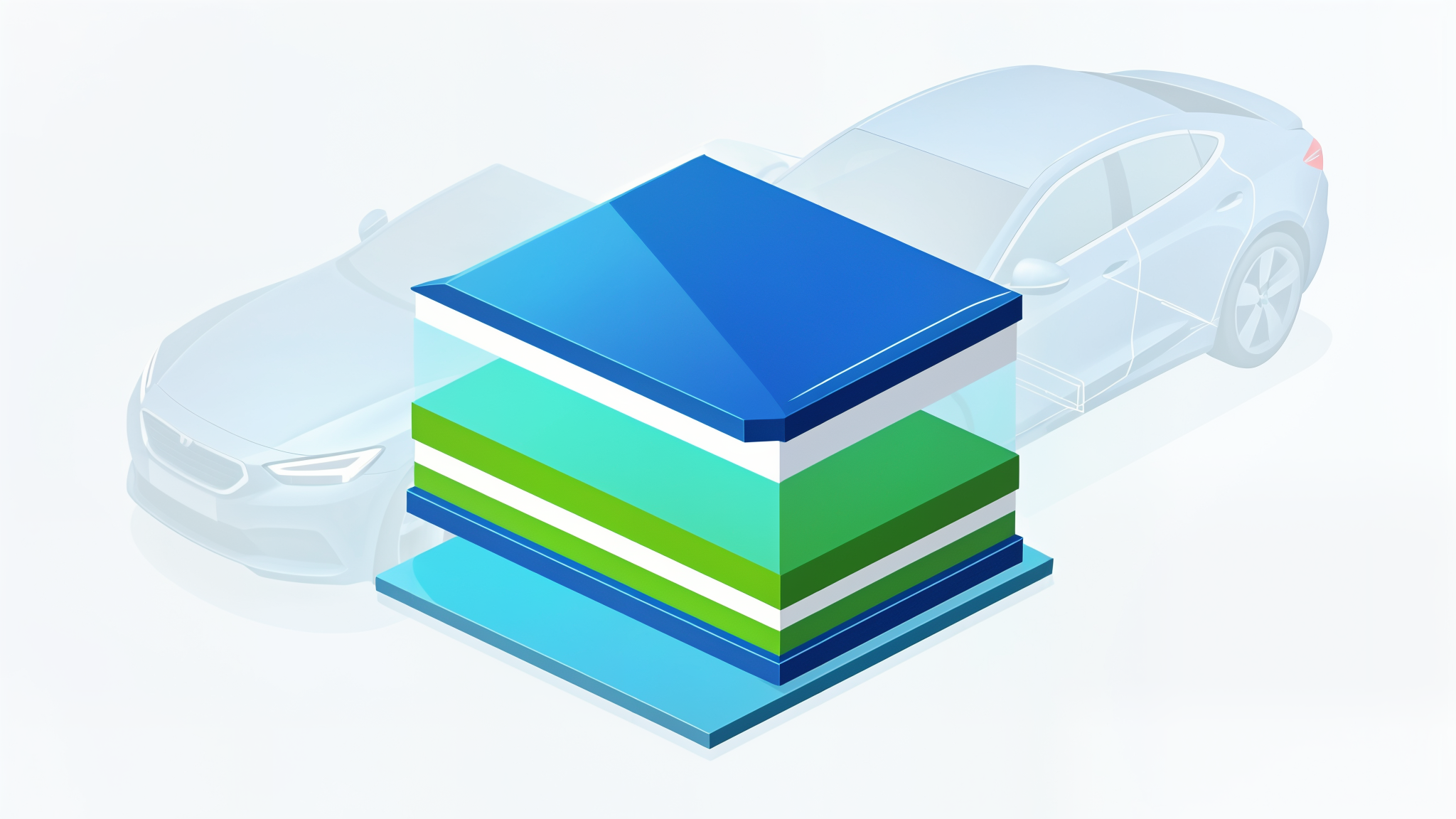
A solid-state battery replaces that liquid with a solid material —ceramic, polymer or glass—. The result: pure metallic lithium anodes can be used, which store much more energy, and the risk of fire almost completely disappears.
**The numbers that matter**
Manufacturers talk about doubling the average range. A car that today does 400 km would go on to exceed 800 km on a single charge. Fast charging would drop from the current 20-30 minutes to less than 10 minutes for 80%. And the useful life would go up because the solid electrolyte does not form dendrites —those metallic filaments that end up crossing the battery and causing short circuits—.
**Who gets there first and when**
Toyota leads the media race: it has announced that its first model with a solid-state battery will go on sale between 2027 and 2028, with a target range of 1,000 km and 10-minute charging. Samsung SDI has started pilot lines in 2026 to supply cells to BMW and Hyundai. QuantumScape, backed by Volkswagen, is already delivering pre-production prototypes to German manufacturers. Nissan and CATL have their own schedules, all converging in the second half of the decade.
**The “but” that almost nobody mentions**
The technology works in the laboratory. The challenge is to manufacture it in series at the price of a normal car, not a prototype. The ceramic electrolyte is fragile and requires controlled atmospheres when assembling it. Material costs (metallic lithium, special ceramics) remain high. And the entire supply chain —from the mine to the assembly line— must scale without bottlenecks.
That is why the first models will be expensive and limited-run. We will see them in premium ranges before we see them in a €25,000 economy car.
**Semi-solid: the realistic bridge**
While the 100% solid version matures, several brands already sell cars with “semi-solid” or “quasi-solid” batteries. They use a gel or a paste with very little liquid. They do not match the figures of the pure technology, but they already improve energy density and safety compared with conventional lithium-ion. They are the intermediate step we will see in dealerships in 2026-2027.
**What it means for you if you buy a car today**
If you need to change your car now, today’s batteries are reliable and the charging network grows every month. Waiting for pure solid-state only makes sense if you can afford a premium and are not in a hurry. If your horizon is 2028-2030, solid-state will be standard in the mid-range and real 800 km of range will stop being news.
**In summary**
The solid-state battery stops being a PowerPoint and becomes a catalogue item. It is not going to solve all of the electric car’s problems overnight —price, the charging network and recycling are still part of the equation—, but it eliminates the Achilles heel of the current technology: the trade-off between energy, safety and charging speed. 2026 is the year the promise starts to get a license plate.