
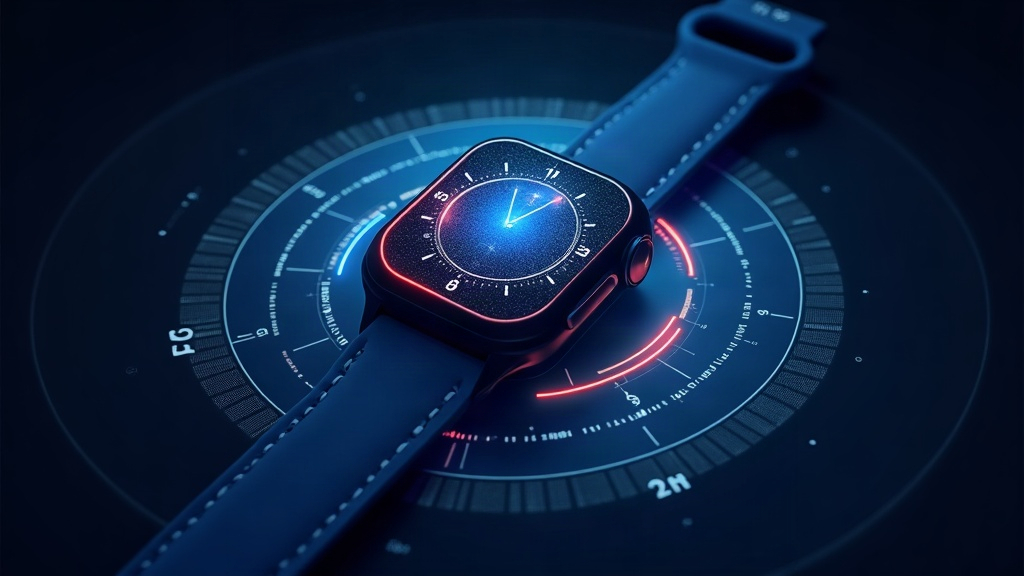
When you put on a smartwatch in the morning, you are strapping a small laboratory to your wrist. It is no longer just for telling the time: it counts your steps, monitors your heart rate, measures how you sleep and even warns you if you have been sitting for too long. This family of devices has a name: wearable technology.
From the pedometer to the pocket laboratory
The first steps of this technology were modest. Activity bands only counted steps and estimated calories. But sensors have become smaller, more accurate and cheaper. Today, a mid-range watch carries more sensors than the first smartphone.
On the wrist, on the finger or even in the ear, these devices collect data continuously. And there lies the key to their success: you no longer have to do anything to measure yourself. The information is recorded on its own, while you live your day.
What they measure and how
The most famous sensor is the one that detects the pulse. It uses a small light that illuminates the skin and measures how blood flow changes. With that data, the device calculates your heart rate and estimates things like the effort of a workout or the stages of sleep.
An accelerometer and a gyroscope detect movement: whether you are walking, running, climbing stairs or staying still. The most advanced models include GPS to trace your routes, blood oxygen sensors and even electrodes capable of recording the electrical activity of the heart.
More than a whim: everyday health
The real value of these devices is that they make health visible. Seeing your daily activity, your hours of sleep or your resting heart rate helps you make better decisions. And in some cases, they detect signals that could otherwise go unnoticed.
Doctors already use them as support. They can track a patient’s heart rate remotely, check whether an elderly person has suffered a fall or verify that someone with a chronic illness maintains stable levels. The data, however, should always be confirmed by a professional: a watch informs, it does not diagnose.
The challenge of personal data
All this tracking generates an enormous amount of information about you: when you sleep, where you run, how your heart beats. It is sensitive information, and it does not always stay only on your wrist. Before connecting a device, it is worth checking what data it collects, who stores it and who it is shared with.
The good news is that there is more and more control. Mobile operating systems ask for permission before an app can access your health data, and many manufacturers encrypt the information. But the first barrier of protection is still you: choose trusted apps and review permissions.
The future is worn
Wearables do not stop at the wrist. Glasses with integrated displays, rings that measure your rest or fabrics with sensors sewn into the clothing are already a reality. The industry is betting on increasingly discreet devices that integrate into what we already use.
The promise is tempting: a technology that takes care of us without us having to pay attention to it. Meanwhile, what we already have on our wrist reminds us of something simple but powerful: knowing your body is the first step to taking care of it.