

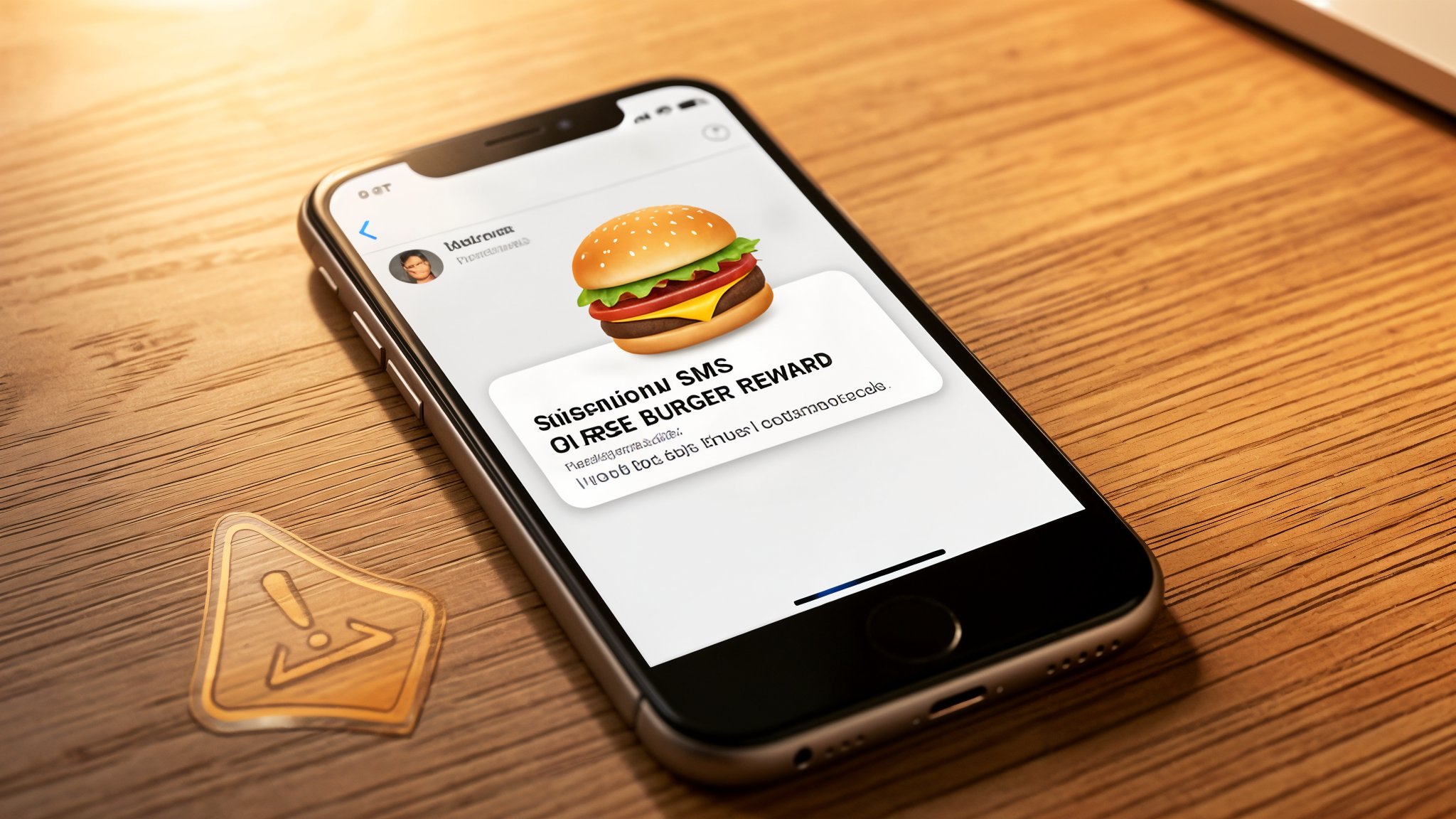
The “burger scam” has arrived in Spain: replying to a simple SMS can blow up your mobile bill
Be very careful with messages offering free hamburger gifts. Cybersecurity experts have just alerted us to a new scam in our country that slips in through the mobile phone. The most dangerous thing is that nobody asks you to download anything or click on a suspicious link: just replying to the message is enough to cause a mess.
We live increasingly connected, and also increasingly exposed. Internet scams are no longer just for older people or the absent-minded: anyone can fall for them, even a young person with a phone in hand. The public body that monitors internet security in Spain, called INCIBE, has issued an alert because a new con, known as “the burger scam”, is already affecting some Spanish users.
What does the con consist of?
It all started when a young man’s father reported what had happened to INCIBE. His son had received an SMS, that is, a text message, from a foreign phone number. In that message they told him he had won a gift from a famous burger chain, a place he had surely been to more than once. They gave him a choice between several gift options and, to choose it, he only had to reply to the message by typing the letter A, B or C.
It seems innocent, right? The boy replied A, B or C, as they asked. And that is where all the trouble began. He did not download any app, he did not click on any link, he did not give any personal data. He only replied to a text message. And yet the damage was already done.
When the phone bill arrived, his parents got a huge scare. From their son’s phone, more than 120 messages had been sent to foreign numbers in a matter of minutes. The bill had completely exploded. For replying to a simple message, someone had signed the boy up to a paid “premium” messaging service to abroad. Now the bill was, with almost total certainty, the most expensive of his life.
How is it possible that just replying causes this?
It is worth clarifying the trick to understand it. There are paid messaging services that, in some countries, you subscribe to simply by replying. In some cases the reply to the message is understood as a “yes, I want it” and, from then on, it starts charging you. The scammer does not need you to do anything else. That is why this con is so dangerous: it seems harmless, but the small print works against you.
The good news is that, according to the experts, in this specific case thousands of euros were not lost. But the scare, and the hole in the bill, can be very serious. And most importantly: this kind of scam is on the rise, so the best thing is to be prepared.
What do I do if I get a message like that?
The golden rule is very simple: do not reply. If you receive a message promising you gifts, prizes or discounts from companies you were not expecting, especially from foreign or unknown numbers, it is better to delete it and not answer. Your reply is exactly what the scammer is waiting for.
And if unfortunately you have already fallen for it, the INCIBE experts recommend these steps:
- Call your phone company and ask it to cancel any paid messaging or abroad-sending service. That is the first thing you should do so they do not keep charging you.
- If the company does not solve the problem for you, contact the Telecommunications User Service Office, which is the body that defends your rights against companies in the sector.
- Check whether your phone has any kind of virus with an antivirus. Although in this case there was no need to download anything, it is worth checking that the phone is still healthy.
- Look at the installed apps on your phone and uninstall those you do not recognize or that you did not install yourself.
- Review the permissions you have given to the apps and remove any permission from any app that seems strange or excessive to you.
A final tip to take home
Think of these messages like the lottery con that tells you “you have won”: if something is too good to be true, it usually is not true. Nobody gives away free burgers by message, just as nobody gives you money out of nowhere. When an unknown message asks you for a reply, a download or a click, stop for a second. That pause can save you a nasty scare and, above all, a bill that is very hard to explain.