
Your operating system lies to you about memory, and that is a good thing. When a program asks for 4 GB of RAM and your laptop only has 8, with three apps open the system does not give up: it offers you memory that does not physically exist. That illusion is called virtual memory, and without it no modern operating system could keep dozens of processes alive at once.
The problem: RAM is not enough
RAM (Random Access Memory) is fast but expensive and scarce. Every process —your browser, your editor, your antivirus— assumes it has all the memory to itself, and if each one really reserved its gigabytes, physical RAM would run out in seconds. On top of that, programs use fixed addresses for memory: if two processes tried to use the same address, they would collide.
The classic solution is indirection: make the program never talk directly to physical RAM, but instead to a virtual address that the system translates into a physical one. It is the same principle as an elevator taking you to floor 5 even though the building only has 3: you ask for “5”, and the mechanism decides where you actually end up.
The translator: the MMU and page tables
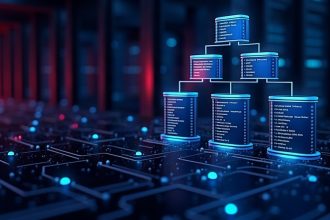
That translation is carried out by a component of the CPU called the MMU (Memory Management Unit). Virtual memory is divided into fixed-size blocks called pages, typically 4 KB each. Each virtual page points to a specific physical page, and that mapping is stored in each process’s page table.
The operating system keeps one page table per process, which also provides isolation: process A cannot read process B’s memory because its table simply has no entries that would lead to those physical pages. That is one of the foundations of security in any system.
The wildcard: swap
Here comes the trick that “creates” memory. When physical RAM fills up, the operating system takes pages that no one has used for a while and writes them to swap, an area on disk (or in a file, such as pagefile.sys on Windows or the swap partition on Linux). The virtual page still exists, only its content now lives on disk instead of in RAM.
When a process touches that page again, a page fault occurs: the CPU detects the page is not in RAM and notifies the operating system, which reads it back from swap and reinserts it. To the program it is transparent: it keeps using the same virtual address. The penalty is speed, because the disk is thousands of times slower than RAM, which is why heavy swapping makes the system crawl.
The accelerator: the TLB
Translating a virtual address on every access would be a brutal bottleneck. To avoid it, the CPU includes the TLB (Translation Lookaside Buffer), a tiny but extremely fast cache that remembers the most recent page translations. Because programs tend to hit the same pages over and over (reference locality), the TLB almost always succeeds and avoids consulting the in-memory table.
When the TLB misses, the full page table must be walked, and on modern architectures with several table levels that page walk is one source of lost microseconds. That is why data living on the same page performs better: optimizing for locality is not superstition, it is speeding up the TLB.
Surprising applications
Virtual memory does more than multiply RAM: it enables features you use every day. Memory mapping (mmap on Linux) loads files as if they were memory, so reading a PDF does not require copying its contents. Copy-on-write lets the fork() call clone a process without duplicating its memory: both copies share the same pages until one tries to write, at which point only that page is copied. And hibernation systems dump all of RAM into swap before shutting down.
The price: thrashing
The mechanism has a limit. When RAM is so saturated that the system spends more time fetching pages from swap than running code, it enters thrashing: the disk works nonstop, the CPU sits near idle, and the machine seems frozen. It is the unmistakable sign that virtual memory is stretching itself thin, and the only cure is closing processes or adding physical RAM.
At its core, virtual memory is a great bargain: the operating system promises you memory it does not have, in exchange for you accepting a tax in access time when things get tight. Knowing how it works helps you understand why your computer slows down, why closing tabs eases the load, and why RAM, after all, remains the resource you miss the most.