
Apple’s MacBook Neo dethrones Windows and Chromebooks in US schools
Apple revealed during the presentation of its fiscal third-quarter results a figure that has surprised the entire education industry: the MacBook Neo, its most affordable laptop, is taking ground from Windows and Chromebooks in US schools and high schools at breakneck speed. According to the company, close to half of the large MacBook Neo purchases made by US educational institutions in the last quarter replaced existing Windows devices or Chromebooks, rather than expanding already established Mac fleets. It is a paradigm shift in a market that Chromebooks have dominated for more than a decade.
Three districts, three mass migrations
The concrete examples Apple cited in its call with analysts are especially illustrative of this trend. The Pinellas County school district, one of the largest in Florida, is migrating 25,000 students from Windows devices to MacBook Neo across its 18 high schools. In Washington state, the Peninsula School District 401 has moved its 8,000 students from Chromebooks to Apple’s new laptop. And in Oklahoma, the Midwest City-Del City district has acquired more than 6,000 units to become a fully Apple school district.
The striking thing is not just the volume of these operations, but their nature: it is not about renewing old MacBook Air fleets, but about ripping out ChromeOS- or Windows-based device parks from the ground up to replace them with Apple hardware. A strategic turnaround that would have been unthinkable just a few years ago, when Chromebooks had become the de facto standard of US education thanks to their low cost and ease of management.
A price designed for education
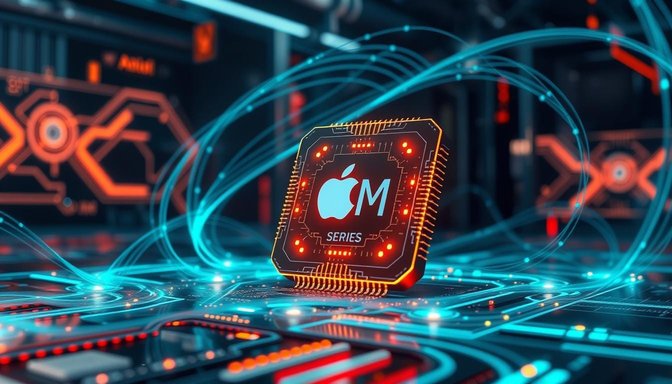
The key to this assault on the education market lies in price. With a starting cost of $499 in its education version, the MacBook Neo is positioned as the cheapest Mac in Apple’s history. It mounts an Apple A18 Pro chip with 8 GB of unified memory, enough for a student’s usual workloads: web browsing, cloud documents, online exam platforms and video-conferencing apps.
The MacBook Neo does not try to be a Pro machine. Its philosophy is that of the spiritual successor to the original MacBook Air: a machine a district can buy by the thousands, hand to a fourteen-year-old teenager and that still works perfectly when that student graduates. Meanwhile, the current Air has become an almost professional machine, and the Neo now fills that niche of basic but capable laptop that for years was the exclusive territory of Chromebooks.
Longevity as an argument
Education IT administrators have been pointing out for years that MacBook Airs with the M1 chip, despite their age, remain perfectly valid machines for the school environment, with life cycles of five, six and even seven years. That durability, combined with the performance of Apple’s silicon, is one of the arguments convincing districts to make the leap. Although the Neo’s price has risen slightly since its launch —as has happened with all laptops on the market due to the rising cost of components—, it still competes directly with Chromebooks and entry-level Windows laptops.
Is the Chromebook era over?
There is no need to rush to declare the end of ChromeOS’s reign in the classroom. Google still has a massive presence in the education sector, and its integration with Classroom and other tools remains a strong argument for many schools. But the fact that Apple is willing to compete on price in a segment it had historically ignored changes the rules of the game. For the first time, education technology decision-makers have a real alternative offering a complete ecosystem with centralized management, extended updates and a resale value far higher than that of a Chromebook.
Looking ahead, it would not be surprising to see the MacBook Neo become the default recommendation not only for students, but also for a good part of the knowledge workers who do not need the power of a MacBook Pro. After all, most users need something reliable, fast for daily work, easy to manage at scale and with a price that allows buying it in bulk. The Neo meets all those requirements, and US schools are being the first to prove it with data on the table.