
Farewell to the “€60 computer”
For years, the Raspberry Pi was the symbol of accessible computing: an all-in-one board with which you could build yourself a computer for less than 60 euros, enough to program, assemble a retro-computer or automate your home. That era has ended. The global RAM memory crisis has turned the British board into a luxury product: a Raspberry Pi 5 with 8 GB now exceeds 180 euros, and the 16 GB version is dangerously close to 300. For that price you can buy a more than decent second-hand computer, or even a new entry-level one. And the escalation does not seem to have hit a ceiling.
Seven times more expensive: the culprit is called HBM
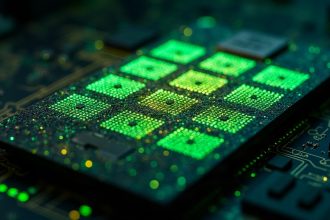
The explanation lies in memory, and more specifically in the insatiable appetite of artificial intelligence. Eben Upton, chief executive of Raspberry Pi, confirmed it on the company’s official blog: the LPDDR4 memory used by the Pi 4 and Pi 5 now costs seven times more than a year ago. The three big manufacturers in the sector (Samsung, SK Hynix and Micron) have devoted up to 70% of their production to HBM memory, the type of ultra-fast chip needed by AI data centers, leaving the consumer market out in the cold.
The result is visible in prices: an 8 GB RAM module has gone from about $40 to more than $130 in just five months. For Raspberry Pi, the blow has translated into three price increases for its flagship model in a little over four months: $25 more in December 2025, another $60 in February 2026 and $100 more in April. In the last batch, the company also raised the Compute Module 4, the 5, the Raspberry Pi 500 and the HAT+ 2 AI accelerator.
The ESP32, the ten-dollar chip that benefits
While the flagship tinkering board gets more expensive, a humble SoC has poked its head out: Espressif’s ESP32. This chip integrates CPU, SRAM, WiFi and Bluetooth in a single package, and most of the development boards that mount it sell for less than ten dollars. Its secret is precisely what protects it from the storm: it does not depend on the LPDDR memory that has blown up the prices of Raspberry and of almost every device with that type of RAM, including phones.
It is not that ESP32 boards are cheaper because of a more austere design; it is that they stay on the sidelines of the memory market. Some variants do mount external memory, so they are not immune either, but most home projects do not need it. And that is the change in terrain: for a decade, the default answer to “I want to build something cool” was a Raspberry Pi, even if the idea was as basic as turning on a light bulb with a motion sensor. Oversizing was cheap; now it no longer is.
Does the ESP32 replace the Raspberry Pi?
Not entirely, and it is worth being clear about it. The Raspberry Pi aims to be a complete computer capable of running real Linux, while the ESP32 is oriented toward the internet of things and low-power projects. When you need full Linux, the Pi is still unbeatable. The problem for Raspberry is that it is almost never needed: most hobby developments on the ESP32 work just as well, and at a fraction of the price.
The honest answer: how much machine do I really need
The British company is aware of the problem and has responded with a “fine-tuning” strategy: keeping the 1 and 2 GB variants at stable prices (between $35 and $65), celebrating that the 4 GB Raspberry Pi 400 still costs $60, and even launching a new 3 GB Raspberry Pi 4 at $83.75 for those who do not want to pay for memory they do not use. The classic models, such as the Pi Zero and the early generations, which use LPDDR2 of which the company holds inventory, do not go up.
The memory crisis has changed the rules of the game for home tinkering. The question stops being “which board do I buy?” and becomes “how much machine do I really need?”. The honest answer is that, for most projects, much less than what we have been consuming. And as long as AI keeps devouring HBM memory, the ESP32 and its low-cost companions are going to keep gaining ground over an icon that is no longer what it used to be.