

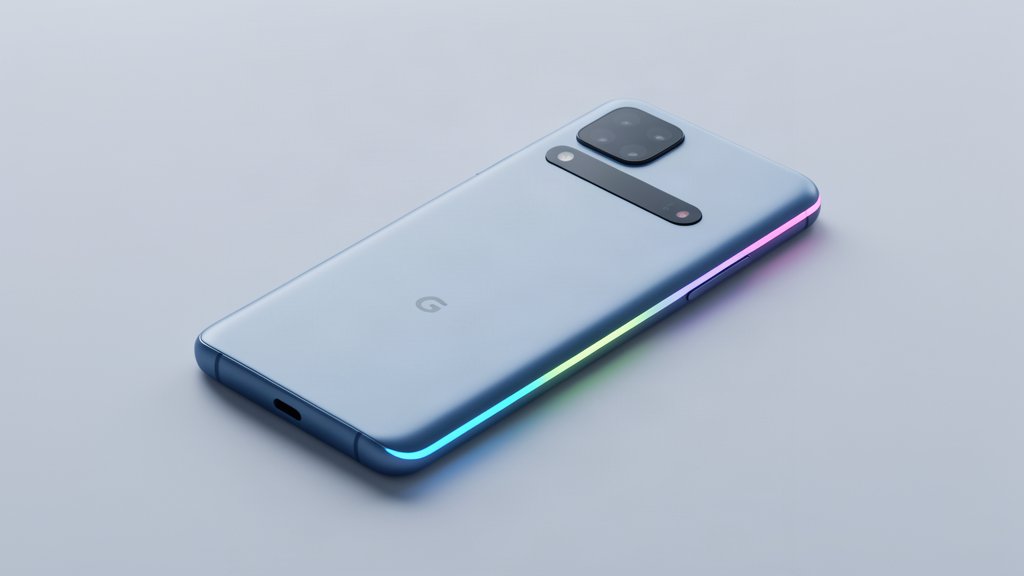
Google’s new phone: the Pixel 11 arrives on August 12
Google has made it official: its new phone, the Pixel 11, will be unveiled next August 12 at an event called "Made by Google". It is the most important date of the year for the company, and it comes at a time when almost everyone is looking at phone prices with a fine-tooth comb. These are the keys to understand what is coming, without needing to be a tech expert.
Think of a phone like a car: what really matters is not only how it looks on the outside, but the engine inside it and what you can do with it. With the Pixel 11, Google wants to change precisely that: the "engine".
Four models, not just one
Google will keep the same structure as the current generation, that is, four flagship phones:
- Pixel 11, the standard model.
- Pixel 11 Pro, with more features.
- Pixel 11 Pro XL, the biggest of all.
- Pixel 11 Pro Fold, the one that folds in half like a book.
In addition, a few months later a cheaper version will arrive, the 11a, designed for those who do not need the latest of the latest. A reservation can be made from the very day of the presentation, although the phone will reach stores one or two weeks later.
A new "engine" inside
The most important change is in the processor, which is the phone’s brain: the chip in charge of making everything work. The new Tensor G6 is made by a different company than in previous years (TSMC, the same one that makes Apple’s chips), and that usually translates into more power and less battery drain.
The leaked data speak of 15% higher performance and up to 30% energy savings. To make it clear: it is like swapping a car’s engine for one that goes faster and uses less fuel. That means the phone will last longer on the same charge and will heat up less when you use it to game or watch videos.
Also expected are 12 GB of RAM, which is the ability to do several things at once without the phone choking, and a new security chip to protect your data.
Screen and design: discreet changes
In what you can see, the changes will be subtle. The Pixel 11 will keep the current design: flat edges, rounded corners and that very characteristic horizontal camera bar. The most striking thing will be a detail called Pixel Glow: a strip of colored lights on the back that will light up for alerts and notifications, something similar to what other phones already do.
The screen of the standard model will be 6.3 inches (more or less like most current phones) and the XL’s will be 6.8. Google could use new panels made by Samsung that give more brightness and use less battery.
Cameras: continuity and more intelligence
In photography, the Pixel 11 will keep the triple camera: the main 50-megapixel sensor (a measure of detail: the more, the sharper the photos come out), an ultrawide for landscapes and groups, and a 5x zoom to get closer to what is far away without the image looking blurry.
The most talked-about new feature is face unlock. Google could bring back a special infrared camera —the same technology TV remotes use to send invisible signals— that would let you unlock the phone with your face even in the dark and authorize payments with a single look. But this is not yet confirmed, so we will have to wait for the event.
Battery and charging
The base model’s battery will be around 5,000 mAh, a figure that in practice translates into one or two days of normal use. Fast charging will be about 30 watts, and the phone will include magnetic charging (the magnet system that lets you stick the charger to the back, like on iPhones).
The modem will also change, the piece that connects the phone to the data network and wifi. Google will replace it with a MediaTek one, which should give better coverage and lower battery consumption.
And the price?
Here comes the million-dollar question. The current Pixel 11 costs 899 euros, and so far there are no clear leaks about the new price. What experts do point to is that it could go up, especially because memory components are more expensive this year. The exact prices will be known on the day of the presentation.
What this means for you
If you have a phone from two or three years ago and are thinking about changing it, August 12 is a date to keep in mind: prices of current models usually drop when the new one comes out. And if you do not need a new phone, no problem: the major news of Android 17, Google’s operating system, will also reach many current phones.
What is clear is that Google is betting big again: better processor, better battery and a facial unlock that promises to match the best. On August 12 we will be out of doubt.